Marktkapitalisierung: $2,56 Bio. 0,50% 24h Vol: $134,60 Mrd. 17,43% BTC Dom: 55,80% 0,19%

Informationen zum Land

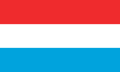
Address icon Hauptstadt: Luxemburg
Continent icon Kontinent: Europe
Language icon Sprache: Luxembourgish, German, French

Population icon Bevölkerung: 562 958
Surface icon Oberfläche (km2): 2 586
Surface icon Oberfläche (sq mi): 998

Weitere Informationen

Currency icon Währung: Euro € (EUR)
ISO Code icon ISO Code: LU
Domain Extension icon Domain-Erweiterung: .lu
Phone icon Aufrufen von Code: +352
Clock icon Uhrzeit (MEZ): UTC+01:00
Clock icon Uhrzeit (MESZ): UTC+02:00

Website

Website icon Official Website: Etat.lu

Extra Links

Soziale Medien & Nachrichten

Coin icon Coins: 11
Exchange icon Börsen: 2
Wallets icon Wallets: 2
Total icon Total: 15

Rangliste

Overall Rank icon Gesamtrang: 64
Rank Per Capita icon Rang Pro-Kopf: 26

Blockchain-Übersicht

# Name Kategorie

Häufig gestellte Fragen

Es gibt 11 Coins in Luxemburg.
Es gibt 2 in Luxemburg.
Es gibt 15 Blockchain-Entitäten in Luxemburg.
Luxemburg rangiert 64 basierend auf der Gesamtzahl der dort ansässigen Blockchain-Entitäten.
Basierend auf der Gesamtzahl der Blockchain-Entitäten belegt Luxemburg den Rang 26 pro Kopf.
In Luxemburg sprechen die Menschen: Luxembourgish, German, French
Die in Luxemburg verwendete Währung ist Euro € (EUR).
Die Hauptstadt von Luxemburg ist Luxemburg.
Luxemburg befindet sich in Europe.
The population of Luxemburg is around 562 958.
Luxemburg hat eine Zeitzone zwischen UTC+01:00 und UTC+02:00.
The 2-letter ISO code of Luxemburg is lu.
Luxemburg hat die Domänenerweiterung .lu verwendet.
Die Telefondurchwahl von Luxemburg ist +352.

Description

Disclaimer: This overview of cryptocurrency regulations in Luxembourg is provided for informational purposes only and does not constitute legal or financial advice. Regulatory frameworks evolve continuously, and readers should consult qualified legal professionals and official government sources for guidance specific to their situation.

Legal Classification & Regulatory Framework

Cryptocurrency Status

Luxembourg does not treat cryptocurrencies as legal tender, but they are fully legal to hold, trade, and use. The country has taken a progressive, structured approach through a series of four Blockchain Laws enacted between 2019 and 2024. Blockchain Law I (2019) recognized distributed ledger technology as legally equivalent to traditional systems for securities registration and transfer. Subsequent laws expanded this scope: Blockchain Law II (2021) broadened access to DLT-based securities issuance, Blockchain Law III (2023) implemented the EU DLT Pilot Regime, and Blockchain Law IV (December 2024) introduced a „control agent“ role for DLT-issued securities, extended the framework to equity securities and tokenized physical assets, and enabled smart contract-based automated payments.

Since 30 December 2024, the EU Markets in Crypto-Assets Regulation (MiCA) provides the primary classification framework, dividing crypto-assets into asset-referenced tokens, electronic money tokens, and other crypto-assets including utility tokens. Crypto-assets that have characteristics of transferable securities continue to fall under existing MiFID II and Prospectus Regulation frameworks.

Tax Treatment

Luxembourg has no dedicated crypto tax legislation. Instead, crypto-assets are taxed under general tax principles as outlined in a circular issued in July 2018. For individuals, capital gains on cryptocurrency held longer than six months are exempt from income tax, provided the activity is not professional in nature. Gains on assets held less than six months are taxable as miscellaneous income at progressive rates up to 42%, though annual speculative gains below EUR 500 are exempt. Professional trading is treated as commercial income at the same progressive rates. Mining income is not taxed upon receipt but becomes taxable when the mined assets are disposed of. There is no individual wealth tax on crypto holdings.

For businesses, the combined corporate tax rate in Luxembourg City is approximately 23.87%, consisting of a 17.12% corporate income tax (including solidarity surtax) and a 6.75% municipal business tax. Corporate entities are subject to a net wealth tax of 0.5% on the fair market value of crypto holdings. Cryptocurrency-to-fiat exchanges are exempt from VAT, consistent with the EU Court of Justice ruling in the Hedqvist case.

Starting 1 January 2026, Luxembourg will implement DAC8 reporting requirements under Draft Law 8592, requiring crypto-asset service providers to register and report crypto transactions, with the first cross-border data exchanges scheduled for September 2027.

Regulatory Oversight

The Commission de Surveillance du Secteur Financier (CSSF) is Luxembourg’s sole competent authority for crypto-asset regulation. The CSSF handles CASP authorization under MiCA, AML/CFT supervision, fund supervision involving crypto exposure, and enforcement. It has full supervisory and investigative powers including on-site inspections and administrative sanctions. The CSSF also operates an Innovation Hub that provides guidance for fintech businesses navigating the regulatory landscape.

Business Environment

Banking Relationships

Luxembourg’s established financial sector provides strong infrastructure for crypto businesses. Standard Chartered launched a Luxembourg entity in January 2025 as its EU regulatory entry point for digital asset custody, initially covering Bitcoin and Ethereum. Clearstream (Deutsche Borse) operates crypto-related services from Luxembourg, leveraging the existing fund infrastructure. The country’s investment fund industry, the second largest globally after the United States, has become increasingly open to digital assets.

In a notable signal of institutional acceptance, Luxembourg’s Intergenerational Sovereign Wealth Fund (FSIL) allocated a portion of its portfolio to Bitcoin through regulated Bitcoin ETFs, with its revised investment policy allowing up to 15% allocation to alternative investments including digital assets. Luxembourg is also piloting a blockchain-based treasury certificate supervised by the CSSF and the Central Bank, testing DLT for short-term sovereign debt issuance.

Licensing Requirements

Under MiCA, the CSSF issues CASP authorizations with minimum capital requirements tiered by service type: EUR 50,000 for order execution, transfer, advisory, and portfolio management; EUR 125,000 for custody and exchange services; and EUR 150,000 for trading platform operation. The application process involves an initial CSSF meeting, detailed business plan submission, electronic filing, and examination. Applicants must demonstrate governance fitness, technical and operational resilience (including DORA compliance), and adequate prudential resources.

The previous national VASP registration regime was officially repealed by the Law of 6 February 2025. Existing VASPs registered before 30 December 2024 benefit from a transitional period until 1 July 2026, by which time they must hold full CASP authorization or cease operations. Major global platforms including Bitstamp (licensed May 2025) and Coinbase have obtained CASP authorization through Luxembourg, using it as their EU regulatory hub. Licensed CASPs can passport their services across all EU and EEA member states.

Innovation Support

The Luxembourg House of Financial Technology (LHoFT) serves as the country’s primary fintech innovation hub, a public-private partnership that connects financial institutions, startups, research institutions, and regulators. It offers incubation, co-working spaces, and a soft-landing platform for international fintechs entering the market.

The Luxembourg Blockchain Lab, a joint initiative of Infrachain, LHoFT, the Luxembourg Institute of Science and Technology, and the University of Luxembourg, focuses on knowledge dissemination, education, talent attraction, and helping industries find DLT solutions. It runs a call for projects offering six to ten months of support and prioritizes sustainable development goals.

Luxembourg’s broader digital strategy includes events like Luxembourg Blockchain Week and organizations such as the Luxembourg House of Web3, contributing to an active ecosystem for blockchain innovation and talent development.

Market Characteristics

Adoption Patterns

Luxembourg’s crypto adoption is heavily institutional, shaped by the country’s position as a global financial center. The fund industry is a primary driver: the CSSF’s February 2026 FAQ update provided the first clear pathway for UCITS funds to include crypto exposure up to 10% of net asset value through transferable securities such as ETPs and ETFs. Retail alternative investment funds may invest directly or indirectly up to 10%, while professional and institutional funds may hold higher allocations with CSSF approval. Because Luxembourg-domiciled UCITS are distributed across the EU via passporting, these clarifications effectively open regulated crypto exposure to retail investors continent-wide.

Industry Focus

Luxembourg’s crypto industry centers on institutional-grade services: fund structuring, custody, tokenization of securities and real assets, and compliant exchange operations. The four Blockchain Laws have made the jurisdiction particularly attractive for security token issuance and DLT-based financial instruments. The European Investment Bank has used Luxembourg’s framework for DLT-based bond issuances demonstrating instant settlement. The CSSF has also registered Luxembourg’s first Bitcoin-focused alternative investment fund manager, further establishing the country as a hub for crypto-focused fund management.

Regulatory Evolution

Luxembourg’s approach has been methodical, building legal infrastructure through successive blockchain laws while aligning with EU harmonization. The Law of 6 February 2025 completed the MiCA implementation by designating the CSSF as sole competent authority, repealing the national VASP regime, and establishing the framework for CASP authorization with full supervisory powers.

In FATF’s mutual evaluation published in September 2023, Luxembourg was rated compliant or largely compliant on 39 of 40 FATF Recommendations, reflecting a high level of technical compliance. The evaluation praised the quality of financial intelligence produced by Luxembourg’s FIU and the CSSF’s well-informed understanding of money laundering and terrorist financing risks. Areas identified for improvement include strengthening prosecution of complex money laundering cases and enhancing non-financial sector supervision. Luxembourg published an updated National Risk Assessment in May 2025.

With progressive legislation, a world-class fund industry infrastructure, major global platforms choosing it as their EU base, and a sovereign wealth fund embracing digital assets, Luxembourg has positioned itself as one of Europe’s premier jurisdictions for regulated crypto-asset services.


For Current Information:

Landkarte

Blockchain Unternehmen

Other Countries