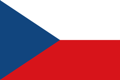
Land Informatie
 Hoofdstad: Prag
 Continent: Europe
 Taal: Czech
 Bevolking: 10 541 466
 Oppervlakte (km2): 78 865
Oppervlakte (sq mi): 30 450
Oppervlakte (km2): 78 865
Oppervlakte (sq mi): 30 450 Extra Informatie
 Valuta: Czech koruna Kč (CZK)
 ISO Code: CZ
 Domain Extensie: .cz
 Telefonie Landcodes: +420
 Tijd (CET): UTC+01:00
Tijd (CEST): UTC+02:00
Tijd (CET): UTC+01:00
Tijd (CEST): UTC+02:00Website
 Official Website: Vlada.cz
Extra Links
Social Media & Nieuws
 Coins: 21
 Exchanges: 3
 Wallets: 2
 Bedrijven: 1
 Totaal: 27
Ranking
 Algemene Rang: 51
 Rang Per Inwoner: 64
Blockchain overzicht
Categorie:
| Naam | Categorie |
|---|
Veelgestelde vragen
Description
Disclaimer: The regulatory information provided below is for general informational purposes only and may not reflect the most current legal developments. Cryptocurrency regulations are rapidly evolving and can change frequently. This information should not be considered legal or tax advice. Before making any business or investment decisions, please consult with qualified legal, tax, or financial professionals familiar with your specific jurisdiction and circumstances. Always verify current regulations with official government sources and regulatory bodies.
Legal Classification & Regulatory Framework
Cryptocurrency Status
The Czech Republic maintains one of Europe’s most progressive and clearly defined approaches to cryptocurrency classification. Czech authorities classify cryptocurrencies as intangible assets or virtual assets rather than legal tender or securities. The Czech National Bank (ČNB) has consistently maintained that cryptocurrencies do not pose a threat to the traditional banking system and are accepted as a legitimate payment method, though they do not fall under the Payment Systems Act.
Under Czech law, virtual currencies are treated as commodities for regulatory purposes, meaning they are subject to value-added tax (VAT) considerations. The legal framework distinguishes between different types of digital assets: crypto-assets (covered under EU MiCA regulation), virtual assets (covered under anti-money laundering legislation), and cryptocurrencies used in everyday transactions. This nuanced approach allows for regulatory flexibility while providing legal certainty for market participants.
With the full implementation of the European Union’s Markets in Crypto-Assets Regulation (MiCA), the Czech Republic has aligned its cryptocurrency framework with broader EU standards. This harmonization provides Czech-based crypto businesses with the ability to passport their services across all EU member states under a unified regulatory regime.
Tax Treatment
The Czech Republic has introduced notably favorable tax treatment for cryptocurrency investors, positioning itself among the most crypto-friendly jurisdictions in Europe. The Digitalization of the Financial Markets Act, signed into law by President Petr Pavel, established significant tax advantages for long-term cryptocurrency holders.
For individual investors, cryptocurrencies held for more than three years are exempt from capital gains taxation upon sale. This time-test provision mirrors the tax treatment for long-term securities holdings in the country, encouraging investors to view digital assets as long-term investments rather than speculative instruments. Additionally, individual transactions below 100,000 CZK (approximately €4,000) annually do not need to be reported, significantly reducing administrative burdens for casual users and small-scale traders.
For those who do not meet the exemption criteria, cryptocurrency gains are taxed as part of general income. Individual investors are subject to progressive personal income tax rates, while corporate entities face corporate income tax on crypto-related profits. The standard corporate income tax rate applies to business activities involving cryptocurrencies. It is important to note that the tax exemptions apply exclusively to individual investors and non-business activities; commercial crypto operations remain subject to standard business taxation.
The Czech tax framework also applies retroactively in certain circumstances. Digital assets acquired before the new legislation took effect may still qualify for tax exemptions if sold under the specified conditions in subsequent tax years, provided the three-year holding requirement is met.
Regulatory Oversight
Cryptocurrency regulation in the Czech Republic involves a collaborative framework between multiple regulatory bodies. The Czech National Bank (Česká národní banka, ČNB) serves as the primary competent authority for crypto-asset markets under the MiCA framework. The ČNB is responsible for receiving applications, issuing licenses to crypto-asset service providers (CASPs), and exercising supervisory powers over the broader crypto-asset market.
The Financial Analytical Office (Finanční analytický úřad, FAÚ) serves as the Czech financial intelligence unit and maintains supervisory powers over anti-money laundering (AML) and counter-terrorism financing (CTF) compliance. All crypto service providers must implement robust AML/KYC policies and report suspicious activities to the FAÚ. The FAÚ also oversees virtual asset service providers (VASPs) that fall outside the scope of MiCA regulation, including businesses offering services related to non-fungible tokens (NFTs).
The regulatory framework is supported by several key pieces of legislation, including the Act on Selected Measures against Legitimisation of Proceeds of Crime and Financing of Terrorism (AML Act), the Digital Finance Act (Act No. 31/2025 Coll.), and the directly applicable EU MiCA Regulation. The Czech Republic has also implemented the Digital Operational Resilience Act (DORA), which establishes requirements for operational resilience in financial services, including crypto-asset operations.
Business Environment
Banking Relationships
The Czech Republic has addressed one of the most significant challenges facing cryptocurrency businesses globally: access to traditional banking services. Under the Digitalization of the Financial Markets Act, cryptocurrency companies and their investors have a legally guaranteed right to open bank accounts without restriction. This provision eliminates the banking access issues that have historically plagued crypto businesses in many jurisdictions.
Czech banks have generally adopted a pragmatic approach to cryptocurrency businesses, particularly those that demonstrate robust compliance frameworks and transparent operations. The country’s well-developed financial infrastructure facilitates integration between crypto businesses and the broader financial ecosystem. Licensed crypto-asset service providers operating under MiCA regulations are increasingly viewed as legitimate financial market participants, which has improved their standing with traditional banking institutions.
The Czech Republic’s reputation as a stable, non-offshore EU jurisdiction enhances credibility with banking partners. Companies holding Czech cryptocurrency licenses are perceived as reliable entities operating within a transparent regulatory framework, which facilitates banking relationships both domestically and internationally.
Licensing Requirements
Following the implementation of MiCA, all crypto-asset service providers operating in the Czech Republic must obtain authorization from the Czech National Bank. The licensing regime categorizes CASPs into different classes based on the services they provide, with corresponding capital requirements:
Class 1 (Basic Services): Providers offering order execution, transmission, token placement, investment advice, portfolio management, or asset transfers without custody services require minimum capital of €50,000.
Class 2 (Custodial Services): Providers offering custody and administration of crypto-assets, exchange services, or operating trading platforms require minimum capital of €125,000.
Class 3 (Full Service): Providers offering the complete range of crypto-asset services require minimum capital of €150,000.
Applicants must demonstrate fit-and-proper management, implement comprehensive AML/CFT procedures, maintain adequate organizational structures, and appoint a dedicated compliance officer. The application process involves detailed documentation including business plans, financial projections, governance frameworks, and technical specifications of intended services.
Transitional provisions allow entities that were providing crypto services under the previous trade license regime to continue operations while their MiCA applications are processed, providing business continuity during the regulatory transition. Licensed CASPs benefit from EU passporting rights, enabling them to offer services across all EU member states under their Czech authorization.
Innovation Support
The Czech Republic has cultivated a vibrant blockchain and cryptocurrency ecosystem supported by both government initiatives and private sector innovation. The ČNB operates a FinTech contact point that provides an open channel of communication between the regulator and cryptocurrency companies, offering guidance and clarification on regulatory matters.
The Blockchain Connect Association (Czech Alliance), founded with participation from major technology and professional services firms, actively promotes the adoption and development of blockchain technology across various sectors of the Czech economy. The association focuses on implementing blockchain solutions in real estate, finance, healthcare, automotive, and food industries.
Prague is home to Paralelni Polis, a unique center dedicated to crypto technology development that operates as a hub for hackathons, international crypto events, and educational conferences. The center includes a co-working space for IT experts and notably operates a café that exclusively accepts cryptocurrency payments. The associated Institute of Cryptoanarchy promotes the ideas of decentralized economy and widespread use of blockchain technologies.
SatoshiLabs Group, the Prague-based company behind the Trezor hardware wallet (the world’s first cryptocurrency hardware wallet), exemplifies the country’s strength in crypto security and infrastructure development. The presence of such globally recognized companies demonstrates the Czech Republic’s capacity to nurture world-class blockchain innovation.
Market Characteristics
Adoption Patterns
The Czech Republic exhibits notably high cryptocurrency adoption rates, with Prague consistently ranking among Europe’s most crypto-friendly cities. The capital features an extensive network of businesses accepting cryptocurrency payments, ranging from cafes and restaurants to hotels, electronics retailers, and professional services. The famous online electronics retailer Alza was among the early adopters of Bitcoin payments in the country.
Consumer adoption has been facilitated by widespread availability of Bitcoin ATMs in major cities including Prague, Brno, Pilsen, Olomouc, and others. Payment systems including GoPay (often referred to as the Czech PayPal) have integrated cryptocurrency payment options, further normalizing digital currency use in everyday transactions.
Czech citizens have historically demonstrated openness to alternative financial instruments, a cultural factor attributed partly to experiences with monetary instability in the region’s history. This has contributed to relatively quick adoption of private, decentralized currencies. The strong technical education tradition in the country, with institutions like the Czech Technical University in Prague (the oldest non-military technical university in Europe), has produced a skilled workforce that supports the growing crypto and blockchain sector.
Industry Focus
The Czech cryptocurrency industry demonstrates particular strengths in hardware security, payment infrastructure, and blockchain development services. Prague-based companies have achieved global recognition in cryptocurrency hardware wallet development, exchange services, and fintech solutions.
The country serves as an attractive location for cryptocurrency exchanges and trading platforms, wallet providers, blockchain development companies, and fintech startups combining traditional finance with crypto services. The combination of favorable regulation, access to technical talent, and supportive business environment has attracted numerous blockchain firms including incubators, development studios, and financial service providers.
The Czech Republic’s position within the European Union, combined with its relatively straightforward regulatory requirements and now-established MiCA compliance framework, makes it an attractive base for companies seeking EU market access. The ability to passport services across the entire European Economic Area from a Czech license provides significant strategic value for expanding businesses.
Regulatory Evolution
The Czech regulatory approach to cryptocurrency has evolved from one of the most permissive frameworks in Europe to a more structured regime aligned with EU-wide standards. The country was among the early European pioneers of reasonable cryptocurrency regulation, with the Czech National Bank issuing guidance as early as 2015 that recognized cryptocurrencies as a legitimate payment method without posing dangers to the traditional banking system.
The implementation of MiCA represents a significant evolution, bringing crypto businesses into the supervised financial sector while maintaining the country’s reputation for pragmatic, innovation-friendly regulation. The Czech Republic has not imposed restrictions beyond those required by EU law, and has utilized available flexibilities to support the crypto industry, including extended transition periods for existing operators.
Looking forward, the regulatory trajectory appears favorable for the cryptocurrency industry. Government statements emphasize support for modern technologies, and the unanimous parliamentary approval of crypto-friendly tax legislation indicates broad political support for the sector. The Czech National Bank has even explored the possibility of including Bitcoin in its reserve assets, signaling institutional openness to digital assets at the highest levels.
The alignment with MiCA ensures regulatory stability and predictability, while the favorable tax treatment and guaranteed banking access position the Czech Republic as an increasingly attractive jurisdiction for cryptocurrency businesses and investors seeking a compliant, stable European base of operations.
For Current Information:
- Czech National Bank (ČNB) – Primary regulator for crypto-assets: https://www.cnb.cz/en/
- ČNB Crypto-Assets Regulation Page: https://www.cnb.cz/en/supervision-financial-market/legislation/crypto-assets/
- Financial Analytical Office (FAÚ) – AML supervision: https://fau.gov.cz/en
- Ministry of Finance of the Czech Republic: https://www.mfcr.cz/en
- Czech Trade Licensing Office: https://www.rzp.cz/
- EU MiCA Regulation (EUR-Lex): https://eur-lex.europa.eu/eli/reg/2023/1114/oj
Landkaart
Crypto Nieuws



Blockchain Bedrijven



Other Countries

Artikelen over crypto en blockchain

Waarom is Quantumcomputing een Risico voor de Cryptowereld?
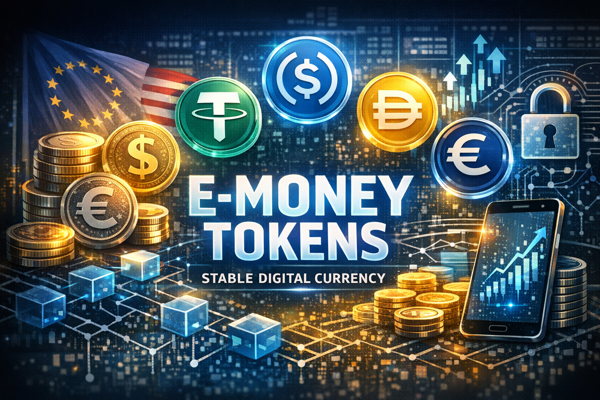
Wat zijn E-Money Tokens?

Wat is BIP‑444?

Wat is een Hash in Proof of Work (PoW)?

Wat is Base (Ethereum L2)?
Waarom is Quantumcomputing een Risico voor de Cryptowereld?
Wat zijn E-Money Tokens?
Wat is BIP‑444?
Persberichten en bijdragen

Xgram.io Lanceert Private ETH naar XMR Swaps

INVESTING YACHTS Lanceert RWA Jachtverhuurmodel