 English
  Nederlands
  Deutsch
A Dutch auction is a unique pricing method that starts with a high offer price and lowers it until buyers accept, making it a valuable tool in the world of crypto projects. This descending-price auction contrasts with traditional auctions, where prices rise through competitive bidding.
Dutch auctions are increasingly being used in the crypto space for token sales, decentralized finance (DeFi) protocols, and NFT (non-fungible token) drops, offering a more transparent and efficient method for pricing and distributing assets.
How It Works in Crypto
In the crypto world, Dutch auctions are typically used in token sales, Initial Coin Offerings (ICOs), Initial DEX Offerings (IDOs), and NFT launches. Here’s how it typically works:
- Token Sales (ICOs & IDOs)
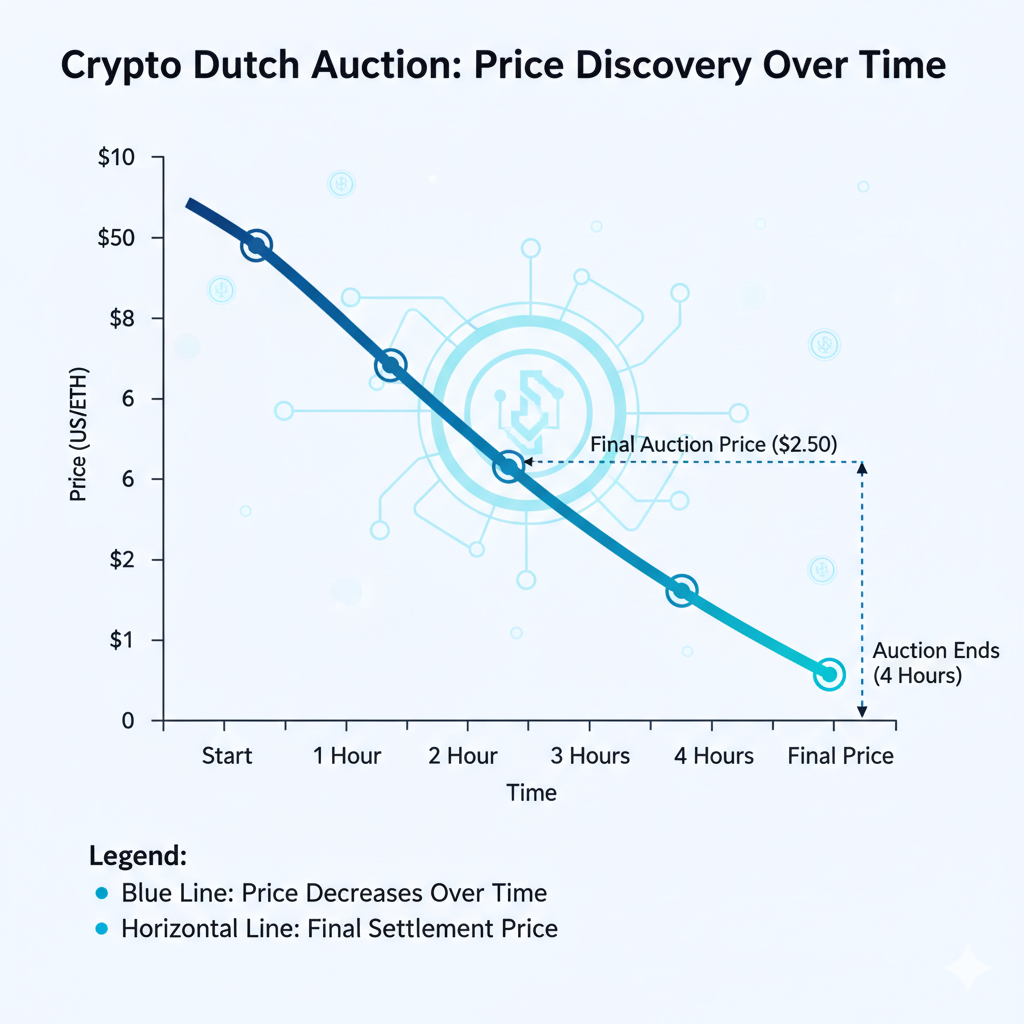
In a Dutch auction, the crypto project starts by setting a high price for its tokens. The price gradually decreases over time, and investors can place bids for the number of tokens they are willing to purchase at specific prices. The auction continues until a predefined time limit is reached, or until the tokens are sold out.
Once the auction concludes, the price at which the last bid is accepted becomes the final price, and all successful bidders pay this same price, whether they bid higher or lower. This ensures fairness and transparency, as all participants pay the same price.
For example, a DeFi project may auction its native tokens using a Dutch auction. If the auction starts at $7 per token and the price decreases over a series of hours or days, the final price could end up at $2.50 per token. Everyone who placed a bid will pay $2.50, no matter what their original bid was.
- NFT Drops
Similarly, Dutch auctions are increasingly being used for NFT launches. Artists and creators may auction their NFTs in a way where the price starts high and drops incrementally. Buyers place bids at the price they’re willing to pay for the NFT, and at the end of the auction, the price at which the last bid is accepted becomes the final sale price.
For instance, an artist could offer 10 NFTs through a Dutch auction, starting at 10 ETH and lowering the price gradually over several hours. The last successful bidder could end up paying 2 ETH for the NFT, while those who bid earlier at higher prices would pay the same price.
Why is the Dutch Auction Method Popular in Crypto?
- Fair Pricing
Dutch auctions offer a transparent and fair method of price discovery. All participants pay the same price, which is based on real market demand rather than speculation or overhyped bidding wars. This method eliminates the issue of “winner’s curse,” where some buyers in traditional methods may end up overpaying for tokens or assets.
- Prevents Overpricing
The main advantage of using Dutch auctions in crypto projects, especially during ICOs or token sales, is the ability to prevent overpriced token launches. In traditional fundraising, token prices can be inflated by excessive speculation or by institutional investors controlling the pricing. Dutch auctions ensure the price is set according to actual demand, benefiting both the project and the investors.
- Efficient Distribution
For large crypto projects or NFT drops, Dutch auctions are a more efficient way to distribute assets. Instead of having to rely on multiple rounds of bidding or whitelist allocation, the Dutch auction method can distribute tokens or NFTs quickly and fairly, without the need for middlemen or underwriters.
- Access for Retail Investors
Dutch auctions democratize the ability for retail investors to participate in token sales or NFT drops. In traditional methods, retail investors are often shut out by large institutional buyers or token allocators. Dutch auctions allow anyone with a wallet to participate and potentially buy tokens at a fair price.
Challenges in Crypto Dutch Auctions
While the Dutch auction method offers numerous advantages, there are also challenges that crypto projects should consider:
- Price Volatility
In the crypto space, price volatility can be especially pronounced. If investors are inexperienced or overestimate demand, they may end up bidding too high in the early stages of the auction. This can lead to price corrections after the auction concludes, as buyers who paid too much may quickly attempt to sell their tokens, driving prices down.
- Market Sentiment
Crypto markets are highly driven by sentiment. If there is a lack of trust in a particular project or a failure to communicate the value of a token effectively, the auction could end with a price far lower than anticipated. This can be challenging for projects that need to raise a certain amount of funds to continue development.
- Smart Contract Risk
In some cases, smart contract vulnerabilities in the auction process could cause issues, such as unintentional price manipulation or issues with transaction processing. This requires projects to ensure their contracts are thoroughly audited and secure before conducting a Dutch auction.
- Institutional Influence
While Dutch auctions can help democratize the buying process, larger institutional investors or whales can still dominate the bidding if they have more capital to deploy. This can lead to some projects still experiencing a concentration of assets in the hands of a few large buyers.
Real-World Examples in Crypto
- Google’s Use of Dutch Auctions
While not directly in the crypto space, Google’s 2004 IPO is often cited as a success in the world of Dutch auctions. The lessons from this traditional Dutch auction were adopted by many blockchain projects, particularly those seeking more transparent and fair pricing methods for their tokens.
- Tezos ICO (2017)
Tezos raised $232 million in its 2017 ICO to fund a self-amending blockchain with on-chain governance. The ICO used a Dutch auction model, where the token price gradually decreased based on demand, ensuring a fair and transparent price discovery process.
- NFT Drops
Many NFT creators and marketplaces, like CryptoPunks and Bored Ape Yacht Club, have experimented with Dutch auctions for their tokenized art. These auctions allow collectors to place bids at various price points, ultimately paying the final price where the auction ends.
Fair Price Discovery
Dutch auctions offer a transparent, fair, and efficient method of pricing in the crypto space, particularly for ICOs, IDOs, token sales, and NFT drops. They enable a more democratic approach to fundraising and asset distribution, allowing for broader retail participation and helping projects avoid inflated prices. However, there are risks, such as price volatility and institutional dominance, that need to be carefully considered.
As crypto projects continue to evolve, the Dutch auction method is likely to remain an important tool in facilitating fair price discovery and fostering transparency in the blockchain ecosystem. Whether for tokens or NFTs, this auction method is a valuable innovation that continues to shape the future of crypto markets.
 Stay Ahead in Crypto