
 English
  Nederlands
  Deutsch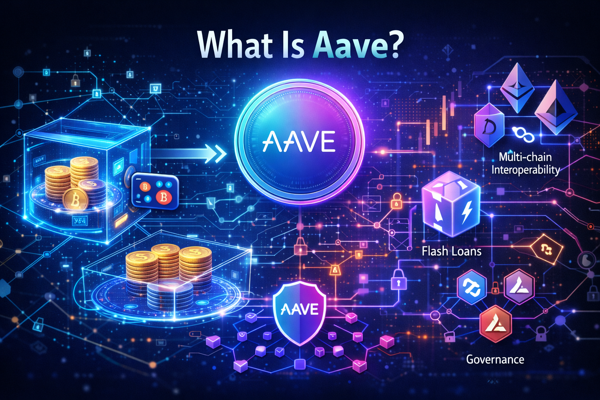
Cryptocurrency has brought about a transformative change in how people interact with financial systems. One of the key innovations in this space is Decentralized Finance (DeFi), which eliminates traditional intermediaries like banks and offers new opportunities for lending, borrowing, and earning interest. Among the leaders of this revolution is Aave, a decentralized lending protocol that operates on blockchain technology.
DeFi Lending Simplified
Aave is a decentralized, non-custodial finance protocol that allows users to lend and borrow cryptocurrencies directly on the blockchain, eliminating the need for banks or other centralized financial institutions. Launched in 2017 as ETHLend, it quickly evolved into Aave in 2020 with a focus on liquidity pools, which helped improve the efficiency and accessibility of lending and borrowing in DeFi. Today, Aave is one of the largest DeFi protocols in terms of Total Value Locked (TVL), which represents the total amount of cryptocurrency locked in the platform’s liquidity pools.
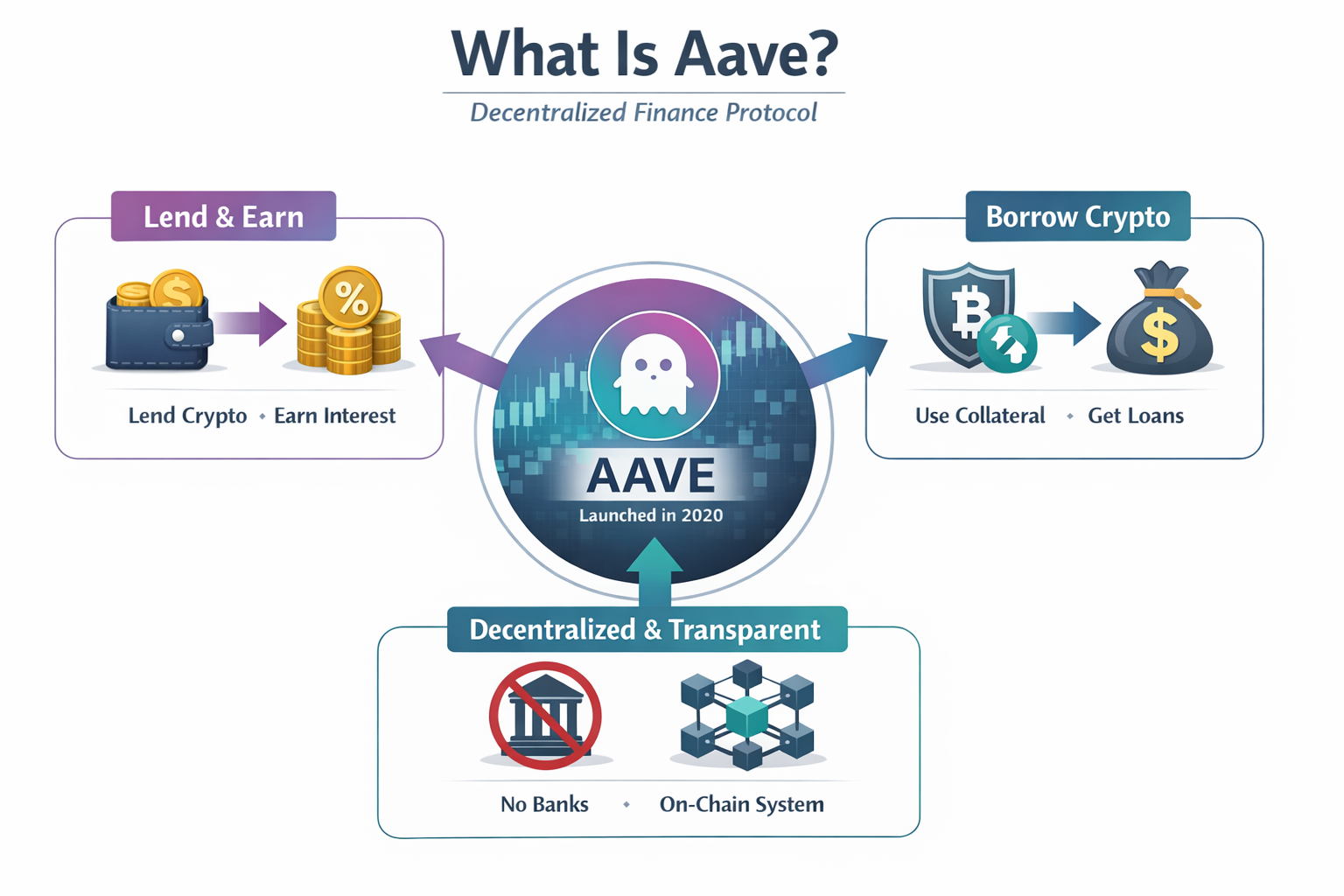
In simple terms, Aave allows users to:
- Lend their cryptocurrency to earn interest.
- Borrow cryptocurrencies using their assets as collateral.
- Participate in a decentralized, transparent system without relying on traditional banks.
How Aave Works: Lending and Borrowing
The Aave protocol uses smart contracts, which are self-executing pieces of code, to automate and manage lending and borrowing activities. Here’s how it works:
Lending (Supplying) Assets
When users lend their cryptocurrency to Aave, they deposit assets into a liquidity pool, where these funds are made available for borrowers. The liquidity pool is managed algorithmically, meaning that interest rates are automatically adjusted based on supply and demand. Lenders earn interest on their deposited assets, and the process is completely automated by smart contracts.
Key features of lending on Aave:
- Interest Accrual: Lenders earn interest on their assets automatically. The interest is not fixed and can vary depending on the utilization rate of the pool (i.e., how much of the pool is being borrowed).
- Liquidity Pools: Lenders contribute to liquidity pools that are available for borrowers.
- Withdraw Anytime: Lenders can withdraw their assets, along with the accrued interest, at any time, as long as the liquidity pool has sufficient funds.
Borrowing Assets
To borrow from Aave, users must provide collateral that exceeds the value of the loan they wish to take. This concept is called overcollateralization. For instance, if you want to borrow $100 worth of cryptocurrency, you might need to supply $150 worth of collateral.
Once the collateral is supplied, the borrower can borrow a percentage of it, depending on the Loan-to-Value (LTV) ratio for that particular asset. If the collateral’s value falls too low, it could be liquidated to cover the loan.
Key points about borrowing:
- Overcollateralization: Borrowers need to provide more value in collateral than the loan they wish to borrow.
- LTV Ratio: This ratio determines how much you can borrow against your collateral. For example, if the LTV for a specific asset is 75%, you can borrow up to 75% of its value.
Key Features of Aave
Aave offers several features that set it apart from other DeFi protocols. These innovations have helped it become a leader in the space.
1. Liquidity Pools
Aave replaces traditional lending models with liquidity pools, where users pool their assets together to create a large fund from which borrowers can draw.
- Automatic Interest Rate Adjustment: Interest rates for lenders and borrowers are automatically adjusted based on demand and supply in the pool.
- No Need for Peer-to-Peer Matching: Unlike traditional peer-to-peer lending, where individual borrowers and lenders must be matched, Aave pools funds together for increased liquidity.
2. Variable and Stable Interest Rates
Aave offers both variable and stable interest rates for borrowers. This flexibility gives users the ability to choose a rate structure that best suits their needs.
- Variable Rates: These change dynamically based on the supply and demand for the asset being borrowed. When demand is high, interest rates increase.
- Stable Rates: These provide borrowers with a more predictable interest rate, offering stability even if demand fluctuates.
3. Flash Loans
One of the most innovative features of Aave is its flash loans, which allow users to borrow funds without collateral, provided the loan is repaid within the same transaction block. This unique feature enables complex financial strategies, such as arbitrage and refinancing, to be executed instantly and with minimal risk.
Key facts about flash loans:
- No Collateral Needed: Flash loans do not require any collateral.
- Instant Loans: They must be borrowed and repaid within the same blockchain transaction.
- Advanced Use Cases: They are mainly used for arbitrage or liquidity optimization.
4. Multi-Chain Deployment
Aave operates on multiple blockchain networks, including Ethereum, Polygon, Avalanche, and others, which allows for reduced transaction costs and expanded liquidity options.
- Ethereum and Beyond: While originally built on Ethereum, Aave’s expansion to other networks increases accessibility.
- Lower Transaction Fees: Multi-chain deployment helps users take advantage of lower gas fees on networks like Polygon and Avalanche.
The AAVE Token: Governance and Utility
The AAVE token is the native governance token of the Aave protocol. It plays an essential role in the protocol’s decision-making process and offers several benefits to its holders.
Key Uses of AAVE Token
- Governance Voting: AAVE token holders can vote on protocol upgrades and changes, shaping the future of the platform.
- Staking: AAVE can be staked in the Safety Module, providing a backstop for the protocol in case of insolvency. In return, stakers earn additional AAVE tokens.
- Fee Discounts: Borrowers using AAVE as collateral may receive discounts on borrowing fees.
AAVE holders are also involved in the governance of the protocol, allowing them to participate in decision-making and ensuring that the protocol remains decentralized.
Risks and Considerations
While Aave offers significant benefits, there are also risks involved in using the platform, particularly due to the volatile nature of cryptocurrencies and the complexities of smart contract technology.
1. Market Volatility
Crypto markets are volatile, and asset prices can fluctuate significantly. If the value of your collateral falls too much, it could lead to liquidation.
2. Smart Contract Risk
Although Aave’s smart contracts have undergone extensive audits, there is always the risk of bugs or vulnerabilities in the code. This could lead to potential loss of funds if a vulnerability is exploited.
3. Liquidation Risk
Since Aave operates on overcollateralized loans, borrowers must always ensure that their collateral exceeds the value of the loan. If the value of their collateral drops, their assets could be liquidated to cover the debt.
Why Aave Matters in DeFi
Aave is one of the most significant DeFi protocols because it brings several important innovations to decentralized finance. It allows users to access liquidity without relying on traditional financial institutions and introduces new concepts like flash loans, governance through AAVE tokens, and multi-chain interoperability. As DeFi continues to grow, Aave’s influence will likely increase, especially with its expansion into multiple blockchain networks and its adoption by institutional players.
Key Points:
- Decentralized Finance: Aave empowers users to lend and borrow cryptocurrencies without intermediaries.
- Innovative Features: Flash loans, stable and variable interest rates, and liquidity pools set Aave apart from traditional platforms.
- Governance: AAVE token holders have a say in protocol changes, ensuring decentralized decision-making.
- Security: Multiple audits and a Safety Module ensure the platform’s security.
DeFi Revolutionized
Aave has become a cornerstone of the DeFi ecosystem, providing innovative solutions for decentralized lending and borrowing. With its liquidity pools, unique features like flash loans, and decentralized governance through the AAVE token, it represents the future of finance. As more users and institutions turn to decentralized platforms, Aave’s ability to operate securely, flexibly, and transparently places it at the forefront of the DeFi revolution. Whether you’re a seasoned crypto enthusiast or new to the space, understanding Aave’s mechanics and offerings is essential for anyone looking to participate in the decentralized economy.