 English
  Nederlands
  Deutsch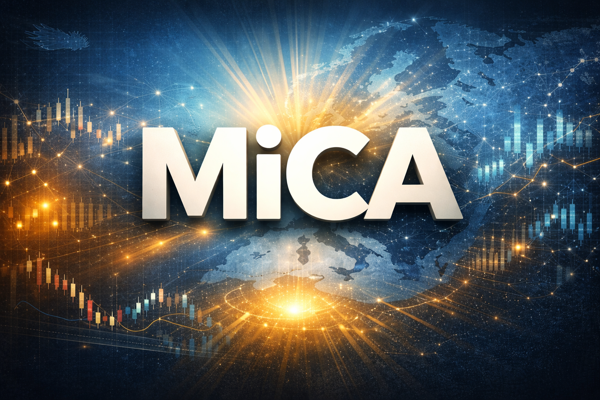
The Markets in Crypto-Assets Regulation (MiCA) is now fully enforceable across the European Union as of December 30, 2024. MiCA sets a unified legal framework for crypto-assets and service providers in all EU Member States. The regulation aims to improve market stability, protect consumers, and support innovation across the digital finance sector.
It introduces new licensing, disclosure, and supervision requirements for all companies that issue or provide services linked to crypto-assets. MiCA applies to a wide range of activities, including trading, custody, token issuance, and transfer services. The law also establishes firm rules for stablecoins, especially asset-referenced and e-money tokens.
What Does MiCA Aim to Achieve?
MiCA is designed to reduce market risk and create a safer environment for users and investors in the EU. It helps close regulatory gaps that previously existed in the crypto sector. Additionally, it allows licensed providers to operate across borders without reapplying in every country.
The regulation increases transparency in crypto markets and limits harmful practices like insider trading or misleading promotions. At the same time, it creates new opportunities for businesses that meet its high standards. With MiCA in place, the EU has become the first region with a complete crypto regulatory framework.
Who Does MiCA Apply To?
MiCA applies to Crypto-Asset Service Providers (CASPs) and issuers of crypto-assets within the EU. These include exchanges, custodial wallet providers, token issuers, and crypto advisors. Any business offering crypto services to EU users must now comply with MiCA.
Entities must register with a national regulator and designate at least one director in the EU. They also need to maintain internal controls, publish disclosures, and meet governance standards. Smaller projects with a total value under €1 million may qualify for exemptions, but most fall under full regulation.
What Types of Crypto-Assets Does MiCA Cover?
MiCA classifies crypto-assets into three main categories:
- Asset-Referenced Tokens (ARTs): Stablecoins backed by multiple assets like currencies or commodities.
- Electronic Money Tokens (EMTs): Tokens linked 1:1 to a single fiat currency like the euro.
- Other Crypto-Assets: This includes utility tokens and cryptocurrencies like Bitcoin and Ethereum.
Excluded from MiCA:
- Security tokens (regulated under MiFID II)
- Non-fungible tokens (NFTs)
- Central bank digital currencies (CBDCs)
- Loyalty or limited-use tokens
Key Requirements Under MiCA
Businesses must follow strict operational, technical, and disclosure obligations:
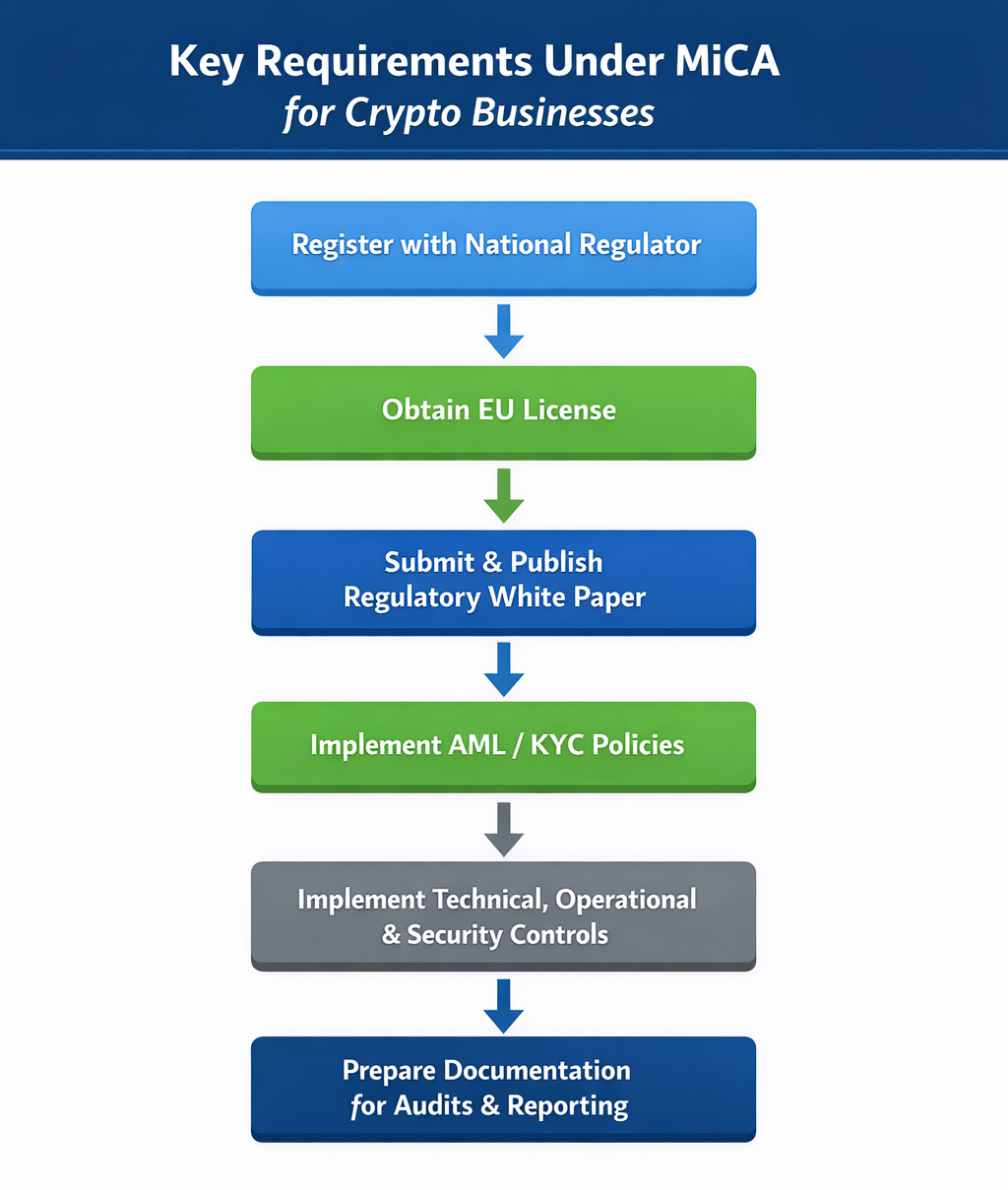
All marketing communications must be clear, accurate, and non-misleading. Regulatory authorities will monitor both content and conduct.
How Does MiCA Impact Crypto Businesses?
MiCA affects how crypto firms operate, advertise, and interact with users. Companies now need to:
- Register and obtain an EU license
- Submit white papers and policy documents
- Implement security and data controls
- Train staff and build compliance teams
- Adjust internal procedures to meet new standards
Despite added costs, MiCA allows passporting across all EU countries once approved in one. This simplifies expansion and builds trust with institutional investors and users.
Timeline and Enforcement
MiCA was published in the Official Journal of the European Union (OJEU) in June 2023. It became law immediately, but was rolled out in two phases:
- June 30, 2024: Requirements enforced for ARTs and EMTs (stablecoins)
- December 30, 2024: All remaining CASPs and issuers fall under full application
Throughout 2025, regulatory authorities oversaw the transition to MiCA and provided supplementary guidance to support implementation. Firms operating before MiCA’s enforcement were obligated to complete their compliance adjustments within the grandfathering timelines set by national competent authorities.
Penalties for Non-Compliance
Companies that do not follow MiCA face serious financial and legal consequences. These include:
- Fines of up to €700,000 for individuals
- Fines of up to €5 million or 12.5% of turnover for businesses
- Suspension or revocation of licenses
- Public warnings or bans from operating in the EU
Authorities also have the power to block specific services or freeze assets in cases of severe violations.
Benefits of MiCA for the Crypto Sector
MiCA delivers several long-term advantages to the European crypto industry:
- Legal certainty across all 27 EU countries
- Increased consumer trust due to clear protection rules
- Standardized compliance improves operational efficiency
- More institutional investment driven by regulatory clarity
- Broader EU market access via the crypto passport system
Although it raises compliance costs, MiCA creates a more mature and stable environment for crypto businesses and investors.
How to Prepare for MiCA Compliance
To comply with MiCA, businesses should:
- Conduct a gap analysis of current practices
- Create and submit regulatory white papers
- Implement or enhance AML/KYC programs
- Update internal policies, procedures, and risk controls
- Prepare documentation for audits and reporting
- Train staff on legal responsibilities under MiCA
Early action reduces disruption and improves chances of regulatory approval.
EU Crypto Overhaul
The Markets in Crypto-Assets Regulation (MiCA) marks a major shift for digital assets in the European Union. It introduces strong protections, clearer rules, and higher standards for crypto-asset activity. MiCA makes the EU the first region in the world with a complete crypto regulatory framework.
Crypto businesses must now operate under clear guidelines or risk losing access to one of the world’s largest digital markets. At the same time, MiCA creates new opportunities for licensed providers to grow safely and compete across Europe.
 Stay Ahead in Crypto