 English
  Nederlands
  Deutsch
In the world of cryptocurrencies, there’s a category called stablecoins, digital coins meant to keep a steady value instead of bouncing up and down like Bitcoin or Ethereum. Among them, USDC, short for USD Coin, is one of the most trusted and widely used.
USDC is a digital currency that’s designed to always be worth about $1 USD. That’s its whole point: to provide the convenience of crypto (fast, programmable, global) with the reliability of real money.
What Makes USDC a Stablecoin?
Stablecoins are cryptocurrencies that are tied to the value of something stable, usually a government currency like the U.S. dollar.
Here’s how USDC stands out:
-
- Pegged 1:1 to the U.S. dollar — each USDC is backed so that it’s meant to be worth exactly one U.S. dollar.
-
- Issued by Circle and originally developed together with Coinbase under something called the Centre Consortium.
-
- Unlike Bitcoin or Ethereum, USDC doesn’t aim to increase in price. Its purpose is stability.
This makes USDC useful in ways other digital currencies sometimes aren’t. It’s like having a digital dollar that you can send instantly anywhere in the world.
How USDC Works In Simple Terms
USDC works a bit like a digital version of a dollar that lives on blockchains instead of in your bank account or wallet:
1. Backing the Value
For every USDC token that exists, Circle holds one U.S. dollar (or equivalent assets) in reserve, kind of like a savings account that backs the coin’s value.
Those reserves aren’t secret. Circle publishes regular reports that show the reserves are equal to or greater than the number of USDC tokens in circulation.
2. Audit and Transparency
Third‑party auditors (independent accounting firms) regularly check Circle’s reserves to make sure everything is backed properly. This is one reason many people trust USDC.
3. Blockchain Technology
USDC mainly started on Ethereum (as an ERC‑20 token), but now exists on many blockchains such as Solana, Algorand, and others.
Being on blockchain means you can:
-
- Send it instantly (often in seconds),
-
- Use it in apps without banks,
-
- Program things like automatic payments.
4. Issuance and Redemption
Circle creates (mints) new USDC when someone deposits dollars with them and destroys (burns) USDC when someone redeems it for dollars. That helps keep the peg stable.
Why Does USDC Matter?
Stablecoins like USDC are important because they bridge traditional finance and digital finance:
1. Price Stability
Most cryptocurrencies swing wildly (think Bitcoin jumping 10% in a day). USDC stays very close to $1, so it’s safe to use as money rather than an investment.
2. Faster, Cheaper Transactions
Sending money with traditional banks, especially across countries, can be slow and expensive. USDC lets you send digital dollars around the world in minutes or seconds.
3. Used in DeFi (Decentralized Finance)
People deposit USDC in apps where they can:
-
- Lend it and earn interest,
-
- Use it as trading collateral,
-
- Participate in financial services without banks.
4. Global Payments and Remittances
Because USDC works everywhere and doesn’t change price, businesses and individuals sometimes use it to pay or receive money internationally.
Real Examples of USDC in Action
Here are a couple of ways people might actually use USDC:
1. Saving Value in Crypto
Instead of keeping Bitcoin (which might jump from $70,000 to $75,000 or drop just as fast), someone might sell Bitcoin for USDC during a market dip. This keeps their crypto value stable while they wait before investing again.
2. Sending Money Overseas
Suppose a family member in the Netherlands needs money from someone in the U.S.
Using USDC, the sender can quickly convert $500 USD to USDC, send it, and the receiver can turn it into local currency, usually much faster and cheaper than many traditional money transfer services.
Numbers & Size of USDC
USDC is not tiny; it’s actually one of the biggest stablecoins in the world (second only to Tether’s USDT).
While figures change over time, as of February 12, 2026, USDC’s total size is reported to be $73.1 billion in circulation, with $73.4 billion in total reserves, showing how many people and businesses are using it.
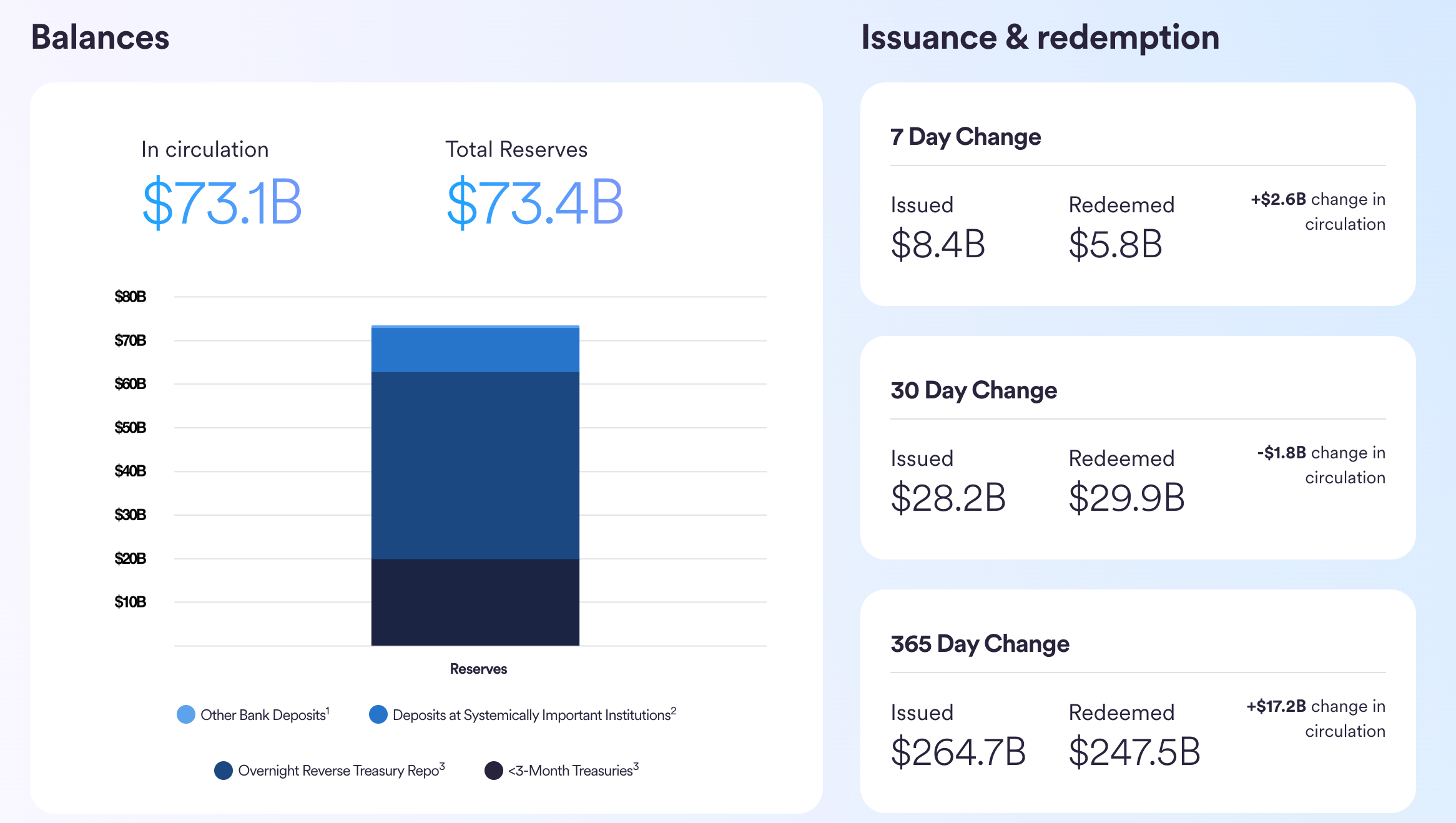 Source: Circle
What USDC Is Not
Before we go on, it’s good to know a few things USDC isn’t:
-
- Not a central bank digital currency (CBDC) — like an official “digital dollar” issued by a government. USDC is private‑sector.
-
- Not designed to make investment gains — it’s meant to be stable, not grow in price.
-
- Not legal tender — U.S. dollars are legal tender; USDC isn’t by law, but it’s fully backed and redeemable for real dollars.
Risks and Things to Know
While USDC is stable and trusted, there are a few realities to keep in mind:
Centralization
Unlike Bitcoin, which is fully decentralized, Circle (a private company) controls USDC. Big decisions, audits, and redemptions run through Circle and banking partners.
Banking Connections
USDC’s backing depends on dollars and dollar‑equivalent assets held in banks and U.S. money market funds, so problems in traditional banking systems can impact perception of stability, as seen in past events with Silicon Valley Bank affecting USDC’s peg (below $1 briefly).
Quick Summary
Here’s what you need to remember about USDC:
-
- USDC = USD Coin — a digital stablecoin pegged to $1 USD.
-
- Issued by Circle (and developed with Coinbase).
-
- Backed 100% by real U.S. dollars or equivalent assets.
-
- Designed to stay stable, not increase in price.
-
- Used for fast digital payments, DeFi, trading, and cross‑border transfers.
-
- Regular audits make it more transparent than many other stablecoins.
The Takeaway
USDC is like a digital version of the U.S. dollar that works 24/7 on the internet. You can use it to move money quickly, avoid crypto price shocks, and participate in digital finance in ways traditional dollars don’t allow. Yet it still pairs real‑world regulation and transparency with blockchain tech.
 Stay Ahead in Crypto