

Land Informatie
 Hoofdstad: Quito
 Continent: South America
 Taal: Spanish
 Bevolking: 16 278 844
 Oppervlakte (km2): 276 841
Oppervlakte (sq mi): 106 889
Oppervlakte (km2): 276 841
Oppervlakte (sq mi): 106 889 Extra Informatie
 Valuta: United States dollar $ (USD)
 ISO Code: EC
 Domain Extensie: .ec
 Telefonie Landcodes: +593
 Tijd (CET): UTC-05:00 to UTC-06:00
Tijd (CEST): UTC-05:00 to UTC-06:00
Tijd (CET): UTC-05:00 to UTC-06:00
Tijd (CEST): UTC-05:00 to UTC-06:00Website
 Official Website: Gob.ec
 Info Website: Ecuador.travel
Extra Links
Social Media & Nieuws
 Coins: 2
 Totaal: 2
Ranking
 Algemene Rang: 108
 Rang Per Inwoner: 112
Blockchain overzicht
Categorie:
| Naam | Categorie |
|---|
Veelgestelde vragen
Description
Disclaimer: The regulatory information provided below is for general informational purposes only and may not reflect the most current legal developments. Cryptocurrency regulations are rapidly evolving and can change frequently. This information should not be considered legal or tax advice. Before making any business or investment decisions, please consult with qualified legal, tax, or financial professionals familiar with your specific jurisdiction and circumstances. Always verify current regulations with official government sources and regulatory bodies.
Legal Classification & Regulatory Framework
Cryptocurrency Status
Ecuador maintains a distinctive position in Latin America as a fully dollarized economy, having adopted the United States dollar as its sole legal tender following the financial crisis of 1999-2000. This monetary policy framework significantly shapes the country’s approach to cryptocurrencies and digital assets.
The Central Bank of Ecuador (Banco Central del Ecuador, BCE) and the Monetary Policy and Regulation Board (Junta de Política y Regulación Monetaria, JPRM) have consistently emphasized that cryptocurrencies are not legal tender and are not authorized as a means of payment in Ecuador. This position is firmly grounded in Article 94 of the Organic Monetary and Financial Code (Código Orgánico Monetario y Financiero, COMF), which establishes that only the US dollar may serve as the country’s official currency.
However, it is important to distinguish between using cryptocurrency as payment and holding or trading it as an investment asset. While cryptocurrencies cannot be used to purchase goods and services within Ecuador, individuals are legally permitted to buy, hold, and trade digital assets through international platforms. The BCE has acknowledged that it lacks the legal authority to prohibit these private investment activities, though it consistently warns citizens about the speculative risks associated with cryptocurrency investments.
The JPRM has issued multiple resolutions reinforcing the exclusivity of the dollar and enumerating authorized electronic payment methods, with cryptocurrencies explicitly excluded from this list. The use of unauthorized payment methods, or their simulation, is prohibited under Article 98 of the COMF, and violations may be referred to the Attorney General’s Office for investigation.
Tax Treatment
Ecuador’s tax treatment of cryptocurrency gains falls under the jurisdiction of the Internal Revenue Service (Servicio de Rentas Internas, SRI). The regulatory framework treats realized profits from cryptocurrency transactions as Ecuador-source income, making them subject to the country’s general income tax provisions.
For individual taxpayers, cryptocurrency gains are taxed progressively at rates reaching up to 35 percent, depending on total annual income. Corporate entities face a standard corporate income tax rate of 25 percent on net profits derived from digital asset activities, although specific industries or activities may be subject to different rates or allowances.
The tax treatment becomes relevant when cryptocurrency holdings are converted to fiat currency (US dollars). While holding unrealized cryptocurrency gains does not trigger immediate taxation, converting these assets to cash or other assets may create a taxable event. Additionally, individuals whose total assets exceed approximately USD 238,000 are required to include cryptocurrency holdings in their annual asset declarations.
The regulatory framework for cryptocurrency taxation continues to evolve, and taxpayers are advised to maintain detailed records of all transactions, including acquisition costs, sale proceeds, and dates of transactions. Consulting with qualified tax professionals familiar with Ecuador’s evolving digital asset regulations is strongly recommended.
Regulatory Oversight
Ecuador’s cryptocurrency regulatory landscape involves multiple government agencies with overlapping responsibilities, creating a complex supervisory environment. The primary regulatory bodies include:
The Central Bank of Ecuador (BCE) establishes monetary policy, issues public warnings regarding cryptocurrency risks, and supervises payment systems. The BCE has also been exploring the potential development of a Central Bank Digital Currency (CBDC) in the form of a tokenized dollar, though no official launch has been confirmed.
The Monetary Policy and Regulation Board (JPRM) determines which instruments qualify as legal tender and authorized payment methods. Its resolutions from 2022 and 2023 explicitly exclude cryptocurrencies from the list of permitted payment mechanisms.
The Superintendency of Banks (Superintendencia de Bancos, SB) supervises financial institutions and has issued guidelines restricting banks from processing cryptocurrency-related transactions. It maintains oversight of entities within the formal banking system and monitors for unauthorized activities.
The Financial and Economic Analysis Unit (Unidad de Análisis Financiero y Económico, UAFE) serves as Ecuador’s financial intelligence unit responsible for anti-money laundering and counter-terrorist financing (AML/CFT) supervision. Virtual Asset Service Providers (VASPs) must register with the UAFE and comply with monitoring, reporting, and suspicious transaction analysis requirements.
The Superintendency of Companies, Securities and Insurance (Superintendencia de Compañías, Valores y Seguros, SCVS) oversees blockchain applications in securities markets and has recognized the use of tokens for company stock registration.
Business Environment
Banking Relationships
Ecuador’s banking sector maintains a cautious stance toward cryptocurrency-related activities. Under current regulations, banks, insurers, and payment processors are prohibited from facilitating cryptocurrency transactions unless future legislation grants explicit authorization. Card acquirers routinely flag cryptocurrency exchanges as high-risk merchants, making it challenging for crypto businesses to establish traditional banking relationships.
This regulatory environment means that individuals and businesses seeking to interact with the cryptocurrency ecosystem typically rely on peer-to-peer trading platforms, international exchanges accessible online, or over-the-counter arrangements. Settlement often occurs through USD cash transactions or stablecoins rather than through the formal banking system.
The banking sector itself remains healthy and well-regulated, with several major institutions including Banco Pichincha, Banco Guayaquil, Banco Pacifico, and Produbanco maintaining correspondent relationships with US banks. However, these institutions generally avoid exposure to cryptocurrency-related accounts due to regulatory restrictions and compliance concerns.
Licensing Requirements
Ecuador’s Organic Law for the Development, Regulation and Control of Technological Financial Services, commonly known as the Fintech Law, came into force in late 2022 and provides the foundational framework for technology-based financial services. Companies wishing to provide fintech services must incorporate as national companies (sociedades anónimas) or establish branches of foreign companies in Ecuador.
Fintech service providers face substantial requirements including a minimum paid-in capital of USD 200,000, liability insurance coverage, approved risk management structures, and registration with the appropriate supervisory authority. They must submit quarterly cybersecurity reports and comply with ongoing regulatory requirements.
While Ecuador does not currently have a specific license exclusively for cryptocurrency exchanges or VASPs, entities operating in the digital asset space must register with the UAFE and comply with comprehensive AML/CFT obligations. This includes implementing customer identification (KYC) procedures, transaction monitoring systems, and suspicious activity reporting mechanisms.
Draft regulations are under development that would establish a formal registry of virtual asset service providers, requiring exchanges to segregate client funds and provide wallet analytics to the Financial Intelligence Unit. The regulatory framework continues to evolve, and businesses should monitor developments closely.
Innovation Support
Ecuador has demonstrated growing interest in financial technology innovation, with the government recognizing the potential benefits of modernizing its financial infrastructure. The Fintech Law includes provisions for a regulatory sandbox, although this mechanism has not yet been fully implemented in practice.
The BCE has conducted technical studies on a potential tokenized dollar that would clear transactions on a private distributed ledger, potentially enhancing payment efficiency while preserving the country’s dollarization framework. However, legislative approval and vendor selection processes remain ongoing, with any potential pilot launch still in the planning stages.
Several blockchain applications have gained traction in Ecuador beyond pure cryptocurrency trading. These include supply chain tracking solutions in the agricultural sector and humanitarian applications using blockchain-based voucher systems to facilitate payments for underbanked populations. The country’s significant remittance inflows have also driven interest in blockchain-based cross-border payment solutions that could reduce transaction costs.
Market Characteristics
Adoption Patterns
Despite regulatory restrictions on cryptocurrency as a payment method, Ecuador has experienced notable grassroots adoption of digital assets. Industry estimates suggest that several hundred thousand Ecuadorians have engaged with cryptocurrency markets, representing a meaningful portion of the population.
Several factors drive this adoption. Ecuador’s history of economic instability, including the crisis that led to dollarization, has created interest in alternative stores of value and hedging instruments. The country’s significant expatriate population and dependence on international remittances make cryptocurrency an attractive option for faster, potentially cheaper cross-border transfers compared to traditional channels.
Limited banking infrastructure, with only approximately half of the adult population holding formal bank accounts, has also contributed to interest in alternative financial services. Cryptocurrency and mobile-based fintech solutions offer potential pathways to financial inclusion for underserved populations.
Ecuadorians typically access cryptocurrency markets through international platforms such as Binance, OKX, and Mercado Bitcoin, as well as peer-to-peer trading platforms. Bitcoin ATMs exist in major urban centers including Quito and Guayaquil, though these operate in a regulatory gray area. Most trading activity involves major cryptocurrencies and stablecoins, with USDT (Tether) particularly popular given the country’s dollar-based economy.
Industry Focus
The cryptocurrency and blockchain industry in Ecuador remains nascent compared to some regional peers, shaped significantly by the regulatory environment and infrastructure constraints. Key areas of focus include:
Remittance solutions represent a significant opportunity, with startups developing applications that leverage stablecoins and messaging platforms to facilitate lower-cost international transfers that can be converted to dollars at local outlets.
Blockchain technology applications in supply chain management have gained traction, particularly in the agricultural sector where traceability and transparency offer commercial benefits.
The NFT and DeFi sectors remain largely undeveloped within Ecuador, with interested participants generally engaging through global platforms. The absence of specific regulations for these emerging technologies creates uncertainty for domestic development.
Mining operations exist on a small scale, primarily hobby-sized operations in suburban areas, constrained by relatively high electricity tariffs, occasional grid reliability issues, and import duties on specialized equipment.
Regulatory Evolution
Ecuador’s cryptocurrency regulatory framework continues to evolve as authorities balance monetary policy objectives with recognition of growing market demand for digital asset services. The tension between protecting the dollarization framework and enabling financial innovation shapes ongoing policy discussions.
Recent regulatory developments suggest movement toward a more structured approach to virtual asset oversight, including potential VASP licensing requirements and enhanced consumer protection measures. The draft provisions for VASP registration and client fund segregation indicate authorities are working toward clearer operational standards.
The potential introduction of a Central Bank Digital Currency could represent a significant development, potentially offering modernized payment infrastructure while maintaining state monetary control. However, the timeline and scope of any CBDC initiative remain uncertain.
Ecuador does not participate in regional cryptocurrency regulatory frameworks comparable to the European Union’s Markets in Crypto-Assets (MiCA) regulation, but the country’s AML/CFT requirements align with international standards and Financial Action Task Force (FATF) recommendations. Continued regulatory evolution is expected as authorities seek to balance innovation, consumer protection, and monetary stability objectives.
For Current Information:
- Central Bank of Ecuador (Banco Central del Ecuador): https://www.bce.fin.ec
- Superintendency of Banks (Superintendencia de Bancos): https://www.superbancos.gob.ec
- Internal Revenue Service (Servicio de Rentas Internas): https://www.sri.gob.ec
- Superintendency of Companies, Securities and Insurance (SCVS): https://www.supercias.gob.ec
- Financial and Economic Analysis Unit (UAFE): https://www.uafe.gob.ec
Landkaart
Crypto Nieuws


Blockchain Bedrijven







Artikelen over crypto en blockchain

Wat zijn (Crypto)Valuta Wisselkoersen?
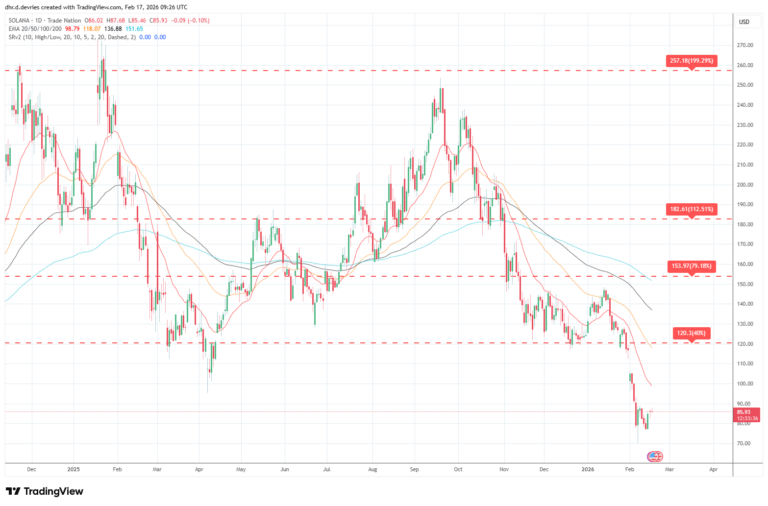
Solana (SOL) Prijsvoorspelling: Wekelijkse Analyse 17 februari 2026

Wat is Arbitragehandel?

Waarom is Quantumcomputing een Risico voor de Cryptowereld?
Wat zijn E-Money Tokens?
Persberichten en bijdragen


Xgram.io Lanceert Private ETH naar XMR Swaps



INVESTING YACHTS Lanceert RWA Jachtverhuurmodel