 English
  Nederlands
  Deutsch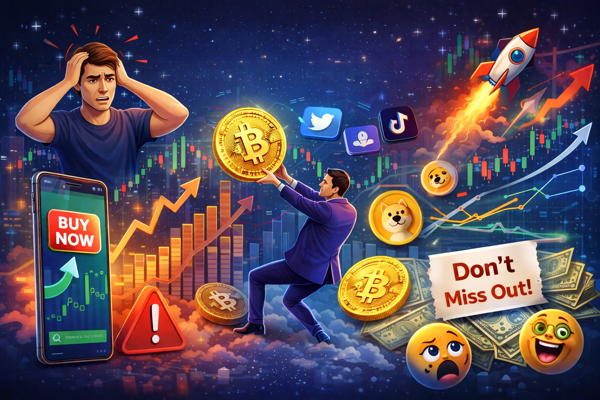
FOMO, or the Fear of Missing Out, is a powerful emotional response that can significantly influence decision-making, particularly in fast-paced environments like the cryptocurrency market. In the simplest terms, FOMO is the anxiety that others are gaining rewards or benefits while you’re being left out. In crypto, this usually results in buying an asset quickly, often without research, because it’s rising in value or gaining attention.
But in a market known for volatility, hype, and rapid price movements, FOMO isn’t just a feeling; it’s a major driving force behind impulsive trades, market bubbles, and even large-scale losses.
Why FOMO Happens in Crypto
Unlike traditional finance, the crypto space runs 24/7 with no closing hours. Combine that with global social media influence and the promise of fast profits, and you have the perfect setup for emotional decision-making.
Here are some core triggers of crypto FOMO:
- Massive, sudden price rallies (e.g., Bitcoin surging in a few hours)
- Influencer hype and viral trends (especially on X, TikTok, and Discord)
- Fear of “missing the next Bitcoin” or “getting in too late.”
- Limited token supply and early buyer rewards
- Exchange listings and airdrop announcements
These triggers can override logic, especially when people believe they’re about to miss a “once-in-a-lifetime” opportunity.
Real-World Examples of FOMO in Crypto
Understanding FOMO is easier when you see how it plays out in real events:
1. Bitcoin 2017 Bull Run
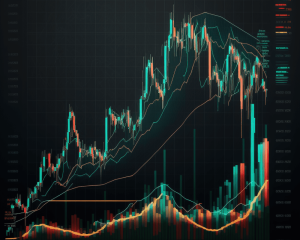
During late 2017, Bitcoin’s price jumped from under $1,000 to over $20,000. New investors rushed in near the top, driven by media coverage and social buzz. Many ended up stuck when the market corrected sharply.
2. Meme Coin Frenzies
In 2021, coins like Dogecoin and Shiba Inu exploded in price due to celebrity endorsements and memes. People who bought in late during the hype suffered huge losses when prices crashed.
3. LUNA/UST Collapse
Terra’s 2022 collapse was a hard lesson. Many investors bought into LUNA during its uptrend, lured by a 20% APY, only to lose everything when the project failed.
How FOMO Affects Investor Behavior
FOMO isn’t just about buying in late; it’s about the psychological loop that drives irrational actions:
- Acting on emotion, not strategy
- Ignoring red flags or obvious risks
- Overinvesting without research
- Making decisions based on tweets or price charts alone
- Selling too early from fear of being wrong, or too late from greed
These behaviors often lead to poor entries, bad exits, and long-term regret.
Common Signs You’re Experiencing FOMO
Recognizing the signs early helps prevent bad decisions. Watch out for these behaviors:
- You feel anxious when you’re not holding a trending coin
- You buy immediately after seeing a coin trending or listed
- You check charts every few minutes
- You invest more money than you can afford to lose
- You fear being the only one not profiting
- You skip research and buy based on hype
Consequences of Acting on FOMO
While some traders do profit in the short term, FOMO rarely leads to long-term success. Here’s why:
- Buying at the peak: You often enter when prices are unsustainably high
- Volatility risk: Hype-fueled assets can crash quickly
- Emotional exhaustion: Constant regret, stress, and “what ifs” wear down confidence
- Portfolio damage: Over time, repeated FOMO trades can lead to serious financial losses
How to Avoid FOMO in Crypto
Dealing with FOMO isn’t about ignoring opportunity; it’s about staying calm, informed, and strategic.
1. Set a Clear Strategy
Have entry and exit plans for every trade. Know your goals, risk limits, and what would cause you to sell.
2. Stick to Research
Only invest in what you understand. Read whitepapers, check tokenomics, and evaluate real-world use cases.
3. Avoid Herd Mentality
If everyone is talking about it, it may be too late. Always pause before following the crowd.
4. Use Small Position Sizes
If you’re testing a trending project, start with small amounts you can afford to lose.
5. Turn Off Notifications
Limit exposure to hype. Constant price alerts or influencer tweets can fuel anxiety.
FOMO vs. Informed Investing
Here’s how they differ:
| FOMO-Based Trading | Informed Investing |
| Emotion-driven | Research-driven |
| Based on trends | Based on fundamentals |
| Short-term thinking | Long-term planning |
| Impulsive buying | Strategic entry and exit |
| Regret afterward | Confidence in process |
Mastering FOMO Is a Skill
FOMO is natural, especially in a market as fast-paced and exciting as crypto. But letting it control your decisions is risky. Understanding the emotional side of investing can be just as important as knowing charts or news.
Remember: you don’t need to catch every pump to be successful. Most smart investors miss plenty of trends but focus on consistent, planned decisions that protect their capital and mental clarity.
Approach crypto with curiosity, not panic. FOMO fades, but smart strategies last.
 Stay Ahead in Crypto