

A margin call is a notification from a broker, exchange, or trading platform requiring a trader or investor to add funds or collateral to their account. This happens when the equity in a leveraged account falls below the platform’s required minimum level, known as the maintenance margin. In simple terms, a margin call means the losses on a leveraged position have grown large enough that the account no longer meets risk requirements.
Margin calls exist to protect trading platforms from losses that could exceed the funds available in an account. They are a core risk-management mechanism in markets that allow leverage, including stocks, futures, CFDs, and crypto derivatives.
How Margin Trading Works
Margin trading allows investors to open positions using borrowed funds, with their own capital acting as collateral. This increases buying power but also magnifies losses. To manage this risk, platforms apply margin rules that determine the minimum amount of equity that must be maintained.
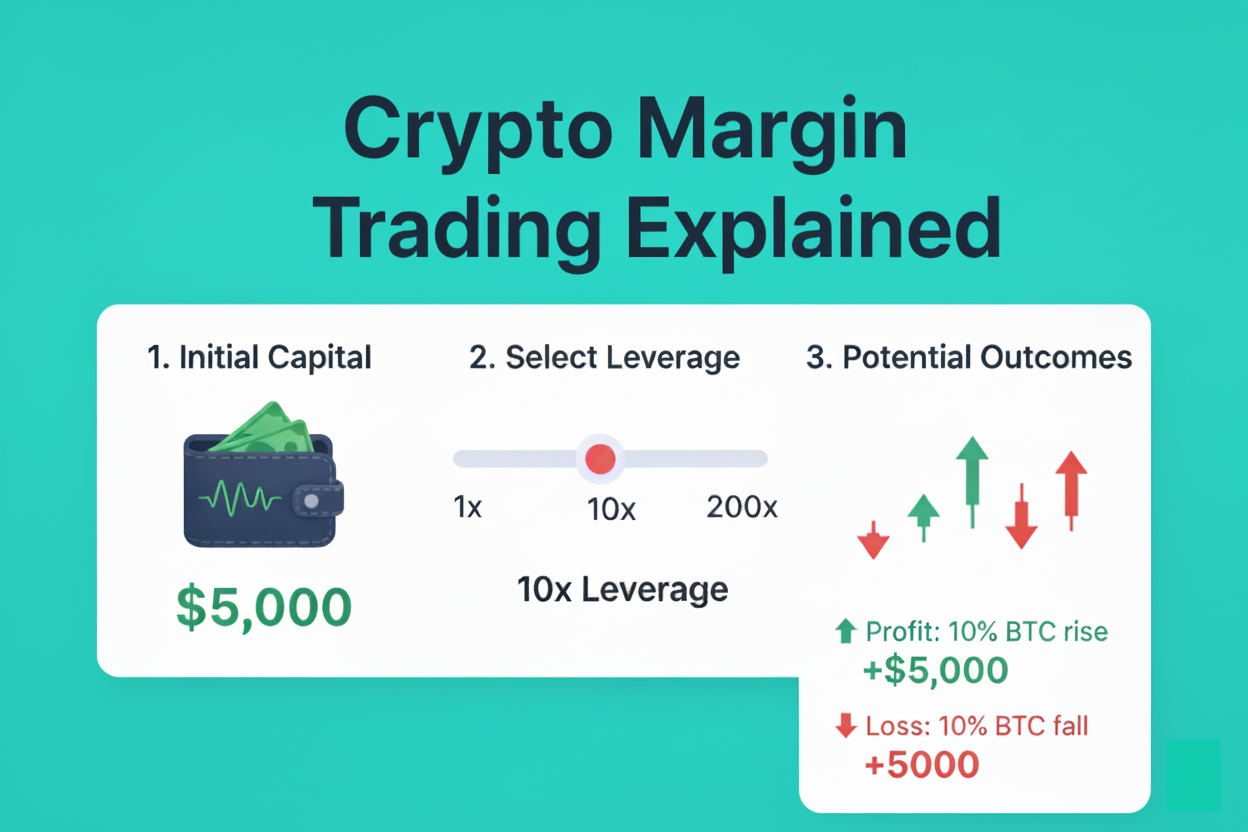
There are two key margin concepts:
- Initial margin: the amount required to open a leveraged position
- Maintenance margin: the minimum equity required to keep that position open
If the account equity drops below the maintenance margin, a margin call is triggered.
Understanding Account Equity
Equity is the portion of an account that truly belongs to the trader after accounting for borrowed funds or unrealized losses.
In a simplified margin setup:
- Market value is the current value of open positions
- Loan or borrowed funds represent the leverage provided
- Equity equals market value minus borrowed funds
A margin call occurs when the equity ratio (equity divided by market value) falls below the required maintenance level set by the broker or exchange.
Margin Call Example
Assumptions
- Maintenance margin requirement: 25%
- You invest using margin to buy stocks worth $10,000
- You use $5,000 of your own money and borrow $5,000 from the broker
Step 1: Initial Position
- Market value of securities: $10,000
- Loan from broker: $5,000
- Your equity = $10,000 − $5,000 = $5,000
- Equity ratio = $5,000 ÷ $10,000 = 50%
No problem, this is well above the 25% maintenance requirement.
Step 2: Market Decline
Now suppose the market value of your securities falls to $6,000.
- Market value: $6,000
- Loan from broker: $5,000
- Your equity = $6,000 − $5,000 = $1,000
- Equity ratio = $1,000 ÷ $6,000 ≈ 16.7%
This is below the required 25% maintenance margin.
Step 3: Margin Call Triggered
Because your equity ratio has dropped below the maintenance level, the broker issues a margin call. You must add funds or securities to restore the equity ratio to at least 25%.
Step 4: How Much Do You Need to Add?
To meet the 25% requirement on a $6,000 position:
- Required equity = 25% × $6,000 = $1,500
- Current equity = $1,000
- Margin call amount = $500
You must deposit $500 (or sell part of the position) to avoid liquidation.
What Triggers a Margin Call
Margin calls are usually triggered by unfavorable market movements, but several factors can contribute.
Common triggers include:
- Price declines in leveraged positions that reduce account equity
- Increased volatility, which raises margin requirements
- Higher house margin rules, where brokers set requirements above regulatory minimums
- Concentrated positions that increase risk exposure
Margin calls can occur suddenly, particularly during periods of rapid or volatile market conditions.
What Happens When You Get a Margin Call
When a margin call occurs, the platform requires immediate action to restore the account to compliance. The trader is usually given a limited time, though some platforms may act automatically.
Typical responses include:
- Depositing additional cash
- Adding eligible securities or crypto as collateral
- Reducing or closing positions to lower margin requirements
If the margin call is not met, the broker or exchange may liquidate positions without further notice. This forced liquidation is designed to prevent the account from going negative.
Example of a Margin Call in Practice
Assume an investor buys securities worth $10,000 using $5,000 of their own money and $5,000 borrowed on margin. The initial equity is 50%. If the value of the securities falls, equity declines faster because the loan amount remains fixed.
Once equity drops below the maintenance margin requirement, often around 25% or higher, depending on the broker, a margin call is issued. The investor must then add funds or reduce the position to restore the required equity level.
Margin Calls in Futures and Derivatives
Margin calls in futures and derivatives function differently from stock margin loans. Instead of borrowing money, traders post margin as a performance bond.
Key characteristics include:
- Positions are marked to market daily or continuously
- Losses are deducted from margin balances in real time
- Falling below the maintenance margin triggers a margin call
If funds are not added promptly, positions may be reduced or liquidated by the platform.
Margin Calls in Crypto Trading
In crypto leveraged trading, margin calls are often closely tied to liquidation thresholds. Platforms track margin ratios based on collateral value and unrealized profit or loss.
If losses reduce the margin below the maintenance requirement:
- Traders may receive warnings or margin alerts
- Failure to act can result in automatic liquidation
Because crypto markets can move rapidly, margin calls and liquidations may occur faster than in traditional markets.
Can Margin Calls Be Delayed?
In most cases, margin calls must be met immediately. While some brokers allow a short response window, margin agreements usually give platforms the right to liquidate assets at their discretion. Traders should never assume extra time will be granted.
Risks Associated With Margin Calls
Trading on margin significantly increases risk. Losses are calculated on the full position size, not just the trader’s deposited funds. In extreme cases, investors can lose more than their initial investment.
Key risks include:
- Forced liquidation during market downturns
- Selling assets at unfavorable prices
- Amplified losses due to leverage
- Reduced control over position timing
How Traders Try to Reduce Margin Call Risk
While margin calls cannot be eliminated entirely, traders often manage risk by maintaining higher equity buffers and monitoring accounts closely.
Common risk-management practices include:
- Keeping extra cash available in margin accounts
- Avoiding excessive leverage
- Using stop-loss orders to limit losses
- Diversifying positions to reduce concentration risk
- Monitoring margin levels frequently
Managing Leverage Risk
A margin call is a protective mechanism used by brokers and trading platforms to manage leverage risk. It occurs when account equity falls below required levels, signaling that a position has moved too far against the trader. While margin trading can increase potential returns, it also increases the speed and size of losses.
Understanding how margin calls work, what triggers them, and how platforms respond is essential for anyone using leverage in financial or crypto markets.