


Coin Information





Market Cap
Fully Diluted Valuation

Coin Supply
 Circ.: 351 026 565(83%)
 Total: 425 045 627
Max: 500 000 000
Total: 425 045 627
Max: 500 000 000Blockchain Explorers

Website

 Online
Extra Links







RUNE to USD Converter
About THORChain
“What is THORChain (RUNE) about?
THORChain is the first decentralized exchange (DEX) to swap Bitcoin, and other UTXO chains, with Ethereum, and other EVM chains. All without using wrapped tokens.
THORChain currently supports swapping between 10 different blockchains. Assets available to swap on THORChain include the following:
Bitcoin (BTC)
Ethereum (ETH)
Tether (USDT)
BNB (BNB)
XRPL (XRP)
USDC (USDC)
Tron (TRX)
Dogecoin (DOGE)
Bitcoin Cash (BCH)
Wrapped Bitcoin (WBTC)
Chainlink (LINK)
Litecoin (LTC)
Dai (DAI)
Avalanche (AVAX)
Aave (AAVE)
Cosmos (ATOM)
Base (BASE)
What makes THORChain (RUNE) unique?
Swapping on THORChain is permissionless and censorship resistant.
THORChain makes it possible for people to stop using centralized exchanges (CEXs) for swapping tokens across chains.
People can use any self-custody wallet in the world to swap Bitcoin (BTC), Ethereum (ETH), BNB (BNB),
XRPL (XRP), Tron (TRX), Dogecoin (DOGE), Bitcoin Cash (BCH), Litecoin (LTC), Avalanche (AVAX), and Cosmos (ATOM), without having to connect the wallet to a website.
There are no block rewards on THORChain. 100% of the revenue on the network is real money paid by real users. 5% of the revenue is burned, making the token supply deflationary.
There are no more token unlocks. The circulating supply has been distributed since 2023.
History of THORChain (RUNE)?
THORChain was conceptualized in 2018 by a team participating in a Binance Dexathon (decentralized exchange coding competition). The first whitepaper was published in July 2018.
The RUNE token was launched on June 19, 2019, and THORChain conducted an IDO on July 20, 2019.
In June 2020, the first public test net was launched; In August 2020, Single Chain Chaos Net (SCCN) was launched.SCCN only had BNB Beacon Chain tokens available for swapping.
In April 2021, Multi Chain Chaos Net (MCCN) launched. This marked the first time in history that crypto users could switch across five different blockchains on a DX, without using wrapped tokens, from self-custody wallets.Bitcoin (BTC), Ethereum (ETH), Binance Smart Chain (BNB), Bitcoin Cash (BCH), and Litecoin (LTC) were the first five tokens available to swap.
MCCN was rolled out as a guarded launch, where a cap was placed on the size of liquidity pools to reduce the potential loss of funds.As bugs and issues in the code were resolved, the self-imposed limitations on the network were gradually lifted.
After several months of stable performance, the development team announced the mainnet in June 2022.
Since then, THORChain has become the largest DEX for swapping bitcoin with $118 billion in total volume as of December 2025.
What’s next for your THORChain (RUNE)?
Work is being done to add the following blockchains to THORChain:
Solana (SOL)
Toncoin (TON)
Cardano (ADA)
Sui (SUI)
Zcash (ZEC)
Monero (XMR)
THORChain is developing its version of intents, which will enable the swapping of long tail assets on every blockchain; Eventuall,y people will be able to swap any token from any self-custody crypto wallet.
THORChain is evolving into a true layer one protocol. Developers can now create smart contracts on TTHORChain that have direct access to native token liquidity. Smart contracts make it possible to have collateralized lending, bitcoin-backed stablecoin, perp DEX, prediction market, token launch platform, NFTs, and more.
The Rujira team is responsible for building smart contracts on THORChain. The fees generated from smart contracts are split 50/50 between THORChain and Rujira.
What can the RUNE token be used for?
All the fees on THORChain are paid in RUNE tokens. The user doesn’t have to own any RUNE tokens or have a RUNE wallet to swap on THORChain. The fees are deducted from the inbound token of the swap and used to buy RUNE.These fees (in RUNE tokens) are then distributed as follows.
10% to TCY token holders
5% are burned
5% to the developer fund
5% to the marketing fund
75% is split between the liquidity providers and bond providers (nodes) according to an incentive pendulum
Every liquidity pool on THORChain is paired with RUNE. The bitcoin pool is BTC/RUNE, the Ethereum pool is ETH/RUNE, and so on.As long as there are Bitcoin, Ethereum, and other liquidity pools on THORChain, RUNE has value and a floor in its market cap. Liquidity providers receive a share of the exchange’s revenue.
The RUNE token is used to bond nodes to the network. A minimum bond of 300,000 RUNE is required for a node to enter. & nbsp; The average node has 950,000 RUNE bonded to it.
Nodes receive a portion of the revenue in return for securing the network. This revenue is distributed to all node bond providers as RUNE tokens on a pro rata basis.
The nodes decide protocol governance. Not individual RUNE holders.Therefore, RUNE is not a traditional governance token.
The RUNE token is used to pay gas fees for transactions on the network. The fee is currently set at 0.02 RUNE per transaction.”
Frequently Asked Questions
Github Statistics (Development)
RUNE Markets on Crypto Exchanges
X Feed (Twitter)
Crypto and Blockchain Articles

Which Euro Stablecoins are there?

What Are OP‑Based Chains?
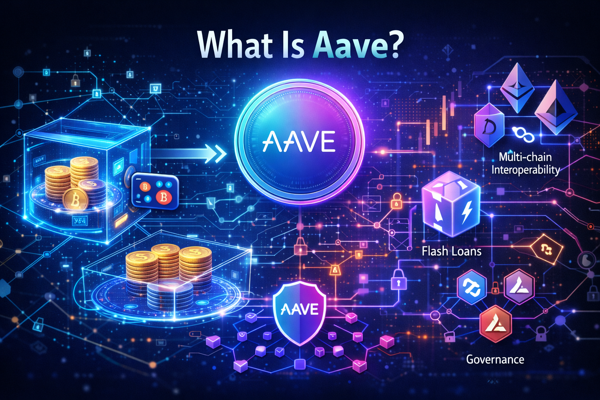
What Is Aave?
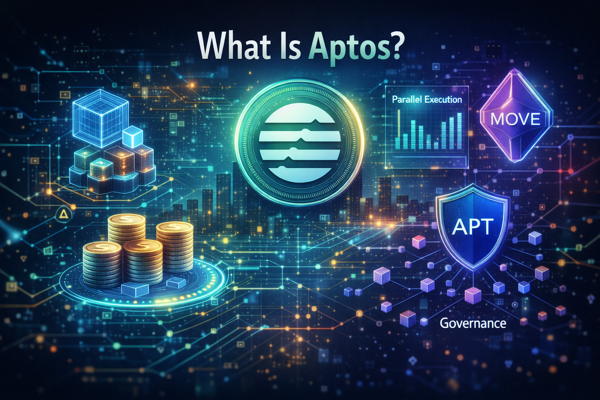
What is Aptos?
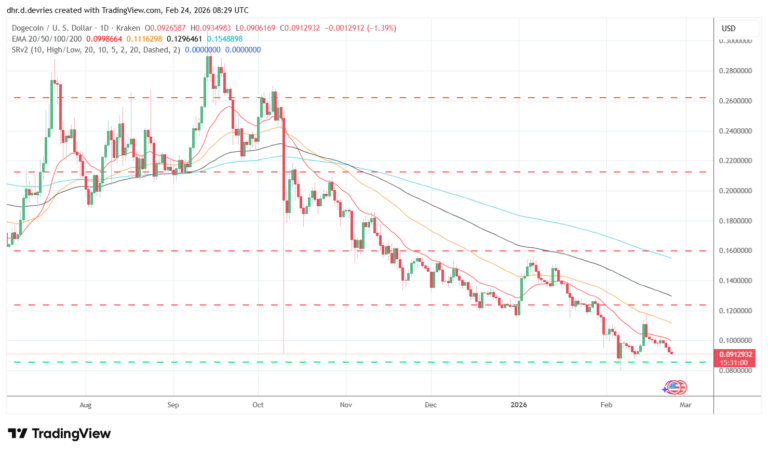
Dogecoin (DOGE) Price Prediction: Weekly Analysis February 24, 2026
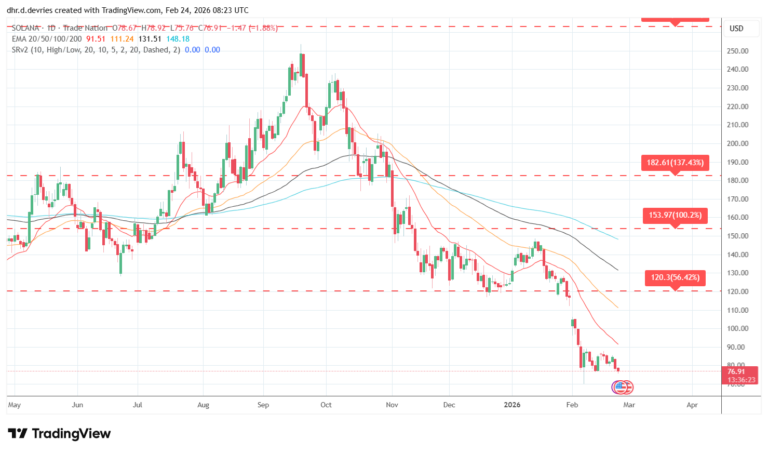
Solana (SOL) Price Prediction: Weekly Analysis February 24, 2026
Which Euro Stablecoins are there?
What Are OP‑Based Chains?
What Is Aave?

Stay in the loop. Subscribe for updates.

Video
Get verified
Crypto News
Top Gainers





Top Losers




New THORChain Tokens
Recently verified coins

Advertise 📣
Are you looking to advertise? We offer press release publications, display banners, featured listings and more.
Contact us for questions, submit a PR or request our media kit.