 English
  Nederlands
  Deutsch
Perpetual futures, often called “perps,” are one of the most widely used trading instruments in the cryptocurrency market. Unlike traditional futures, they have no expiration date, allowing traders to hold positions indefinitely while using leverage to amplify exposure.
These contracts mirror the spot market through a funding rate mechanism, which ensures prices stay close to the underlying asset. With daily volumes exceeding $100 billion, perpetual futures have become a cornerstone of crypto trading.
What Are Perpetual Futures?
Perpetual futures are derivative contracts that allow traders to speculate on the price of an asset such as Bitcoin or Ethereum without owning it.
Unlike standard futures that expire monthly or quarterly, perpetual futures can be held as long as the trader maintains the required margin balance.
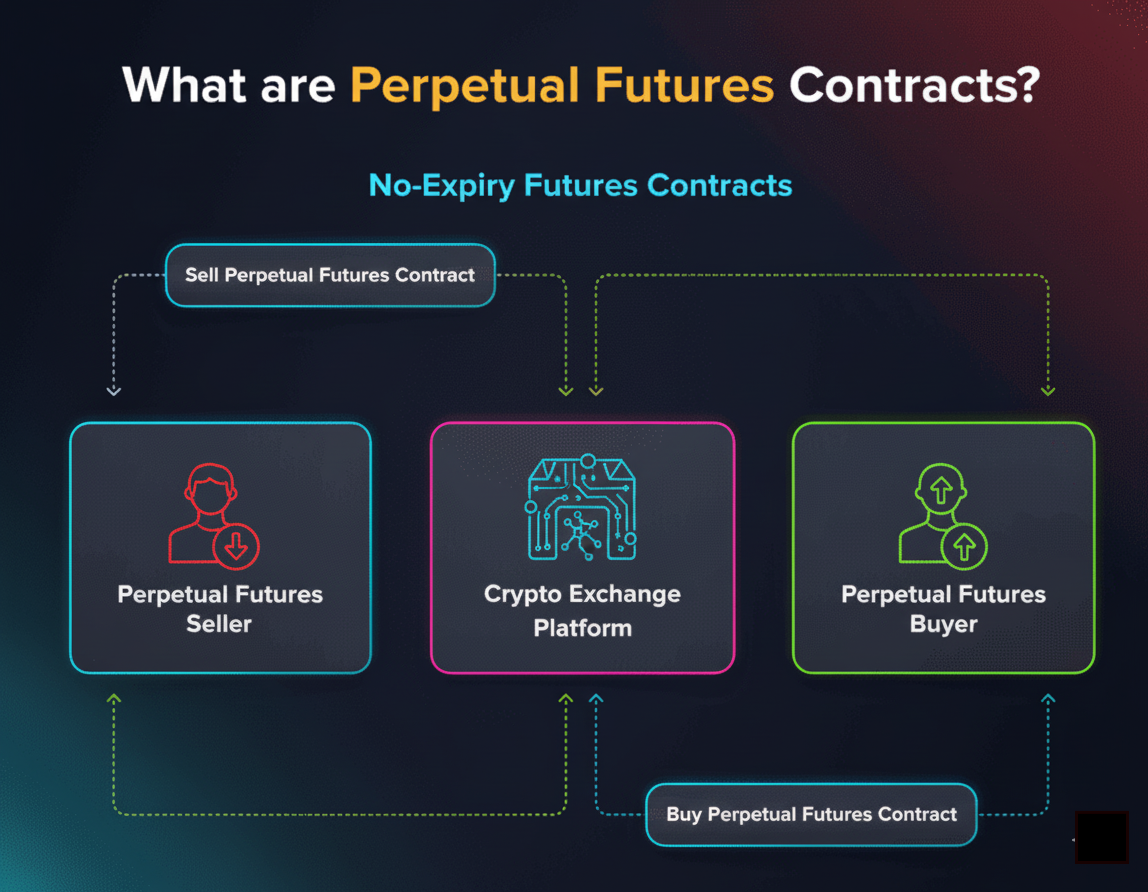
Key characteristics include:
- No expiration date: Positions remain open indefinitely.
- Funding rate: A periodic payment between traders keeps prices aligned with spot values.
- Leverage: Enables control of large positions with smaller capital.
- Margin system: Traders must maintain collateral; falling below triggers liquidation.
This flexibility makes perps especially attractive to active traders and institutions seeking 24/7 exposure to digital assets.
How the Funding Rate Works
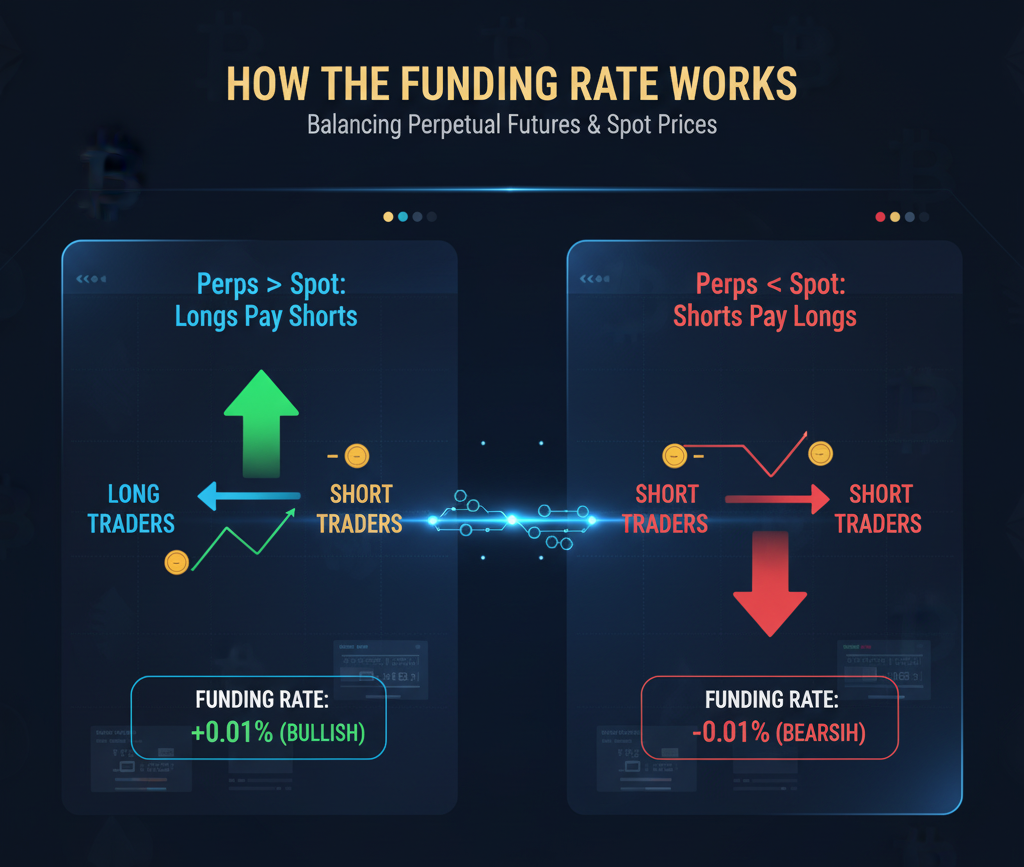
The funding rate is a small periodic payment exchanged between long and short traders. It keeps the perpetual futures price close to the spot price.
How it functions:
- When perps trade above spot price (contango), longs pay shorts the funding fee.
- When perps trade below spot price (backwardation), shorts pay longs.
- Rates adjust every 8 hours on most exchanges, though intervals vary.
This dynamic helps prevent large price gaps between spot and futures markets. Traders often watch funding rates to gauge market sentiment. Positive rates suggest bullish pressure, while negative rates signal bearish bias.
Why Traders Use Perpetual Futures
Perpetual futures offer several practical benefits that appeal to both retail and professional traders.
1. Speculation
- Traders can profit from both rising and falling markets.
- Going long anticipates price increases; going short profits from declines.
2. Hedging
- Holders of crypto assets can short perps to protect against downside risk.
- Example: A trader holding Bitcoin can open a short position in BTC perps to offset losses during price drops.
3. Leverage
- Traders can amplify returns with leverage ratios ranging from 2x to 100x.
- Example: With 10x leverage, $1,000 controls a $10,000 position.
- However, leverage magnifies both profits and losses, demanding strict risk management.
4. Arbitrage Opportunities
- Traders exploit price differences between spot and perpetual futures markets.
- Common approach: Buy spot Bitcoin while shorting its perp when a premium exists, earning the difference as prices converge.
Also, many exchanges are expanding their derivatives offerings to include more perpetual contracts, e.g., PrimeXBT expanded crypto futures by adding 101 new coins.
Comparing Perpetual Futures to Traditional Futures
| Feature | Perpetual Futures | Traditional Futures |
| Expiration Date | None | Fixed (monthly/quarterly) |
| Funding Rate | Yes | No |
| Leverage | Often up to 100x | Typically lower |
| Market Hours | 24/7 (Crypto) | Limited (Exchange Hours) |
| Settlement | Continuous via Funding | On Expiry |
Perpetual futures bring continuous market access, enabling crypto traders to act instantly on global price movements, even on weekends.
Risks of Trading Perpetual Futures
While powerful, perpetual futures involve considerable risks, especially for inexperienced traders.
Key risks include:
- Liquidation Risk:
If prices move against a leveraged position, the trader’s collateral may be liquidated automatically.
Example: A 5% move against a 20x leveraged trade can wipe out the entire margin. - Funding Costs:
Funding payments can accumulate over time and eat into profits, especially during prolonged trades. - High Volatility:
Crypto markets move rapidly, increasing both opportunity and risk. Sudden swings can trigger liquidations even for well-positioned trades. - Margin Maintenance:
Falling below maintenance margin levels leads to forced closure of positions, often at a loss.
Effective Trading Strategies for Perpetual Futures
To trade perps successfully, traders must use structured approaches and robust risk management.
Popular strategies include:
- Trend Following:
Trade in the direction of market momentum using moving averages or breakout patterns. - Range Trading:
Buy near support and sell near resistance within sideways markets. - Hedging:
Offset exposure in spot holdings during volatility spikes or event risk. - Arbitrage:
Capture funding rate differentials or cross-exchange price discrepancies.
If you also trade via MetaTrader 5, you can use it to execute strategies on derivatives, including perps and CFDs.
Pro tip: Always track the funding rate and total open interest to assess market positioning and sentiment shifts.
Best Practices and Risk Management
Successful perpetual futures trading relies on discipline, education, and planning.
Risk management checklist:
- Use stop-loss and take-profit levels for every position.
- Limit leverage, especially during high-volatility periods.
- Monitor funding rates and trading fees.
- Diversify across instruments rather than concentrating exposure.
- Review exchange margin requirements and liquidation rules.
- Maintain adequate capital buffers to withstand market shocks.
Also consult guides on crypto investment strategies to contextualize derivatives in a broader portfolio.
Regulation and Oversight
Regulatory frameworks for perpetual futures differ globally.
In the United States, the Commodity Futures Trading Commission (CFTC) oversees derivatives, but most crypto perp trading occurs on offshore exchanges with lighter regulation.
Traders should ensure they comply with local laws and understand the jurisdictional protections, or lack thereof, of the exchange they use.
Also, Aster launched 24/7 stock perpetual contracts, showing how derivatives are expanding beyond crypto.
Mastering Perpetual Futures
Perpetual futures have become a cornerstone of modern crypto markets, offering traders unmatched flexibility and liquidity. Their ability to combine continuous trading, leverage, and dynamic pricing makes them ideal for active strategies.
However, with these advantages come significant risks. High leverage, volatile markets, and funding costs can quickly erode profits. Traders who apply sound risk management, understand funding mechanisms, and stay disciplined can use perps effectively as tools for speculation, hedging, and portfolio diversification.
 Stay Ahead in Crypto