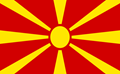
Country Information
 Capital: Skopje
 Continent: Europe
 Language: Macedonian, Albanian
 Population: 2 077 132
 Surface (km2): 25713
Surface (sq mi): 9928
Surface (km2): 25713
Surface (sq mi): 9928Extra Information
 Currency: Macedonian denar (MKD)
 ISO Code: MK
 Domain Extension: .mk
 Calling Code: +389
 Time (CET): UTC+01:00
Time (CEST): UTC+02:00
Time (CET): UTC+01:00
Time (CEST): UTC+02:00Website
 Official Website: Vlada.mk
Extra Links
Social Media & News
 Coins: 2
 Total: 2
Ranking
 Overall Rank: 107
 Rank Per Capita: 1
Blockchain Overview
Category:
| Name | Category |
|---|
Frequently Asked Questions
Description
Disclaimer: The regulatory information provided below is for general informational purposes only and may not reflect the most current legal developments. Cryptocurrency regulations are rapidly evolving and can change frequently. This information should not be considered legal or tax advice. Before making any business or investment decisions, please consult with qualified legal, tax, or financial professionals familiar with your specific jurisdiction and circumstances. Always verify current regulations with official government sources and regulatory bodies.
Legal Classification & Regulatory Framework
Cryptocurrency Status
North Macedonia presents a unique regulatory landscape for cryptocurrencies within Europe. Cryptocurrencies currently operate in a legal gray zone—they are neither explicitly banned nor formally recognized as legal tender. The National Bank of the Republic of North Macedonia (NBRM) has clarified that the absence of specific cryptocurrency legislation does not make digital asset activities illegal, marking a significant departure from earlier interpretations that considered crypto trading prohibited.
Cryptocurrencies are not recognized as legal tender in North Macedonia. According to the NBRM, payments within the country must be made in the domestic currency—the Macedonian denar (MKD). This means that while individuals may hold and trade digital assets, using cryptocurrencies directly for payment transactions is not officially permitted under current regulations.
The country took a meaningful step toward regulatory clarity when amendments to the Law on Prevention of Money Laundering and Financing of Terrorism (AML/CTF Law) were adopted and published in the Official Gazette in July 2022. These amendments introduced legal definitions for “virtual assets” and established that such assets fall under the broader definition of “property” for regulatory purposes. This legislation also defines “virtual asset service providers” and imposes specific compliance obligations on entities operating in this space.
Tax Treatment
The tax treatment of cryptocurrencies in North Macedonia remains an area of considerable uncertainty. There is currently no specific tax legislation addressing digital assets, which creates challenges for investors and businesses seeking to understand their reporting obligations and potential liabilities.
In the absence of crypto-specific rules, general tax principles may apply. Capital gains realized from cryptocurrency trading could potentially be subject to the standard capital gains tax rate. Individual income tax in North Macedonia is levied at a flat rate across income categories, with the general rate approximately 10% on capital gains. However, the lack of explicit guidance means that taxpayers face uncertainty regarding how to classify and report cryptocurrency-related income.
Income generated from cryptocurrency mining or business activities related to digital assets may be treated as income from other sources or self-employment, subject to applicable income tax rates. Corporate entities engaged in cryptocurrency activities would likely fall under the standard corporate tax framework. Some investors have voluntarily declared cryptocurrency gains as internet income or foreign income, though this approach lacks official endorsement from tax authorities.
New legislation is anticipated to provide clarity on the tax treatment of all crypto-related earnings, including potential guidance on capital gains taxation and VAT implications for cryptocurrency transactions.
Regulatory Oversight
Several regulatory bodies in North Macedonia share responsibility for overseeing financial sector activities, with their authority extending to cryptocurrency-related matters in various capacities.
The National Bank of the Republic of North Macedonia (NBRM) serves as the central supervisory authority for banks, payment service providers, and exchange offices. While not specifically mandated to regulate cryptocurrencies, the NBRM plays an important role in issuing public warnings about the risks of digital assets and in ensuring that entities within its jurisdiction comply with AML/CFT regulations. The central bank has historically taken a cautious stance toward cryptocurrencies, citing concerns about price volatility and fraud risks.
The Financial Intelligence Unit (FIU) operates as the primary supervisory body for anti-money laundering compliance. Under the amended AML/CTF Law, the FIU ensures that virtual asset service providers adhere to customer due diligence requirements, transaction monitoring obligations, and suspicious activity reporting duties. The FIU also oversees financial entities not specifically assigned to other regulatory bodies.
The Securities and Exchange Commission (SEC) of North Macedonia supervises the securities market, including brokerage firms and investment funds. While the SEC’s current mandate does not explicitly encompass cryptocurrencies, it may become relevant for digital assets that exhibit characteristics of securities or for platforms facilitating trading in such assets.
Business Environment
Banking Relationships
One of the most significant challenges facing cryptocurrency users and businesses in North Macedonia is the relationship with traditional banking institutions. Most domestic banks have adopted restrictive policies toward cryptocurrency-related transactions, often blocking or refusing to process transfers associated with digital asset activities.
This banking barrier creates substantial friction for individuals seeking to convert between cryptocurrencies and fiat currency, as well as for businesses attempting to operate in the digital asset space. Banks’ reluctance to engage in cryptocurrency activities stems from compliance concerns, regulatory uncertainty, and risk management considerations.
As a result, the majority of cryptocurrency trading by North Macedonian residents occurs through international exchanges and platforms operating outside the country, such as Binance and similar global service providers. Peer-to-peer transactions and informal arrangements have also emerged as alternative methods for crypto-to-fiat conversion.
Licensing Requirements
North Macedonia currently lacks a dedicated licensing framework for cryptocurrency exchanges, wallet providers, or other virtual asset service providers. This regulatory gap means there is no formal authorization process for entities seeking to establish cryptocurrency businesses in the country.
However, entities operating in the financial services sector, including those potentially handling virtual assets, must comply with the AML/CTF Law requirements. This includes implementing customer due diligence procedures, maintaining transaction records, conducting ongoing monitoring, and reporting suspicious activities to the FIU. The law imposes limits on cash transactions of up to €500 and designates the FIU as the supervisory authority for compliance enforcement.
Enforcement actions for non-compliance with AML/CTF obligations can include substantial financial penalties and mandatory termination of business relationships with offending parties. Virtual asset service providers are expected to ensure transparency and traceability of transactions, with privacy-focused cryptocurrencies and mixing services facing particular restrictions under the AML/CTF framework.
The government is actively developing comprehensive cryptocurrency legislation expected to introduce a formal licensing regime for exchanges and service providers. This upcoming framework is anticipated to align with international standards and may establish registration requirements, operational standards, and consumer protection measures.
Innovation Support
North Macedonia has shown growing interest in blockchain technology and digital innovation, though formal government support mechanisms specifically for the cryptocurrency sector remain limited. The country’s capital, Skopje, has witnessed the emergence of blockchain startups, particularly those focused on fintech applications and decentralized technologies.
The government has expressed intentions to position North Macedonia as a regional hub for blockchain innovation in the Balkans. Recent political leadership has met with major cryptocurrency industry players and signaled openness to creating a favorable regulatory environment for digital asset businesses. These discussions have focused on establishing a legal framework that could attract foreign investment while retaining local tech talent.
Educational institutions are beginning to recognize the importance of blockchain technology, with some universities integrating blockchain-related courses and seminars into their programs to build local expertise in cryptocurrency and Web3 technologies. However, formal curriculum integration remains limited, and public understanding of cryptocurrencies continues to develop.
The NBRM has reportedly been exploring the concept of a digital denar—a potential central bank digital currency—though this remains in the investigative phase without concrete implementation timelines.
Market Characteristics
Adoption Patterns
Cryptocurrency adoption in North Macedonia has grown steadily despite the regulatory uncertainty. Digital assets have gained popularity, particularly among younger citizens seeking alternative investment opportunities, faster international payments, and exposure to emerging financial technologies.
While cryptocurrencies are not officially recognized for payments, informal adoption has occurred in various contexts. Some merchants, particularly in urban areas and tourist-facing businesses, have experimented with accepting digital assets unofficially. Cryptocurrencies are commonly used for online purchases, peer-to-peer payments, and international remittances—the latter being particularly relevant given North Macedonia’s significant diaspora population.
The most commonly traded cryptocurrencies among North Macedonian users include Bitcoin, Ethereum, stablecoins like Tether (USDT), Solana, and Ripple. Many users have been active in the cryptocurrency space for several years, with a mix of active traders and passive holders who view digital assets as a savings or investment vehicle.
Non-custodial wallets such as MetaMask and Trust Wallet, along with hardware wallet solutions, are popular among users who prioritize security and privacy. Custodial wallet services provided by international exchanges also serve beginner users entering the cryptocurrency market.
Industry Focus
The cryptocurrency industry in North Macedonia is primarily consumer-driven, with most activity centered on individual trading and investment rather than institutional participation. The absence of clear regulations has hindered the development of local cryptocurrency businesses.
The emerging blockchain sector in Skopje shows particular focus on fintech applications, decentralized applications, and payment solutions. Some local startups have developed blockchain-based services targeting specific use cases, such as remittances, to leverage the technology and reduce costs relative to traditional banking channels.
Without comprehensive regulation, the local market has faced challenges, including cryptocurrency scams and fraudulent schemes. The lack of consumer protection mechanisms means that victims of such fraud have limited recourse, highlighting the need for regulatory frameworks that balance innovation with investor protection.
Regulatory Evolution
North Macedonia’s cryptocurrency regulatory journey has evolved significantly over time. The NBRM’s initial stance that cryptocurrency trading is prohibited has given way to a more nuanced position, acknowledging that unregulated does not mean illegal. The 2022 AML/CTF Law amendments marked the first concrete regulatory step, formally defining virtual assets and establishing compliance obligations.
As an EU candidate country, North Macedonia’s regulatory development is increasingly influenced by European frameworks. The government has indicated its intention to align future cryptocurrency legislation with the EU’s Markets in Crypto-Assets (MiCA) Regulation, the comprehensive framework governing digital assets across EU member states.
While MiCA does not directly apply to North Macedonia, alignment with its provisions would facilitate eventual EU accession and enable local businesses to serve EU markets. Proactive adoption of MiCA-equivalent standards could also position the country as a credible destination for cryptocurrency businesses seeking regulatory clarity within the Balkan region.
Anticipated regulatory developments include the introduction of licensing requirements for cryptocurrency exchanges and service providers, enhanced AML compliance measures aligned with Financial Action Task Force (FATF) standards, clearer tax treatment for cryptocurrency transactions, and improved consumer protection measures. The government has set ambitious targets for implementing these frameworks, though the precise timeline for legislative adoption remains subject to political and procedural factors.
The regulatory trajectory suggests that North Macedonia is moving toward a more structured approach to cryptocurrency governance, balancing the desire to attract investment and foster innovation with the need to protect consumers and prevent illicit financial activities.
For Current Information:
- National Bank of the Republic of North Macedonia (NBRM): https://www.nbrm.mk
- Financial Intelligence Office: https://www.ufr.gov.mk
- Securities and Exchange Commission of North Macedonia: https://www.sec.gov.mk
- Ministry of Finance: https://www.finance.gov.mk
- Public Revenue Office (Tax Authority): https://www.ujp.gov.mk
Country Map
Crypto News


Blockchain Companies




Other Countries
Crypto and Blockchain Articles
What is Aptos?
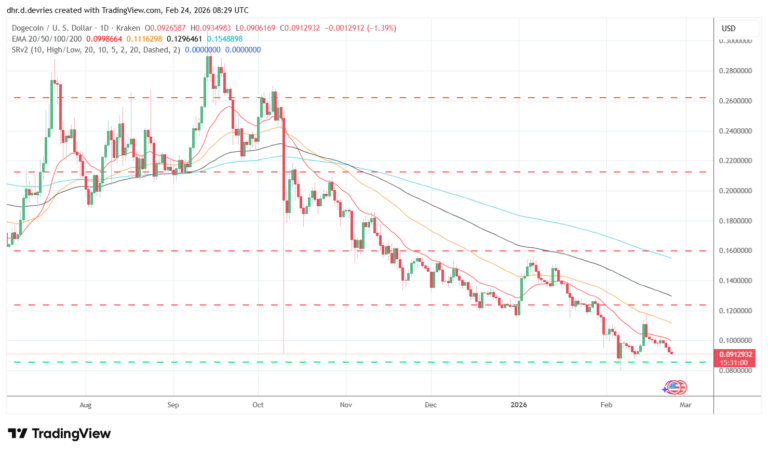
Dogecoin (DOGE) Price Prediction: Weekly Analysis February 24, 2026
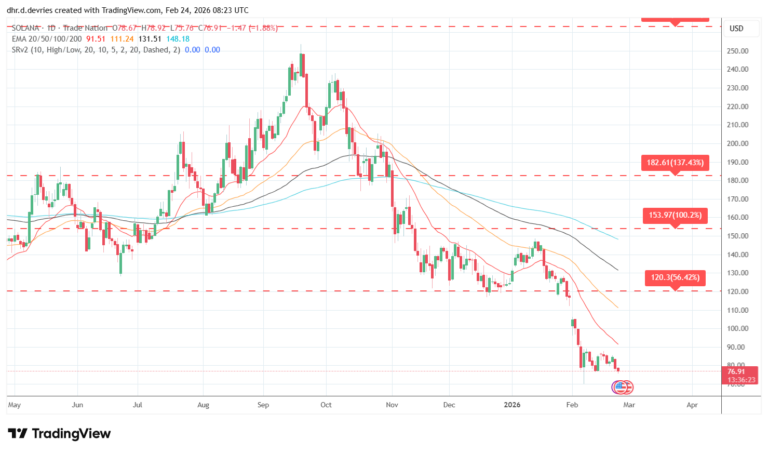
Solana (SOL) Price Prediction: Weekly Analysis February 24, 2026
Ethereum vs. Bitcoin for Online Gambling
What Is Polygon?
What is Aptos?
Dogecoin (DOGE) Price Prediction: Weekly Analysis February 24, 2026
Solana (SOL) Price Prediction: Weekly Analysis February 24, 2026
Press Releases and Contributions