
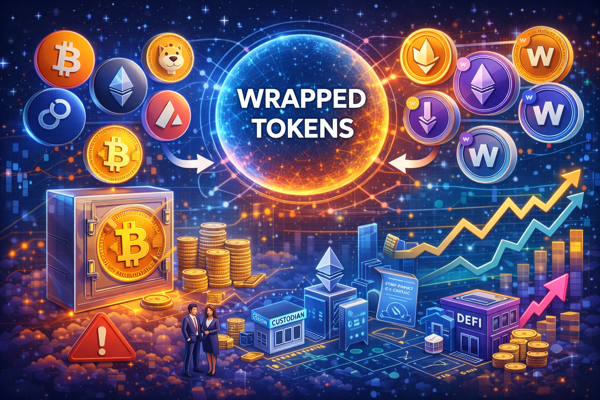
Wrapped tokens have become a pivotal innovation in the cryptocurrency landscape. They allow assets to be transferred across different blockchain networks, enabling seamless interaction between otherwise isolated ecosystems. By offering a bridge for cryptocurrencies that operate on one blockchain to be used on another, wrapped tokens significantly enhance blockchain interoperability.
Wrapped tokens are backed 1:1 by the original asset, meaning that for each wrapped token, there is an equivalent amount of the native cryptocurrency held in reserve. This ensures the value of the wrapped token remains consistent with the original asset, facilitating its use in various blockchain ecosystems.
How Do Wrapped Tokens Work?
The creation and usage of wrapped tokens involve a series of simple steps. The process starts when a user deposits a cryptocurrency into a secure custodian or smart contract. Once the deposit is confirmed, an equivalent amount of wrapped tokens is minted on the target blockchain.
- A user deposits Bitcoin (BTC) into a custodian’s vault.
- The custodian mints an equivalent amount of Wrapped Bitcoin (WBTC) on the Ethereum blockchain.
- The value of WBTC mirrors the price of Bitcoin, ensuring it remains tied to the original asset.
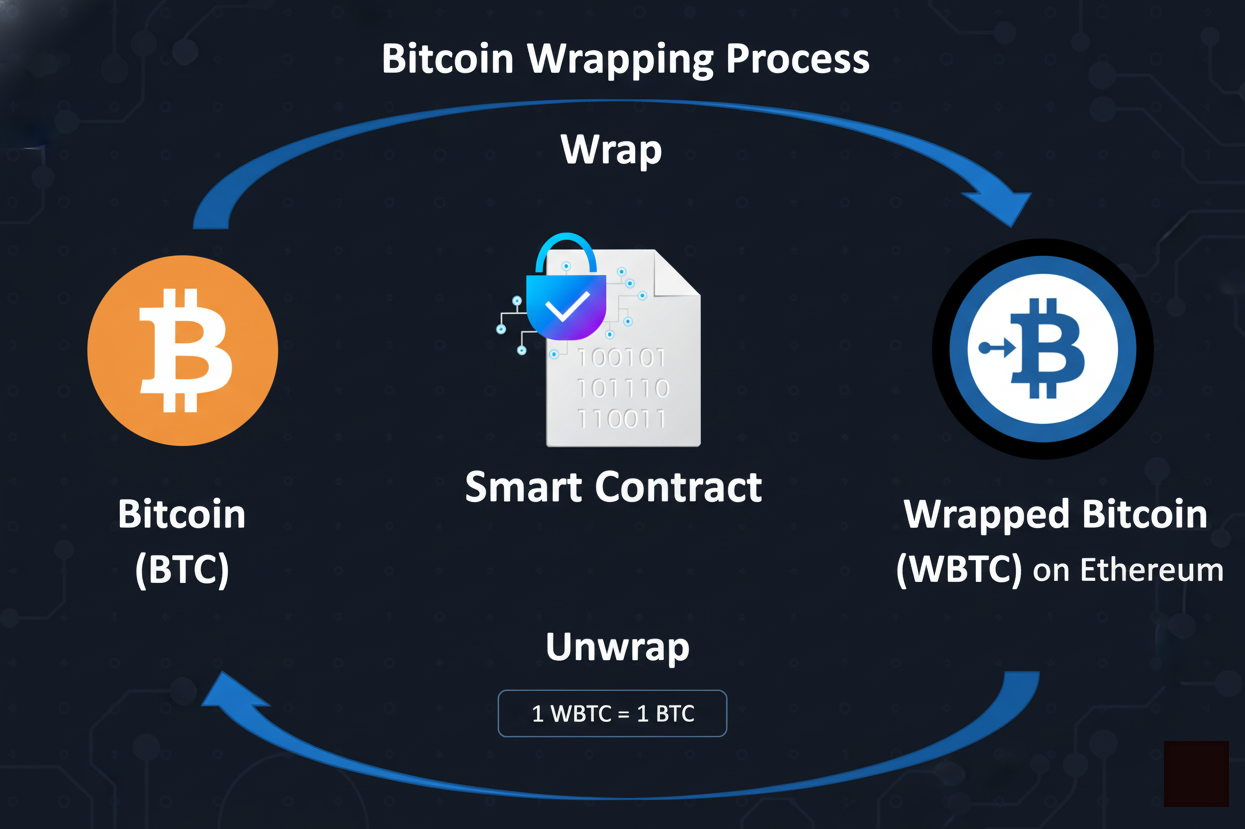
When users wish to redeem their wrapped tokens, they follow the reverse process. The wrapped token is sent back to the custodian, who burns it, and the equivalent amount of the original asset is released from the vault.
Benefits of Wrapped Tokens
Wrapped tokens provide multiple advantages, particularly in decentralized finance (DeFi) and cross-chain functionality. Some of the main benefits include:
- Interoperability: Wrapped tokens allow assets to be used across different blockchain networks, enhancing functionality and access to decentralized applications (dApps) on multiple platforms.
- Increased Liquidity: By making assets like Bitcoin usable on blockchains like Ethereum, wrapped tokens increase liquidity and provide more opportunities for trading and investing.
- Cost Reduction: Wrapped tokens allow users to use assets on blockchains with lower transaction fees, which can reduce overall costs compared to using the native blockchain.
- DeFi Access: Users can engage in DeFi applications, such as lending, borrowing, and liquidity provision, by wrapping their assets and using them on DeFi platforms that support specific blockchains.
Types of Wrapped Tokens
Wrapped tokens are not limited to Bitcoin. Several other cryptocurrencies have their wrapped counterparts on different blockchains, enabling them to participate in decentralized finance and other applications. Common examples of wrapped tokens include:
- Wrapped Bitcoin (WBTC): A tokenized version of Bitcoin on the Ethereum blockchain, allowing Bitcoin holders to participate in Ethereum-based DeFi.
- Wrapped Ether (WETH): A wrapped version of Ether (ETH) on the Ethereum network, making it compatible with the ERC-20 token standard.
- Wrapped Dogecoin (WDOGE): A tokenized form of Dogecoin (DOGE) on the Ethereum blockchain.
- Wrapped Matic (WMATIC): A wrapped version of MATIC on the Ethereum blockchain.
- Wrapped AVAX (WAVAX): A wrapped token representing AVAX on the Ethereum blockchain.
These tokens unlock various use cases, ranging from liquidity provision to cross-chain governance and participation in DeFi protocols.
The Role of Custodians in Wrapped Tokens
Custodians are central to the functioning of wrapped tokens. They are responsible for securing the original cryptocurrency and ensuring that there is a 1:1 backing for every wrapped token issued. Custodians can either be centralized entities or smart contract systems, depending on the project.
- Security: Custodians ensure that the original asset is stored securely, offering users confidence that their wrapped tokens are properly backed.
- Trust: Since the process of minting and burning wrapped tokens requires trusting the custodian to manage the original asset, users must carefully consider the credibility and reliability of custodians.
Despite their benefits, custodians introduce a layer of centralization that contrasts with the decentralized nature of blockchain technology.
The Process of Minting and Redeeming Wrapped Tokens
Creating and redeeming wrapped tokens involves two main processes: minting and burning. Here’s how they work:
- Minting: When a user wants to wrap their cryptocurrency, they deposit it into a secure vault. The custodian or smart contract then mints an equivalent number of wrapped tokens on the target blockchain.
- Burning: When the user wants to redeem their wrapped tokens, they send them back to the custodian. The wrapped tokens are then burned, and the equivalent amount of the original cryptocurrency is released to the user.
These processes ensure that the supply of wrapped tokens remains consistent with the underlying assets, preventing inflation or deflation of their value.
Wrapped Tokens and Decentralized Finance (DeFi)
Wrapped tokens are crucial in decentralized finance applications. They allow users to access a wide range of financial services on blockchains that might not natively support certain assets. For example:
- Access to Ethereum-based dApps: Bitcoin holders can wrap their BTC into WBTC and use it to interact with Ethereum-based decentralized applications (dApps) or decentralized exchanges (DEXs).
- Increased Collateral Options: Wrapped tokens enable users to use assets like Bitcoin or Dogecoin as collateral in DeFi platforms that only accept Ethereum-based assets.
- Liquidity Pooling: Wrapped tokens allow users to provide liquidity on Ethereum or other platforms that might not natively support the original asset, expanding the potential for decentralized finance services.
By facilitating cross-chain functionality, wrapped tokens play a crucial role in the ongoing growth and diversification of decentralized finance.
Risks and Challenges of Wrapped Tokens
While wrapped tokens offer many benefits, they also present some risks and challenges:
- Custodial Risk: The reliance on custodians to secure the original assets introduces centralization. A breach or failure by the custodian could lead to the loss of the underlying assets.
- Smart Contract Vulnerabilities: The smart contracts used in the wrapping and burning process could contain vulnerabilities, which may be exploited by hackers.
- Regulatory Uncertainty: Wrapped tokens face regulatory scrutiny in various jurisdictions. Their use could potentially be subject to additional regulations or legal hurdles in the future.
Users must be aware of these risks and take precautions when interacting with wrapped tokens.
The Future of Wrapped Tokens
The future of wrapped tokens looks promising as they continue to evolve with blockchain technology. As more blockchains integrate with each other, the demand for wrapped tokens is likely to grow. Future advancements could focus on increasing decentralization, reducing custodial risk, and enhancing the overall security of wrapped token systems.
With the rise of decentralized finance and cross-chain applications, wrapped tokens will continue to play a key role in enabling liquidity and interoperability between blockchain networks.