

If you’ve ever copied a long string of letters and numbers to receive crypto, you’ve used a blockchain address. A blockchain address works a bit like a digital account number; it tells the network where funds should be sent or which account or smart contract is involved in a transaction.
Even though the idea sounds simple, many people get confused because the term “address type” can actually refer to two different things:
- Technical address formats — how an address is structured or encoded on a specific blockchain
(for example, older Bitcoin legacy addresses vs newer SegWit formats) - Usage-based address roles — how an address is used in real-world situations
(for example, a withdrawal address, refund address, or deposit address provided by an exchange)
In other words, not every “address type” is a different kind of cryptographic wallet. In many cases, the difference lies in how the address is used rather than how it is built.
Public address
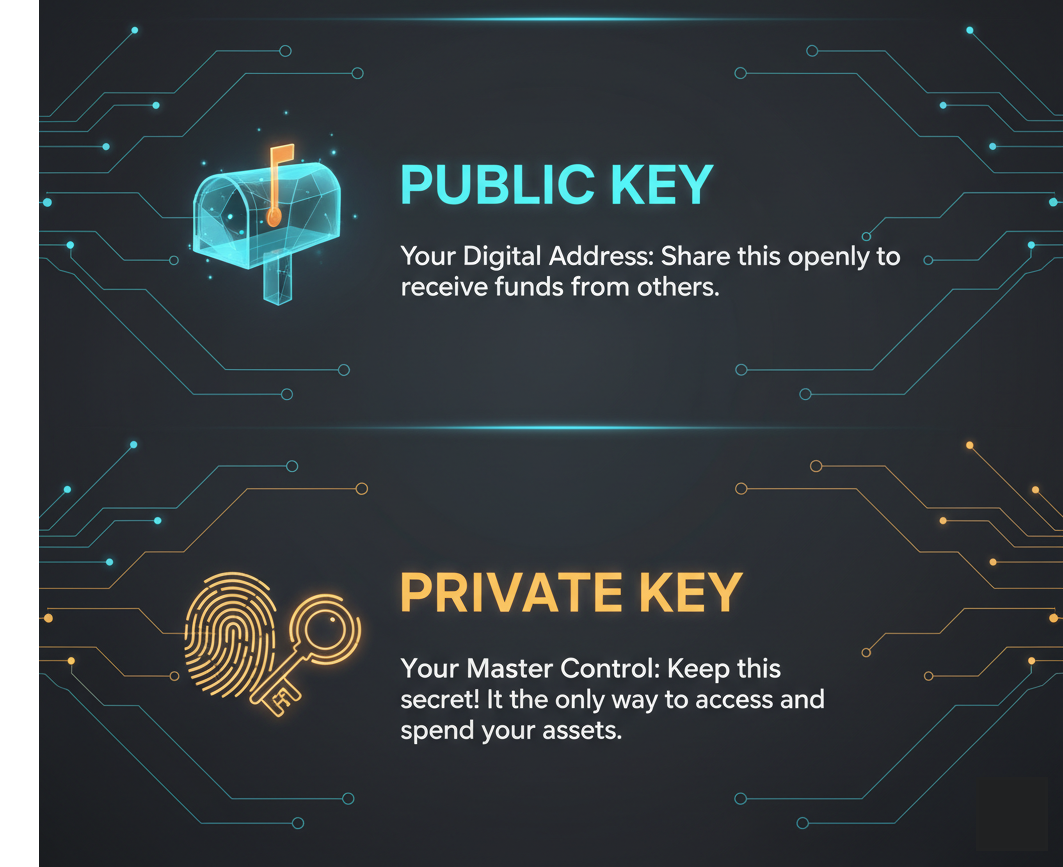
A public address is the general “receive address” you share with others so they can send you crypto. It’s safe to share publicly (hence the name), but it’s linked to the wallet that controls it.
- What it’s for: receiving funds or identifying your account on a network
- What it looks like: depends on the chain
- Ethereum: usually starts with 0x…
- Bitcoin: often starts with 1…, 3…, or bc1…
A public address is not your private key. The private key (or recovery phrase) is what controls spending.
Contract address
A contract address belongs to a smart contract, a program that lives on a blockchain (common on Ethereum, Polygon, Arbitrum, BNB Chain, etc.). Contract addresses can hold funds, but they also have rules: they can execute code when someone interacts with them.
A simple way to understand it: a normal wallet is controlled by a person (via a private key), while a smart contract address is controlled by logic written in code.
- Examples of contract addresses: token contracts (ERC-20), NFT contracts (ERC-721/1155), DeFi protocols, bridges, multisig wallets
- Common mistake: sending funds to a contract that can’t handle them (some assets can get stuck if the contract isn’t designed to receive them).
Legacy address
“Legacy address” most commonly refers to older Bitcoin address formats, especially the classic format that starts with 1… (often called P2PKH).
Bitcoin’s address formats evolved over time to improve efficiency and add features. You’ll often hear these “generations”:
- Legacy (P2PKH): starts with 1…
- P2SH: starts with 3… (often used for older multisig or compatibility)
- Native SegWit (Bech32): starts with bc1… (often cheaper fees, more efficient)
- Taproot (Bech32m): also starts with bc1… but uses a newer script type
Legacy isn’t “bad,” but many wallets prefer newer formats because they can reduce fees and improve flexibility.
Refund address
A refund address is a functional designation used when a service must return funds after a failed or reversed transaction. It is not a different technical format but a specified destination for returned payments.
Where refund addresses appear
- cryptocurrency payment processors
- swap or conversion services
- exchanges
- merchant payment gateways
Example scenario
A user pays a merchant using USDC on Ethereum. If the transaction fails, the refund is typically issued back to:
- an Ethereum‑compatible USDC address
- on the same network used in the original payment
Providing an incompatible chain or token address may prevent the refund from being processed.
Vanity address
A vanity address is an address deliberately generated to include a recognizable pattern, such as a name or custom prefix.
Example patterns
- Ethereum vanity‑style
0x0000ABCD… - Bitcoin vanity prefix
1MARKET…
Vanity addresses may be used for branding or public donation wallets. However, they should only be generated using secure tools, as unsafe generators may expose private keys. They may also encourage address reuse, which can reduce privacy.
Withdrawal address
A withdrawal address is the destination address specified when transferring assets from a custodial service, such as an exchange, to another wallet.
Example scenario
A user withdraws ETH from an exchange to their non‑custodial wallet:
- Exchange withdrawal address set to:
0xF472dAB6… (Ethereum wallet)
If the user instead selects the wrong withdrawal network (for example, BNB Smart Chain), funds may be sent to an incompatible address environment.
Many platforms support:
- withdrawal address books
- whitelisted addresses
- withdrawal approval controls
These features are intended to reduce transfer risks.
Best-practice guidance
To safely use withdrawal addresses, users should:
- Confirm the correct blockchain network before submitting a withdrawal
- Enable address whitelisting when available
- Consider sending a small test transaction before moving large amounts
Deposit address
A deposit address is assigned by a platform to receive inbound transfers.
Example
An exchange may display:
- Deposit address:
bc1qw4k8s… - Network: Bitcoin
- Optional memo/tag: not required
On networks such as XRP, Stellar, or Cosmos, deposits may also require a memo, tag, or reference ID.
Change address (UTXO networks)
On UTXO‑based chains such as Bitcoin, transactions often generate a change output that returns unspent value to the sender via a change address.
Example
A user spends 0.2 BTC from a 1 BTC UTXO:
- 0.2 BTC → sent to recipient
- 0.8 BTC → returned to a change address controlled by the sender
The change address may appear unfamiliar in the transaction history, but it usually remains owned by the wallet.
Multisignature (multisig) address
A multisig address requires authorization from multiple parties before funds can be spent.
Common uses
- organization treasuries
- DAO reserves
- business custody systems
Example
- A 2‑of‑3 multisig requires signatures from any two authorized parties before a transaction is approved.
On Ethereum, multisig structures are commonly implemented through contract wallets such as Gnosis Safe.
Custodial and non‑custodial addresses
The distinction concerns control rather than format:
- A custodial address is controlled by a platform or service provider.
- A non‑custodial address is controlled directly by the user.
Example
- Exchange wallet address → custodial
- Hardware wallet address → non‑custodial
This distinction affects withdrawal permissions and account access.
Bridge or escrow address
A bridge address is used when transferring assets between blockchains, typically via a smart contract or escrow mechanism.
Example scenario
A user bridges tokens from Ethereum to Polygon:
- Tokens are locked or burned on Ethereum
- A representation is minted on Polygon
Users should only rely on:
- official bridge documentation
- verified contract addresses
Due to the high security risk associated with bridges.
Burn address
A burn address is used to permanently remove tokens from circulation.
Example
- A project sends tokens to a burn address such as:
0x0000000000000000000000000000000000000000
Funds sent to burn addresses are generally considered irretrievable.
Human‑readable name service addresses
Some ecosystems support human‑readable naming systems that map names to blockchain addresses.
Example
- ENS name
example.eth → resolves to
0x91F84C3b…
Although more convenient, users should still verify the resolved address for significant transfers.
Watch‑only address
A watch‑only address allows balances and transactions to be monitored without enabling spending.
Typical uses
- auditing
- treasury monitoring
- cold storage tracking
It is commonly used in institutional or compliance contexts.
Privacy‑enhanced or one‑time addresses
Certain systems generate one‑time or stealth addresses to improve transactional privacy. Even on non‑privacy chains, many wallets encourage periodic address rotation for similar purposes.
To reduce the risk of transaction errors, users should:
- Verify the correct blockchain and token format before sending
- Confirm whether the destination is a wallet or a smart contract
- Check whether a memo or tag is required for deposits
- Avoid unnecessary address reuse if privacy is important
- enable address whitelisting where available
- perform small test transfers before sending larger amounts
Address Taxonomy
Blockchain addresses can represent different technical formats, account structures, and operational roles across networks and platforms. Some address types relate to cryptographic or protocol design, such as legacy, SegWit, multisignature, or Taproot‑compatible structures.
Others refer to how an address is used in practice, such as refund, withdrawal, deposit, or bridge addresses. A clear understanding of these categories supports safer handling of digital assets and reduces the likelihood of transfer or compatibility errors.