
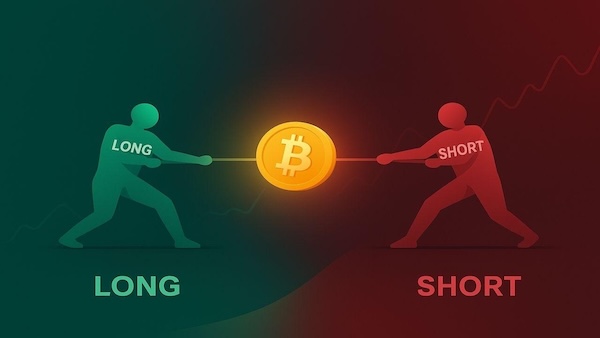
Perpetual futures are popular because they allow traders to follow market moves without holding the asset itself, and on the surface the structure looks simple. Most people think the main expense comes from trading fees they pay when opening and closing a position. The part that often stays unnoticed is the ongoing payment called funding rates. These regular settlements keep the futures market aligned with spot prices, but they also create a cost pattern that slowly changes how the trade performs over time. Many traders focus on comparing exchanges based only on fees, available pairs and liquidity, without realizing that funding rates can become the real cost once a position stays open for more than a short period.
What Funding Rates Are in Perpetual Futures
Funding rates exist because perpetual futures do not expire, and without expiry the contract needs another mechanism to remain close to the spot market. The rate is a scheduled payment between long and short positions that appears whenever the futures price drifts away from spot.
When futures trade higher than spot, long traders pay short traders. When futures fall below spot, shorts pay longs. It is a simple system on paper, but in practice the rate reflects more than a small price gap. It shows where demand is building and how much imbalance the market is carrying.
Some quantitative traders describe funding as a risk premium rather than a quirk, because taking the opposite side of a crowded market exposes you to sudden moves, basis jumps and other forms of trading pressure. This premium shapes the cost structure without people noticing.
| Cost Type | What It Covers | Who Receives the Fee | When It Is Paid |
| Trading Fees | Cost for opening or closing a position | The exchange | Paid instantly at order execution |
| Funding Fees | Regular payments that align perp price with spot | Exchanged between traders (longs and shorts) | Paid at each scheduled funding interval |
Funding Fees Compared With Trading Fees
Trading fees are the part most traders understand. These charges go directly to the exchange and appear the moment a position opens or closes. Maker fees usually cost less because they add liquidity while taker fees cost more because they remove liquidity, and the exact numbers change depending on the platform. Many traders check crypto exchange reviews to judge how fee tiers behave, but even after comparing everything, these costs remain predictable and fairly small when viewed against the size of a leveraged position.
Funding fees behave differently because they do not go to the exchange. They move from one group of traders to another at each scheduled interval. A positive rate means longs are paying shorts and a negative rate means the reverse. These payments depend on market sentiment, leverage pressure and how far the futures market stands from spot. They can rise in active markets and fall during calmer phases, which makes them a repeating cost that becomes more important than the single fee a trader pays at execution. This is why many traders underestimate the real exposure they take when they decide to hold a position longer than expected.
Funding rates move across exchanges, and most traders track them through simple dashboards such as CoinGlass that compile this data in one place. Keeping an eye on such dashboards helps traders notice where pressure is forming without needing to jump between different screens.
Why Funding Is the Core Cost in Perpetual Futures
Funding rates can look small when you see a number like 0.01%, yet over a full day or week these intervals start to add up. The part that misleads many traders is the annualized display on dashboards. A rate that says 12%-13% per year appears alarming at first glance, but that number does not mean you are actually paying that full amount across the year.
If the higher rate only occurs during a small part of the cycle, the true cost becomes far lower. Some traders point out that a headline rate near 13% can translate to a real cost below 1% when adjusted for how often the rate stays elevated. It shows how people often make decisions based on the wrong interpretation.
Even with this nuance, funding remains the part that eats into profits when traders hold directional positions during active phases. This happens because the rate reflects the imbalance of the market. If longs crowd the book, the rate moves positive and anyone holding a long position pays to remain on that side. If shorts become dominant, the opposite pattern appears.
This system pushes traders to rebalance naturally, yet it also means that being right on direction will not always lead to a positive outcome if the cost of staying in the trade quietly climbs. Many traders discover this only after seeing their returns shrink despite the market moving in the expected direction.
The quant view captures the idea clearly. Positive funding means you are paying to be on the popular side. You are supplying liquidity that the market lacks, and that comes with structural risks. This perspective helps explain why funding matters far more than the small execution fee a trader pays once at the start.
Weekly Cost Example Using Funding Rates
To see how this behaves in real time, imagine a position worth $10,000 held on the long side with a funding rate of 0.02% charged every 8 hours. At each interval the position pays $2. In one day this becomes $6. After 7 days it becomes $42. At first the number seems small, but for a trader who expected to pay only a few dollars in trading fees, the effect becomes noticeable. If the rate rises during a busy market, the total increases even faster. Now compare this with the cost of opening the trade. A taker fee of 0.05% on a $10,000 position is only $5. The contrast is clear. Over time the funding cost far outweighs the trading fee.
This simple example shows the core message. Funding can quietly accumulate even in moderate conditions, and during strong sentiment phases it climbs at a pace that changes the economics of longer trades. Direction alone is not enough to judge profitability unless the cost of staying in that position is placed into the picture.
Understanding the True Cost Structure of Perpetual Futures
Funding rates sit at the center of perpetual futures and shape the actual cost of holding a position. Traders who focus only on trading fees see just one part of the story while the repeating settlements continue to change the outcome of the trade. When you understand how funding reflects sentiment and imbalance, the picture becomes clearer and you can judge how holding a position for several days or weeks might alter the final result. The idea stays the same across market cycles. Funding rates build quietly in the background, and once they are tracked properly, the real cost of a perpetual futures position reveals itself more naturally.