English
  Nederlands
  Deutsch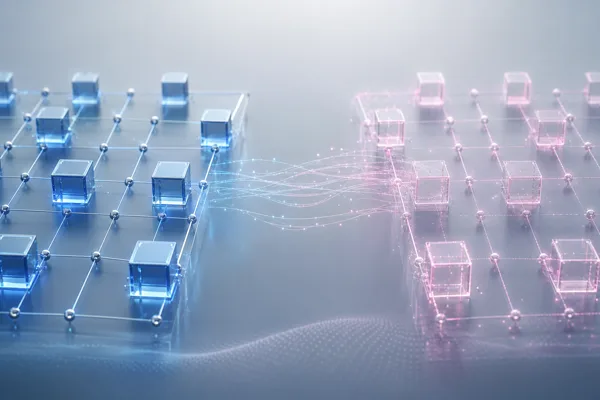
Key Takeaways
- A mainnet is the live, production blockchain where real transactions happen and tokens have real value, while a testnet is a separate network that mirrors the same software but uses worthless test tokens.
- Developers use testnets to deploy and validate smart contracts, dApps, and protocol upgrades without paying real gas or risking user funds.
- Most major chains run one or more named testnets, like Ethereum’s Sepolia and Holesky, and provide free test tokens through faucets.
In This Article
Mainnets and testnets are two parallel versions of the same blockchain. They share most of the underlying software but serve very different purposes: the mainnet is where real value moves, and the testnet is where developers experiment without risking real money.
What Is a Mainnet?
A mainnet (short for “main network”) is the live, production version of a blockchain. It is the network that holds the canonical ledger, where transactions are broadcast, verified by validators or miners, and stored permanently. The tokens on a mainnet have real economic value: Bitcoin’s BTC, Ethereum’s ETH, and Solana’s SOL all live on their respective mainnets.
Most chains launch a mainnet only after months or years of development and testing. Before that point, the project usually raises funds and grows a community through an ICO, an IEO, an airdrop, or another mechanism. The money raised pays for building, auditing, and stress-testing the network on its testnet.
Once a mainnet is live, the code is typically published as open source so that anyone can verify the rules, run a node, or build on top of it.
What Is a Testnet?
A testnet is a separate network that runs the same client software as the mainnet but is intentionally kept apart. Developers use it to deploy and try out contracts, applications, and protocol upgrades without risking real funds or real network state.
Crucially, the tokens used on a testnet have no economic value. They are handed out for free through services called faucets, and they only function on that specific test network. A successful test on a testnet is not a guarantee that something will work on mainnet, but it catches the vast majority of bugs before they touch real money.
Testnets are also where infrastructure providers, wallet teams, and smart contract auditors do integration work. When a chain plans a hard fork, the upgrade usually lands on the testnets first.
Why Testnets Matter
Running everything directly on mainnet would be slow, expensive, and dangerous. Testnets solve a few specific problems.
- Cost: Mainnet transactions cost real gas. During development, contracts may be deployed and redeployed dozens of times. Doing that on mainnet would be prohibitive.
- Safety: Bugs in smart contracts can drain millions of dollars. Catching them on a testnet means no one loses real funds.
- Realism: Testnets aim to mirror mainnet conditions, including block times, opcode behavior, and increasingly even MEV dynamics, so what works there is likely to work in production.
- Upgrade rehearsal: Core protocol changes are deployed to testnets first so the wider community can confirm they behave correctly before mainnet activation.
How to Access a Testnet
Connecting to a testnet is usually a matter of switching networks in a wallet such as MetaMask, Rabby, or any other compatible wallet. Each testnet has its own chain ID and RPC endpoint, which most wallets ship by default.
To get test tokens, you visit a faucet. Faucets are operated by the chain’s foundation, by infrastructure providers, or by community projects, and they hand out small amounts of test tokens to wallet addresses, often subject to anti-abuse measures. Once you have test tokens, you can pay test gas, deploy contracts, mint test NFTs, or interact with dApps that have a testnet deployment.
Key Differences at a Glance
- Purpose: A mainnet is the live, production network; a testnet is a sandbox for development and rehearsal.
- Token value: Mainnet tokens have real market value; testnet tokens are free and worthless outside the network.
- Cost of use: Mainnet transactions pay real gas; testnet transactions pay test gas obtained from a faucet.
- Audience: Mainnets serve end users and applications; testnets serve developers, auditors, and infrastructure teams.
- Stability: Mainnets prioritize uptime and conservative changes; testnets are reset, deprecated, or replaced relatively often.
Common Testnets You’ll Encounter
A few examples make the concept concrete. Ethereum currently runs two main testnets: Sepolia for application developers, and Holesky for protocol and staking developers. Earlier Ethereum testnets such as Goerli, Ropsten, Rinkeby, and Kovan have all been deprecated. Bitcoin runs Testnet3, Signet, and a regression-test environment called regtest. Solana has Devnet and Testnet, each with a slightly different focus. Many newer chains follow a similar pattern, often with a long-running stable testnet plus shorter-lived networks for specific upgrades.
For anyone building on or learning about a particular chain, the testnet is the natural starting point. It looks and feels almost identical to mainnet, but mistakes there cost nothing.
 Stay Ahead in Crypto