

Liquid staking continues to expand across the crypto market as users seek both rewards and flexibility. It allows people to stake tokens while still using them, and this development is influencing the direction of decentralized finance.
Staking originally required tokens to remain locked for long periods, and this prevented users from trading or deploying them. Liquid staking changes this structure, and it enables continued access to the value of the staked asset.
In a liquid staking model, a user deposits tokens into a staking protocol and receives a second token that represents the staked amount. This representation token can move across DeFi platforms, and it continues to maintain a claim on the original locked tokens.
This mechanism helps users earn staking rewards without losing liquidity, and it provides greater control over asset use. The approach also increases participation because users do not need to sacrifice flexibility to support network security.
Understanding Staking and Proof-of-Stake
Staking functions as the security foundation for Proof-of-Stake blockchains, and it requires users to commit tokens to support network operations. Validators verify transactions and produce new blocks, and their staked tokens can be penalized if they fail to operate correctly.
Networks such as Ethereum, Solana, and Polygon use Proof-of-Stake to reduce energy usage and improve scalability. Stakers earn rewards because they help secure the network and uphold consensus rules.
However, traditional staking locks tokens and restricts access. This lock period can last from days to multiple months, depending on the blockchain.
What Liquid Staking Changes
Liquid staking introduces an alternative that allows users to earn rewards while preserving liquidity. The staked tokens support the network, but users can still interact with DeFi platforms using the representation token they receive.
The representation token reflects the value of the underlying staked asset. It can be transferred, traded, lent, or used in liquidity pools.
In short:
- The original tokens stay locked and continue to earn rewards.
- The user receives a Liquid Staking Token (LST) or Liquid Staking Derivative (LSD).
- The LST works like a regular token across DeFi platforms.
- When users want to withdraw, they return the LST to the protocol and unlock the original tokens.
This system provides a way to stake without becoming financially stuck.
How Liquid Staking Works Step-by-Step
Liquid staking maintains a simple workflow despite the technology supporting it. The process can fit both beginners and advanced users.
Process:
- The user deposits tokens into a liquid staking platform.
- The platform stakes the tokens on a Proof-of-Stake network.
- The user receives LSTs that represent ownership of the staked tokens.
- The original staked tokens earn continuous rewards.
- The user may trade, lend, or reuse the LSTs in DeFi.
- To retrieve the original tokens, the user returns the LSTs and performs an unstake request.
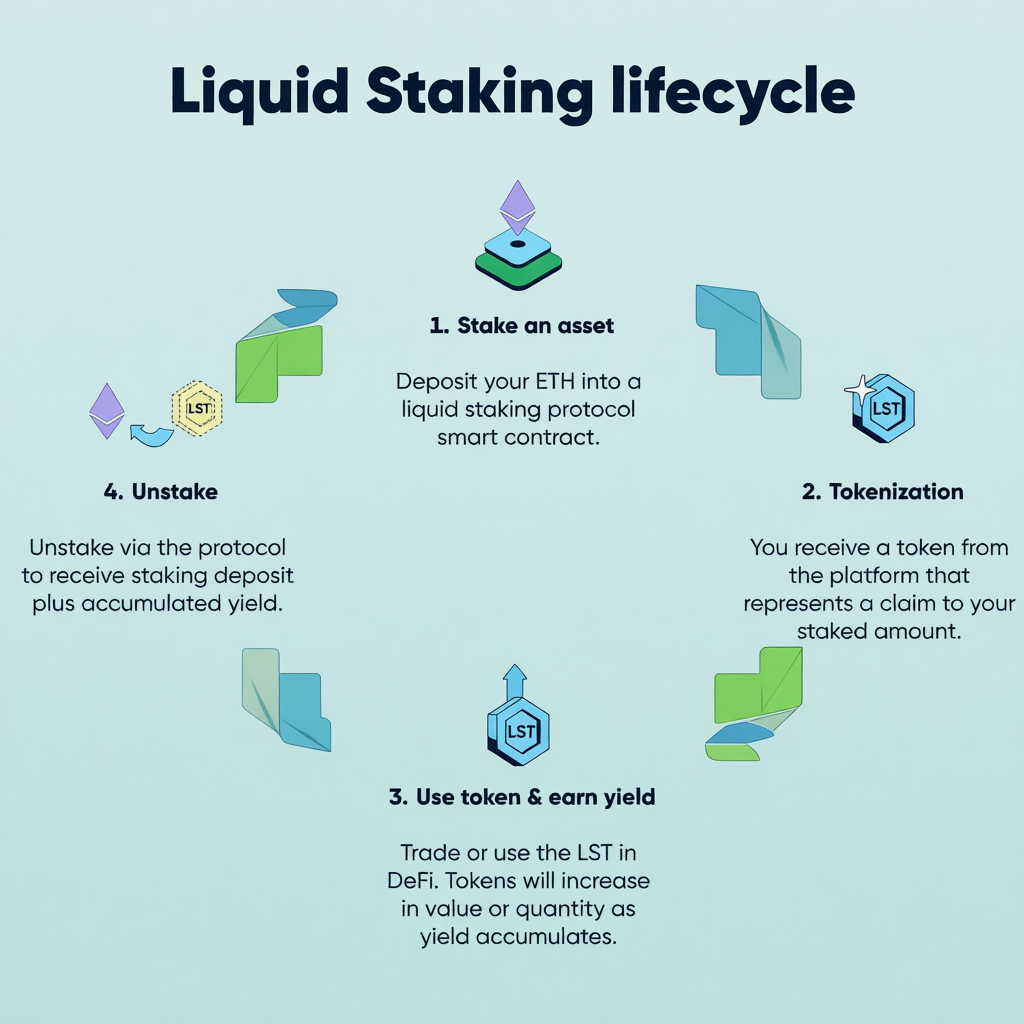
Each step helps maintain both liquidity and reward generation. This provides a flexible financial environment within blockchain systems.
What Are Liquid Staking Tokens (LSTs)?
Liquid Staking Tokens operate as receipts and functional financial assets. They represent proof of ownership over staked assets, and their value generally tracks the original token value plus staking rewards.
These tokens behave like standard crypto tokens because they comply with programmable token standards. They can therefore move between wallets and platforms without restriction.
Examples of popular LSTs:
- stETH for Ethereum
- mSOL for Solana
- stMATIC for Polygon
- rETH for Rocket Pool on Ethereum
- stDOT used for liquid staking on Polkadot
These tokens allow users to continue engaging with decentralized applications while earning staking rewards in the background.
Advantages of Liquid Staking
Liquid staking provides multiple benefits, and these advantages contribute to its rising adoption across networks. It improves the efficiency and usability of staked cryptocurrency.
Main advantages include:
- Liquidity remains available: Users continue using the token value while staking.
- Reward generation continues: Staking rewards accumulate without sacrificing mobility.
- Expanded DeFi participation: Users can lend, borrow, or provide liquidity with LSTs.
- Lower entry barriers: No need to run a validator or have large minimum stake deposits.
- Better capital efficiency: Assets work in multiple places at once.
This flexibility helps users take part in fast-changing markets without sacrificing earning potential.
Risks and Considerations
Like all financial activities, liquid staking carries risks. Users must remain aware of how these risks might affect both their rewards and token value.
Primary risks include:
- Smart contract vulnerabilities: Issues in contract code could allow exploitation.
- Validator slashing: Poor validator performance may reduce staked balances.
- Representation token volatility: LSTs may temporarily diverge from the value of the underlying asset.
- Protocol fees: Some platforms charge performance or withdrawal fees.
Understanding these risks helps users choose platforms with strong track records and audits.
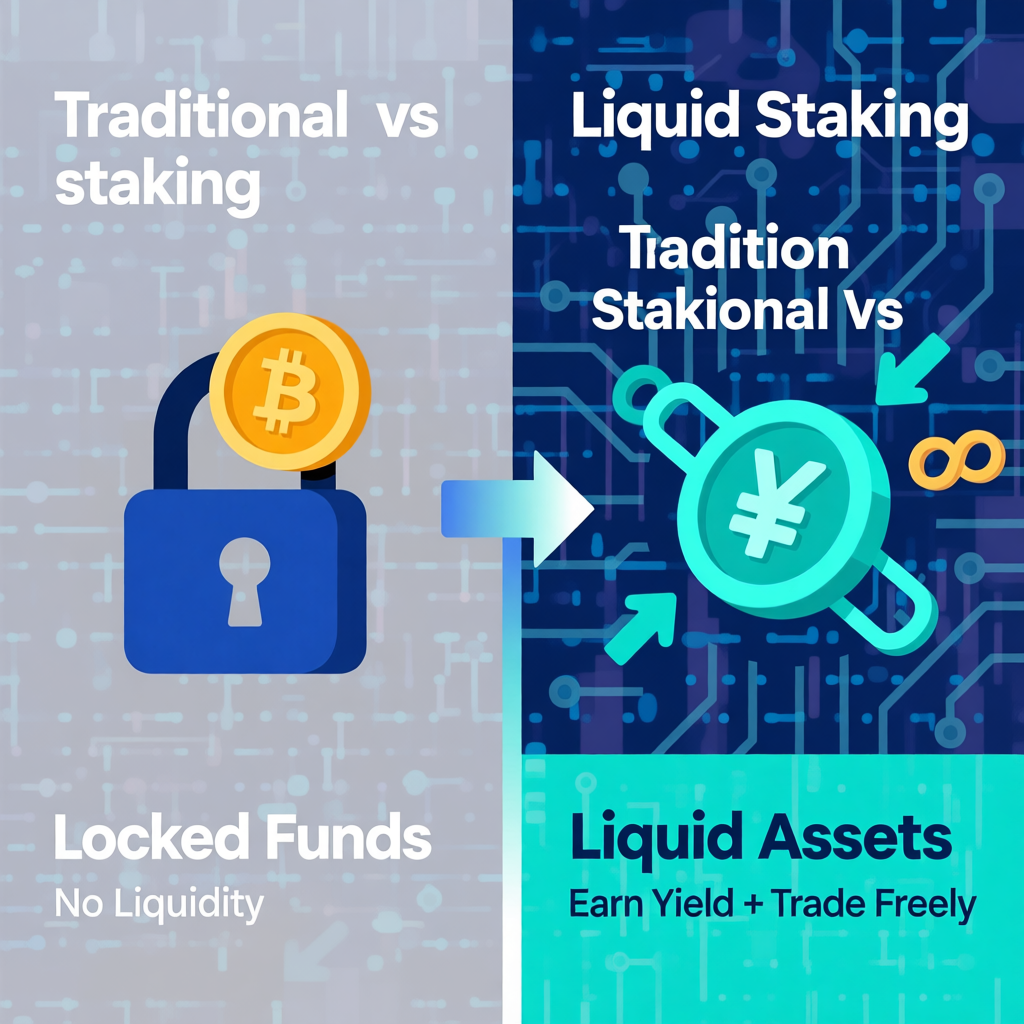
Liquid Staking vs Traditional Staking
Traditional staking locks tokens, and users cannot access them until the staking period ends. This design was effective for network security, but it created financial rigidity.
Liquid staking allows users to maintain access through LSTs. It removes the lock barrier but still supports network security and reward generation.
Traditional staking suits users who want simplicity and do not require liquidity. Liquid staking suits users who want active portfolio management and participation in multiple DeFi activities.
Liquid Staking vs Staking Pools
Staking pools gather multiple users’ funds to meet network validator requirements. The pooled funds remain locked for the duration of the staking period.
Liquid staking offers a different structure by giving tokens back to the user for immediate use. This approach maintains utility while still using the pooled funds for network support.
Pooling focuses on accessibility, while liquid staking focuses on flexibility. Both models share the goal of increasing participation in Proof-of-Stake ecosystems.
Restaking and Liquid Restaking Tokens (LRTs)
Restaking extends liquid staking by allowing users to stake LSTs again on another platform. This creates additional reward layers but also increases exposure to risk.
Liquid Restaking Tokens represent ownership in these restaked layers. The complexity level increases, and users must evaluate multiple platform risks instead of one.
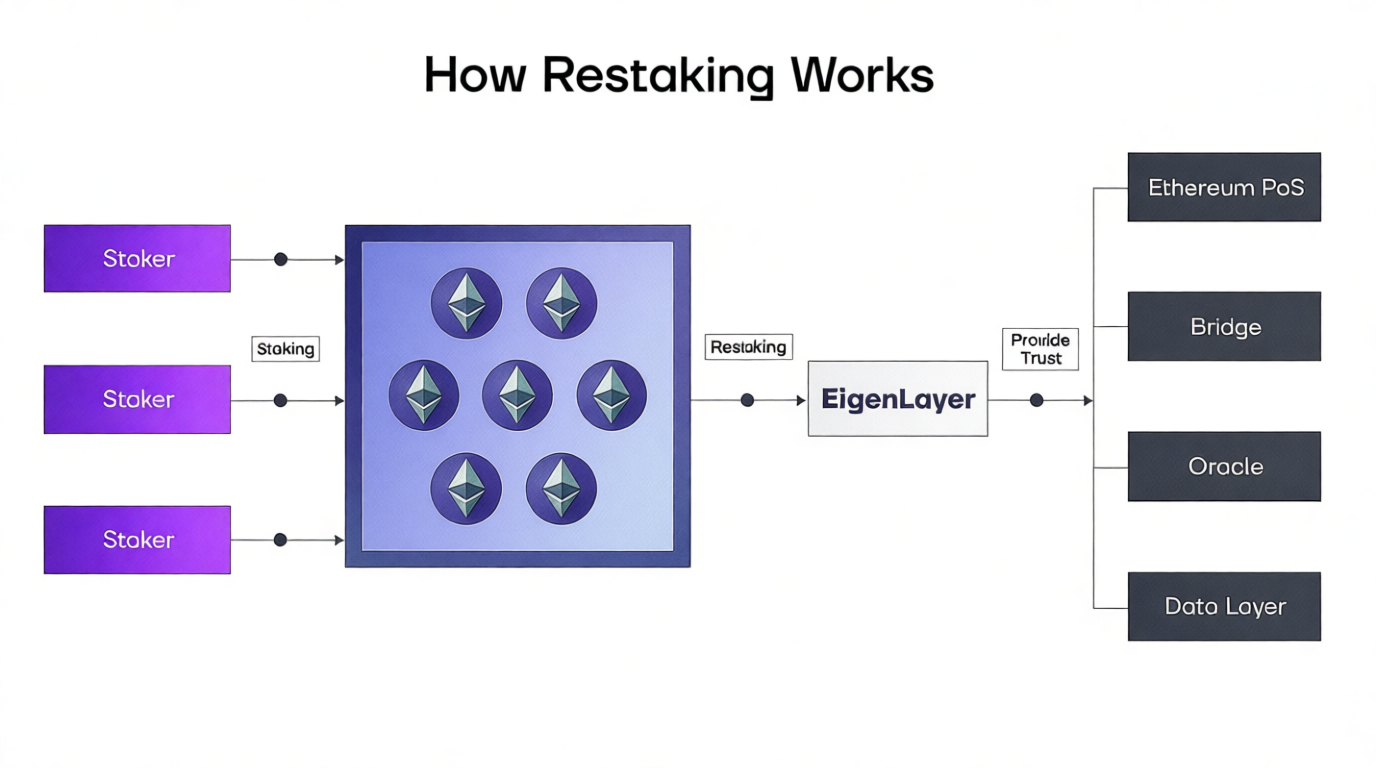
Restaking appeals mainly to experienced DeFi participants seeking advanced yield strategies. New users should approach restaking cautiously due to its added technical risk.
Growth Across Major Blockchains
Liquid staking is expanding because more networks adopt Proof-of-Stake. Ethereum’s move to Proof-of-Stake accelerated this transition and increased demand for staking solutions.
Solana and Polygon also host active liquid staking ecosystems, and each network integrates LSTs into lending and liquidity platforms. Cross-chain liquid staking research continues as protocols explore ways to unify platform benefits.
This growth signals the market’s move toward more flexible blockchain participation. The trend also suggests broad support for decentralized financial coordination.
Current Market Direction
Organizations in the crypto industry continue building products that integrate liquid staking. Platforms seek to simplify participation, reduce technical requirements, and increase reward options.
The model encourages deeper network engagement while still supporting user autonomy. Developers and users both recognize the efficiency improvements offered by liquid staking.
As more blockchains adopt similar mechanisms, liquid staking is likely to hold a central role in decentralized economies. Its impact continues to influence trading, lending, governance, and liquidity behavior across networks.