

Traders worldwide increasingly rely on technical analysis to forecast price movements. Among the most used tools are ascending and descending triangles. These patterns guide traders to identify potential market continuations or reversals during periods of price consolidation.
Ascending and descending triangles form as buyers and sellers battle for control, and the price moves within narrowing ranges. Traders monitor these setups to prepare for likely breakouts or breakdowns. These triangle formations provide a visual representation of market momentum and possible direction.
Understanding the Triangle Chart Pattern
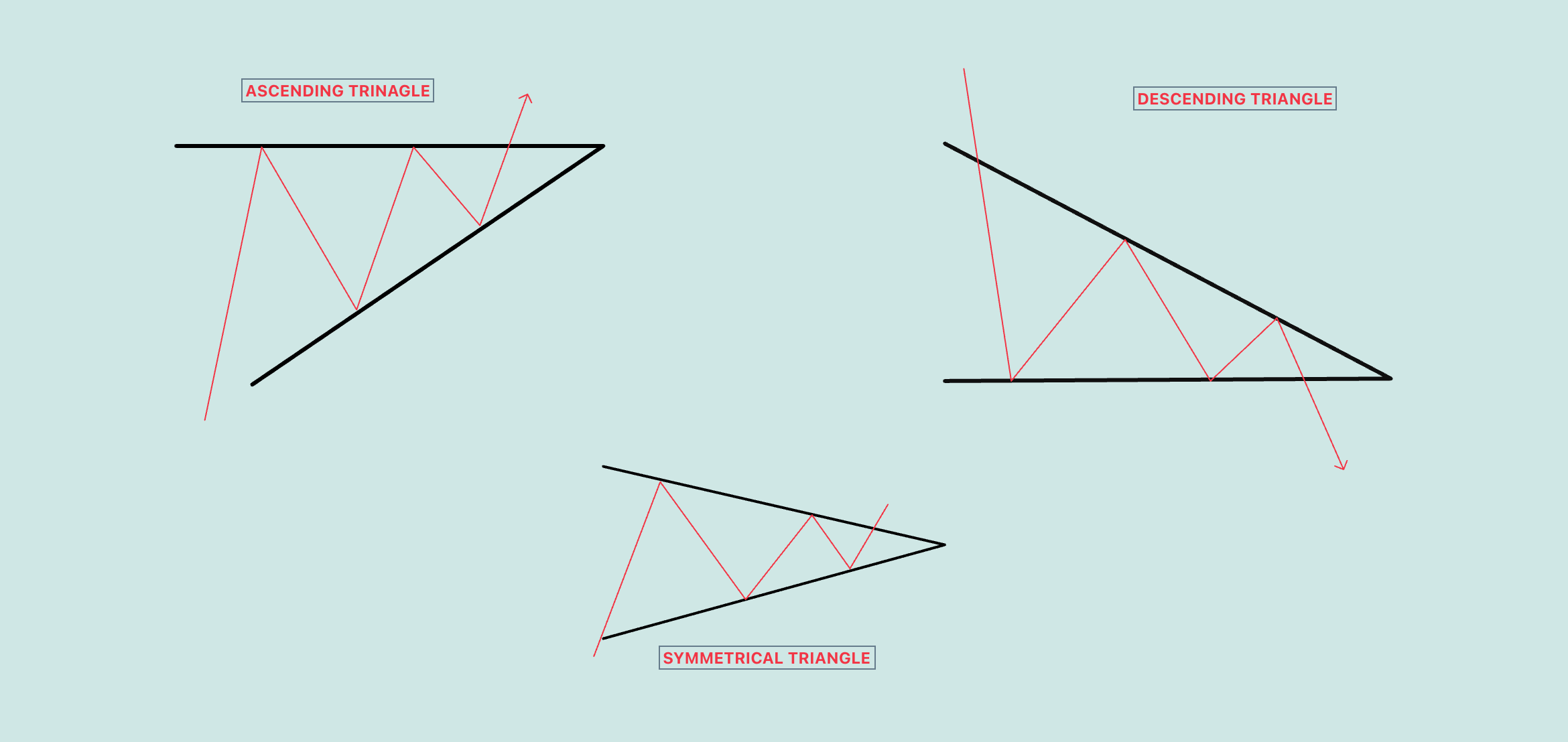
Triangle patterns emerge on price charts when trendlines converge to form a triangle shape. This occurs as price action narrows between a resistance and support zone. Traders use these formations to identify high-probability trading opportunities during market consolidation.
There are two primary triangle types:
- Ascending Triangle: Bullish pattern with flat resistance and rising support.
- Descending Triangle: Bearish pattern with flat support and falling resistance.
Each type reflects different market dynamics and potential outcomes. They are not guarantees but help increase the probability in trade setups.
Key Features of Triangle Patterns
Traders can identify triangle patterns using these characteristics:
- Support and Resistance Lines:
- Ascending triangles have flat resistance and rising support.
- Descending triangles have a flat support and falling resistance.
- Volume Behavior:
- Volume typically declines during the pattern’s formation.
- A volume spike on breakout confirms a valid move.
- Breakout Direction:
- Ascending triangles usually break upward.
- Descending triangles often break downward.
These patterns help traders plan trades, though confirmations are necessary before acting.
The Ascending Triangle: Bullish Continuation Signal
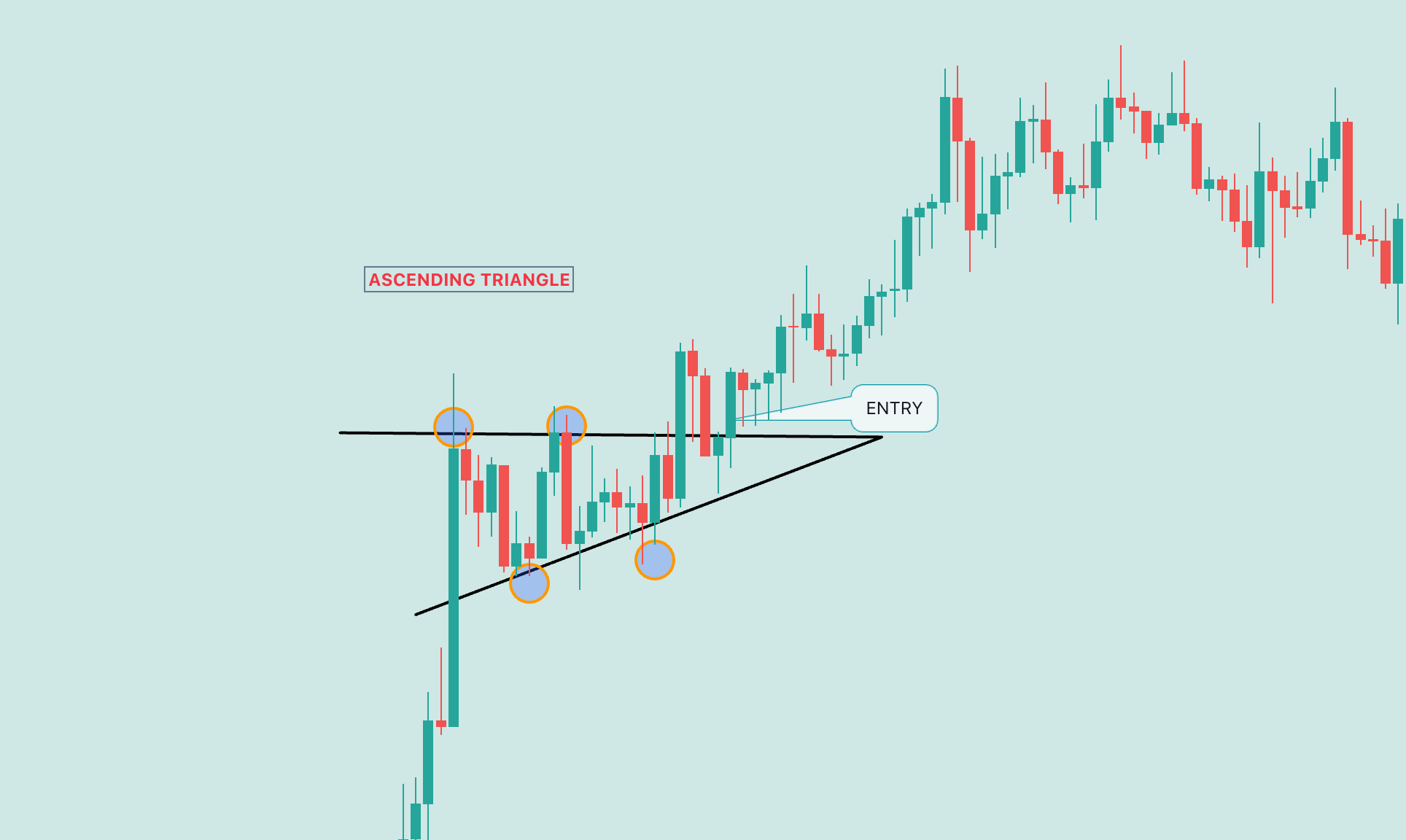
An ascending triangle occurs during an uptrend when buyers gradually gain strength. The price repeatedly tests a resistance level but forms higher lows over time. This shows that demand is increasing as buyers push prices higher.
Structure of Ascending Triangle:
- Flat resistance line connects equal highs.
- Rising support line connects higher lows.
- Volume reduces during pattern formation, then spikes on breakout.
Trading the Pattern:
- Entry: Place a buy order just above resistance.
- Stop-loss: Set it below the rising support line.
- Take profit: Measure the triangle’s height and project it above the breakout point.
Traders consider ascending triangles as high-probability bullish setups, but confirmations are always required.
The Descending Triangle: Bearish Continuation Signal
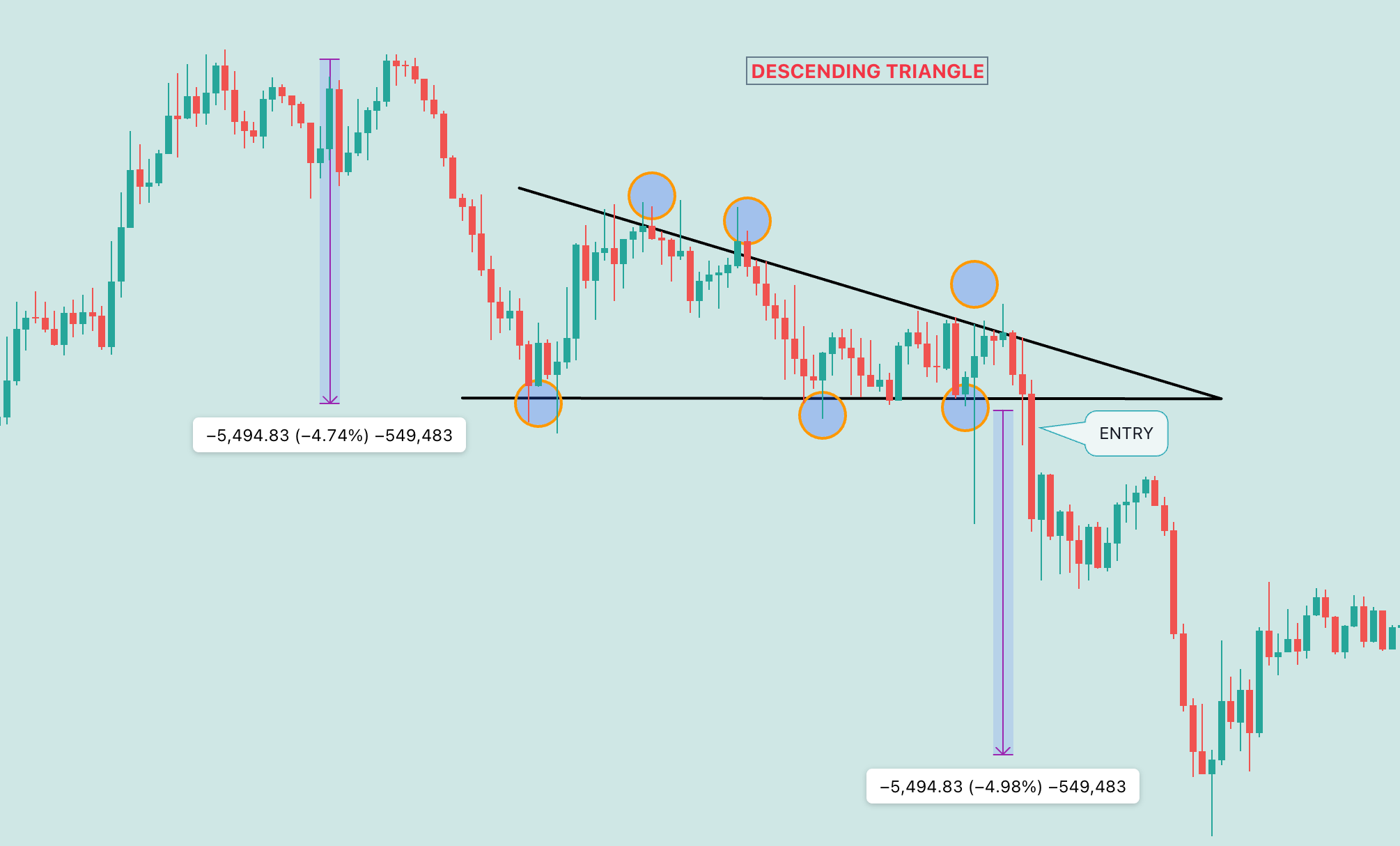
Descending triangles reflect selling pressure, commonly forming during downtrends. The price finds repeated support but creates lower highs each time. Sellers increasingly dominate, compressing the price downward.
Structure of Descending Triangle:
- Flat support line connects equal lows.
- Descending resistance line connects lower highs.
- Volume drops during setup and rises sharply on breakdown.
Trading the Pattern:
- Entry: Place a sell order just below support.
- Stop-loss: Set it above the descending resistance line.
- Take profit: Measure the height and project it downward from the breakdown point.
Although descending triangles typically break lower, traders must confirm signals before entering positions.
Symmetry and Pattern Confirmation
Triangle formations typically complete after five touches of the trendlines, either three on one side and two on the other or vice versa. These touches validate the strength of support and resistance levels. Breakouts often occur near the triangle’s apex.
Confirmation Techniques:
- Watch for a strong candle close beyond the trendline.
- Ensure volume increases during breakout or breakdown.
- Use indicators like RSI or MACD to validate momentum.
Relying on confirmation helps traders avoid false breakouts, which can lead to losses.
Differences Between Ascending and Descending Triangles
Although both are triangle patterns, they reflect opposing market sentiments.
| Feature | Ascending Triangle | Descending Triangle |
| Market Sentiment | Bullish | Bearish |
| Upper Trendline | Flat (resistance) | Descending (resistance) |
| Lower Trendline | Rising (support) | Flat (support) |
| Breakout Direction | Typically upward | Typically downward |
| Volume Behavior | Declines during pattern, then spikes | Declines during pattern, then spikes |
| Entry Strategy | Buy above resistance | Sell below support |
These clear distinctions make it easier for traders to choose a strategy based on the pattern type.
Chart Timeframes and Triangle Reliability
Triangle patterns appear across different timeframes, but longer intervals often produce better signals.
- Daily Charts: Best for spotting reliable triangle patterns.
- 4-Hour Charts: Useful for confirming setups and refining entry points.
- 1-Hour Charts: Helps fine-tune stop-loss and take-profit levels.
Traders should adapt their strategy based on the timeframe they trade and the volatility of the asset.
Practical Trading Tips for Triangle Patterns
Traders aiming to use triangle patterns should follow structured plans to increase success rates.
Key Tips:
- Wait for confirmed breakouts with volume spikes.
- Avoid trading inside the triangle unless scalping.
- Use stop-losses outside the pattern boundaries.
- Set profit targets based on the triangle’s height.
- Prepare for throwbacks or retests after breakout.
Risk management is essential, as even well-formed patterns can fail due to unexpected news or market shocks.
Common Mistakes to Avoid
Even with a solid strategy, mistakes can reduce trading success.
Common Pitfalls:
- Entering before confirmation
- Ignoring volume signals
- Over-leveraging on breakout expectations
- Failing to use stop-loss protection
- Trading without checking the overall trend
Traders should remain disciplined, patient, and data-driven to improve consistency.
Triangle Patterns in Technical Analysis
Triangle chart patterns are vital tools for traders analyzing price movement. They provide insight into market sentiment and potential breakout directions. When applied correctly, ascending and descending triangles offer clear and actionable trading setups.