
Country Information
 Capital: Santa Fé de Bogotá
 Continent: South America
 Language: Spanish
 Population: 48 471 400
 Surface (km2): 1 141 748
Surface (sq mi): 440 831
Surface (km2): 1 141 748
Surface (sq mi): 440 831 Extra Information
 Currency: Colombian peso $ (COP)
 ISO Code: CO
 Domain Extension: .co
 Calling Code: +57
 Time (CET): UTC-05:00
Time (CEST): UTC-05:00
Time (CET): UTC-05:00
Time (CEST): UTC-05:00Website
 Official Website: Gov.co
 Info Website: Colombia.travel
Extra Links
 Company Registry: Org.co
Social Media & News
 Coins: 10
 Companies: 2
 Total: 12
Ranking
 Overall Rank: 70
 Rank Per Capita: 103
Blockchain Overview
Category:
| Name | Category |
|---|
Frequently Asked Questions
Description
Disclaimer: The regulatory information provided below is for general informational purposes only and may not reflect the most current legal developments. Cryptocurrency regulations are rapidly evolving and can change frequently. This information should not be considered legal or tax advice. Before making any business or investment decisions, please consult with qualified legal, tax, or financial professionals familiar with your specific jurisdiction and circumstances. Always verify current regulations with official government sources and regulatory bodies.
Legal Classification & Regulatory Framework
Cryptocurrency Status
Colombia currently lacks comprehensive cryptocurrency-specific legislation, placing digital assets in a regulatory gray area. Multiple government authorities have clarified what cryptocurrencies are not, rather than establishing what they are. The Banco de la República (Central Bank of Colombia) has definitively stated that cryptocurrencies do not constitute legal tender, money, or foreign currency under Colombian law. The Financial Superintendence of Colombia (Superintendencia Financiera de Colombia, or SFC) has similarly confirmed that cryptocurrencies are not classified as currency or securities under capital market laws.
For practical purposes, cryptocurrencies are treated as intangible assets in Colombia. This classification emerged through various regulatory opinions and statements from the National Tax and Customs Directorate (Dirección de Impuestos y Aduanas Nacionales, or DIAN), which has established that crypto-assets are susceptible to valuation and form part of an individual’s or corporation’s patrimony. While individuals may own, transact, and accept cryptocurrencies as payment, there is no legal obligation for merchants or businesses to accept them, and users bear all associated risks.
The Superintendency of Companies (Superintendencia de Sociedades) has evolved its position over time. Initially stating that crypto-assets could not be contributed to a corporation, the agency later reversed course and permitted such contributions, treating them as intangible assets or inventory for corporate purposes.
Tax Treatment
The DIAN has established a framework for cryptocurrency taxation based on existing tax code provisions rather than crypto-specific legislation. Cryptocurrencies are treated as intangible assets for tax purposes, and Colombian residents who hold crypto-assets must report them on their annual income tax return at their fair market value.
Capital gains from cryptocurrency sales are subject to income tax. For assets held for more than two years, a preferential capital gains rate applies; shorter holding periods result in taxation at regular progressive income tax rates, which can reach significant percentages in higher income brackets. Income from cryptocurrency mining is treated as income in kind, with the value of the mined coins recognized as taxable income upon receipt.
Value-Added Tax (VAT) does not apply to cryptocurrency sales themselves, as crypto-assets are not classified as industrial property. However, services related to cryptocurrency transactions, such as exchange fees, may be subject to the standard VAT rate. Businesses engaged in crypto-related activities must comply with electronic invoicing requirements for services rendered within Colombia.
Wealth tax may apply to individuals whose net assets, including cryptocurrency holdings, exceed established thresholds. The DIAN requires all cryptocurrency values to be converted to Colombian pesos (COP) for tax reporting, as COP is the only currency accepted for tax obligations.
Regulatory Oversight
Several Colombian government agencies share oversight responsibilities for cryptocurrency-related activities, though no single comprehensive regulatory framework exists.
The Financial Superintendence of Colombia (SFC) supervises financial institutions and has historically taken a restrictive stance toward cryptocurrency. Through Circular Letter 29 of 2014, the SFC prohibited supervised entities from holding, investing in, or engaging in intermediation with digital currencies. This prohibition effectively prevents traditional banks from directly offering cryptocurrency services.
The Financial Information and Analysis Unit (Unidad de Información y Análisis Financiero, or UIAF) serves as Colombia’s primary anti-money laundering (AML) and counter-terrorist financing (CTF) authority. Virtual Asset Service Providers (VASPs) must submit Suspicious Transaction Reports (STRs) to the UIAF when they detect potential money laundering or terrorist financing activities. Regular reporting on client activities is also required.
The Superintendency of Companies requires businesses dealing with virtual assets to implement robust Anti-Money Laundering and Counter-Terrorist Financing Risk Management Systems (SARLAFT) when transaction volumes exceed certain thresholds.
Legislative efforts to establish a comprehensive regulatory framework have been ongoing. Draft Bill 510/2025, which proposes regulating Virtual Asset Service Providers, is currently under congressional discussion. This legislation would introduce licensing requirements for VASPs, consumer protection measures, marketing rules, educational requirements, and taxation provisions while strengthening AML/CTF compliance frameworks.
Business Environment
Banking Relationships
The relationship between traditional banking and cryptocurrency businesses in Colombia has been historically challenging. The SFC’s prohibition on supervised entities engaging with digital currencies effectively created barriers for cryptocurrency companies seeking banking services. This restrictive stance led to account closures and forced some exchanges to cease operations in the country.
A notable development occurred when Bancolombia Group, one of Colombia’s most significant financial holdings, launched a digital asset platform called Wenia. This platform allows customers with Bancolombia savings or checking accounts to trade cryptocurrencies. However, it is essential to note that Wenia is incorporated in Bermuda rather than under Colombian law, representing a creative approach to navigating the regulatory landscape rather than a direct integration of crypto services within the regulated Colombian banking system.
Cryptocurrency businesses operating in Colombia generally face difficulties establishing and maintaining relationships with traditional financial institutions. This has led many operators to seek alternative solutions, including offshore structures and peer-to-peer trading mechanisms.
Licensing Requirements
Currently, Colombia does not have a mandatory licensing regime specifically for cryptocurrency businesses. However, this is expected to change if pending legislation is enacted. The proposed regulatory framework would require VASPs to obtain licenses to operate legally within the country.
In the absence of specific crypto licensing, businesses must comply with existing regulatory obligations. This includes implementing SARLAFT systems when required by the Superintendency of Companies, fulfilling UIAF reporting obligations, and meeting general corporate registration and tax compliance requirements. Companies must also adhere to consumer protection regulations and data protection laws.
From 2021 to 2023, the SFC operated a regulatory sandbox that allowed limited experimentation with crypto-related services in a controlled environment. However, this sandbox concluded without producing new formal regulations, leaving businesses in continued uncertainty about future requirements.
Innovation Support
Colombia has demonstrated interest in blockchain technology through various government initiatives. The Ministry of Information and Communications Technologies (MinTIC) has led blockchain experimentation phases to explore potential applications in public-sector operations.
The central bank partnered with Ripple to pilot blockchain use cases for enhancing the high-value payment system. This initiative, conducted in collaboration with MinTIC, aimed to educate public entities on the capabilities of blockchain technologies for payment systems and data management. The pilot explored potential efficiencies in transaction processing using distributed ledger technology.
Colombia has also explored blockchain applications beyond financial services. A notable project used blockchain technology to permanently store and authenticate property titles, addressing historical issues in land distribution that have contributed to social conflicts. This initiative demonstrated government openness to blockchain solutions for public administration challenges.
The central bank has researched the potential issuance of a Central Bank Digital Currency (CBDC), though this exploration remains in early stages without a clear timeline for implementation. The bank’s instant payment system, Bre-B, was rolled out to improve domestic payment infrastructure, though it operates independently from any CBDC development.
Market Characteristics
Adoption Patterns
Colombia has emerged as one of the significant cryptocurrency markets in Latin America, with millions of residents actively engaged in buying, selling, and trading digital assets. Several factors, including economic conditions, a tech-savvy population, and interest in alternative financial services, drive the country’s adoption.
Remittances play a role in cryptocurrency adoption, as Colombians seek efficient methods for cross-border money transfers. The informal nature of much of the crypto activity reflects the lack of clear regulatory frameworks, with peer-to-peer trading platforms seeing significant volume.
Institutional adoption remains limited due to regulatory restrictions on financial entities engaging with cryptocurrencies. The prohibition on banks holding or intermediating digital currencies has constrained the development of institutional-grade cryptocurrency products and services within the traditional financial system.
Industry Focus
The Colombian cryptocurrency industry primarily consists of exchange platforms, peer-to-peer marketplaces, and payment service providers. Several international exchanges serve Colombian users, offering trading pairs with the Colombian peso. Local startups have also emerged, focusing on accessible cryptocurrency trading and remittance solutions.
Fintech integration has been a notable trend, with digital payment platforms exploring cryptocurrency-related services within the constraints of the regulatory environment. Some platforms operate through partnerships with licensed entities or by structuring operations through foreign jurisdictions.
The current regulatory uncertainty creates challenges for businesses seeking to establish long-term operations in Colombia. Many operators maintain flexible structures that can adapt to evolving regulatory requirements while serving the growing domestic market demand.
Regulatory Evolution
Colombia’s approach to cryptocurrency regulation has evolved from initial warnings and restrictions toward a more structured framework development. The progression from outright prohibitions on financial institution involvement to active legislative efforts represents a significant shift in regulatory philosophy.
The pending VASP legislation reflects Colombia’s recognition that formalizing the cryptocurrency sector is necessary for consumer protection, financial system integrity, and alignment with international standards for combating money laundering and terrorist financing. The proposed framework draws on global best practices while attempting to balance innovation with risk management.
Colombia is not subject to frameworks like the European Union’s Markets in Crypto-Assets (MiCA) regulation. However, the country’s participation in international organizations and its commitment to FATF recommendations influence its regulatory development. The anticipated adoption of the global Crypto-Asset Reporting Framework (CARF) will further shape compliance requirements for businesses operating in or serving Colombian customers.
The regulatory trajectory suggests movement toward formalization, though the timeline remains uncertain. Businesses and individuals engaged in cryptocurrency activities should monitor legislative developments and prepare for increased compliance obligations as the regulatory framework matures.
For Current Information:
- Financial Superintendence of Colombia (SFC): www.superfinanciera.gov.co
- Banco de la República (Central Bank): www.banrep.gov.co
- National Tax and Customs Directorate (DIAN): www.dian.gov.co
- Financial Information and Analysis Unit (UIAF): www.uiaf.gov.co
- Superintendency of Companies: www.supersociedades.gov.co
- Ministry of Information and Communications Technologies (MinTIC): www.mintic.gov.co
Country Map
Crypto News



Blockchain Companies





Other Countries




Crypto and Blockchain Articles

What is Aptos?
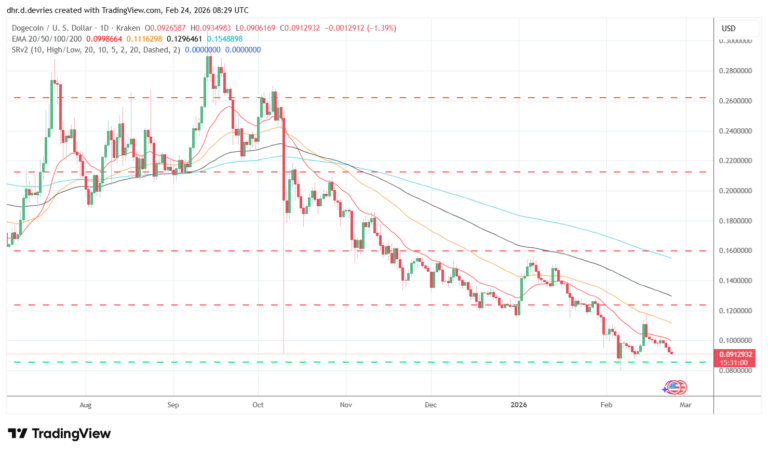
Dogecoin (DOGE) Price Prediction: Weekly Analysis February 24, 2026
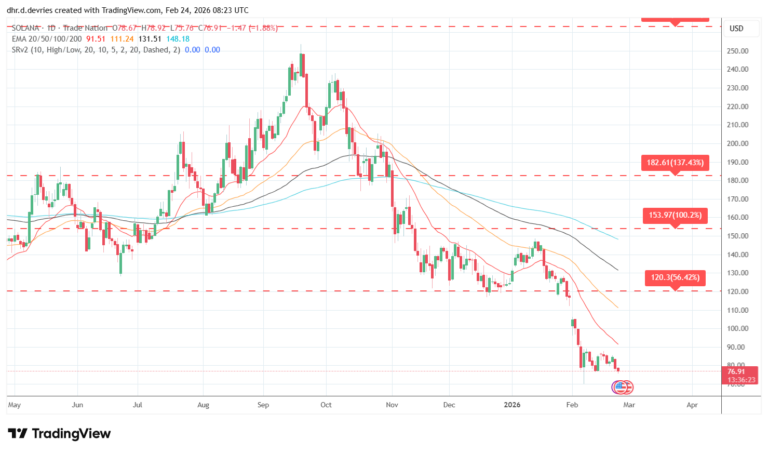
Solana (SOL) Price Prediction: Weekly Analysis February 24, 2026

Ethereum vs. Bitcoin for Online Gambling

What Is Polygon?

What is Aptos?
Dogecoin (DOGE) Price Prediction: Weekly Analysis February 24, 2026
Solana (SOL) Price Prediction: Weekly Analysis February 24, 2026
Press Releases and Contributions