

Liquidity plays a vital role in the efficient functioning of decentralized exchanges (DEXs). It enables users to buy and sell tokens without price disruption. DEX liquidity depends on user-supplied funds, and investors can earn returns by contributing to these pools.
Liquidity Powers DEXs and Facilitates Seamless Trading
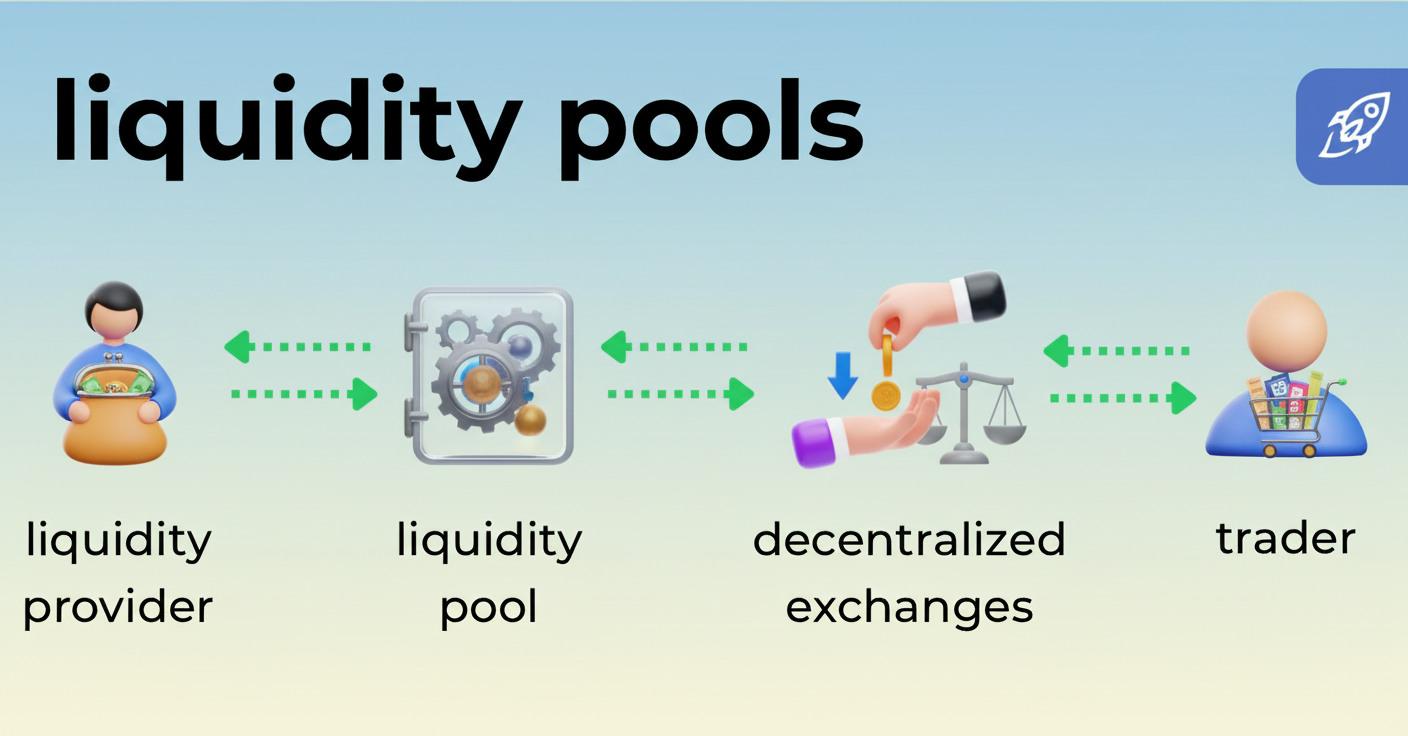
Decentralized exchanges rely on liquidity to execute token swaps instantly. Unlike centralized platforms, DEXs use smart contracts and liquidity pools instead of order books. These pools allow trades to occur directly, making DEXs fast and decentralized.
Liquidity ensures users face minimal slippage when trading assets on-chain. It also boosts trader confidence and encourages higher trading volumes. Consequently, liquidity becomes a foundational element for every DeFi protocol.
How Liquidity Works in a Decentralized Exchange
DEXs operate without intermediaries and match trades through Automated Market Makers (AMMs). AMMs use liquidity pools to allow trading between two or more crypto assets. A smart contract automatically calculates prices based on token ratios.
Users who deposit funds into these pools are called liquidity providers (LPs). In return, LPs receive tokens representing their share in the pool. These LP tokens allow them to claim their funds and any trading fees earned.
Prices in AMMs adjust using a formula such as the constant product formula (x * y = k). This method ensures tokens remain balanced inside the pool. As a result, users can swap tokens anytime, regardless of order book activity.
Why Liquidity Matters for Investors and Traders
High liquidity allows users to buy or sell tokens at fair prices. With more funds in a pool, price changes become smaller during trades. Therefore, traders face lower slippage and faster execution.
Investors who provide liquidity benefit from these trades. They earn fees collected from every transaction in the pool. This turns liquidity provision into a potential source of passive income.
In low-liquidity pools, trades can distort prices and raise risks. That’s why liquidity is a critical factor in both user experience and investor profitability on DEXs.
How Investors Earn Through Liquidity Provision
Liquidity providers earn a share of trading fees from the DEX. These fees are usually collected during token swaps made by other users. The more an LP contributes, the higher its share of these fees.
In many DEXs, LPs can also earn bonus tokens or incentives. These rewards often come from the protocol’s native token as a way to attract liquidity. This process is known as liquidity mining.
Here’s how LPs earn in a liquidity pool:
- Trading Fees: LPs receive a percentage of each trade, usually ranging from 0.3% to 1%.
- Incentives and Rewards: Many platforms offer native token rewards to LPs.
- LP Tokens: LP tokens represent your pool share and can be used in other DeFi applications.
- Yield Farming: Some platforms let LPs stake their LP tokens in other contracts for extra earnings.
These earnings can be claimed anytime or reinvested to compound returns. However, profits depend on market activity, the token pair chosen, and pool competition.
Understanding the Risks of Liquidity Provision
Providing liquidity involves financial risks that investors must evaluate carefully. One major risk is impermanent loss, which occurs when token prices diverge. It can reduce the value of your LP share when compared to simply holding the tokens.
Impermanent loss is temporary, but becomes permanent if the LP withdraws funds during a price imbalance. The greater the price difference, the higher the loss.
Other risks include:
- Smart Contract Risk: Bugs or vulnerabilities can lead to asset loss.
- Token Risk: The token you supply might crash in value.
- Platform Risk: The DEX itself may fail or be exploited.
Despite these risks, careful planning and choosing stable pairs can reduce exposure. Many LPs favour stablecoin pairs to minimise volatility and preserve capital.
Evaluating Liquidity Pools: What to Look For
Choosing the right liquidity pool is key to earning stable rewards. Not all pools offer equal returns or risk profiles. Investors should assess the following factors before adding liquidity:
- Token Pair Type: Stablecoin pairs like USDC/DAI offer lower risk and lower returns.
- Total Value Locked (TVL): Higher TVL means better liquidity and reduced slippage.
- Trading Volume: Pools with high volume generate more fees and returns.
- Annual Percentage Rate (APR): This reflects the expected return, including incentives.
- Fee Tier: Some pools allow users to set their preferred fee level.
Risk Levels by Pool Type
- Low Risk: USDC/DAI or ETH/USDC — stablecoins or large-cap tokens
- Moderate Risk: ETH/IMX or BTC/ETH — major crypto pairs with some volatility
- High Risk: New or low-volume tokens with little history or high volatility
Investors should select pools that match their personal risk tolerance and financial goals. Monitoring the pool regularly can also help in adjusting strategies if market conditions change.
How to Add Liquidity on a DEX
The process of adding liquidity is simple and can be done using most Web3 wallets. Here’s a general outline:
- Choose a DEX (e.g., Uniswap, SushiSwap, PancakeSwap)
- Select a token pair to provide liquidity for.
- Deposit an equal value of both tokens into the liquidity pool.
- Receive LP tokens, which represent your share of the pool.
- Track your earnings and withdraw or reinvest when needed.
Many platforms also allow users to manage liquidity automatically using tools like Gamma or Merkl. These tools can rebalance your investments and claim rewards efficiently.
How to Check Locked Liquidity for Safety
Locked liquidity refers to tokens that can’t be withdrawn for a set period, improving trust. It prevents sudden liquidity exits that could harm users. Here’s how to check if liquidity is locked:
- Use blockchain explorers like Etherscan or BscScan to inspect smart contracts.
- Look for third-party locking services like Unicrypt or Team Finance.
- Check project documentation for lock periods and conditions.
- Use analytics platforms like DappRadar or DeFiLlama to view liquidity data.
Locked liquidity helps reduce rug-pull risks and boosts investor confidence. Always confirm liquidity details before depositing funds into a new pool.
Why High Liquidity Benefits Everyone
High liquidity benefits the entire DEX ecosystem. Traders enjoy lower slippage and better prices, while investors earn higher fees from increased volume. More liquidity also stabilizes token prices and reduces volatility.
As DEXs grow in popularity, maintaining healthy liquidity becomes critical. Incentives for LPs, robust AMMs, and transparent practices ensure that DEXs remain competitive with centralized exchanges.
Driving DeFi Growth
Liquidity is the foundation that supports decentralized exchanges and enables smooth trading. Through liquidity pools, investors can contribute assets and earn returns, while traders gain access to fast and fair markets.
Providing liquidity on DEXs is a viable way to earn passive income, especially when done strategically. By choosing reliable platforms, assessing risk, and understanding impermanent loss, investors can manage exposure and optimize rewards.
In a rapidly evolving DeFi space, liquidity remains a core component. As tools and platforms improve, more investors are expected to participate in liquidity provision, shaping the future of decentralized finance.