English
  Nederlands
  Deutsch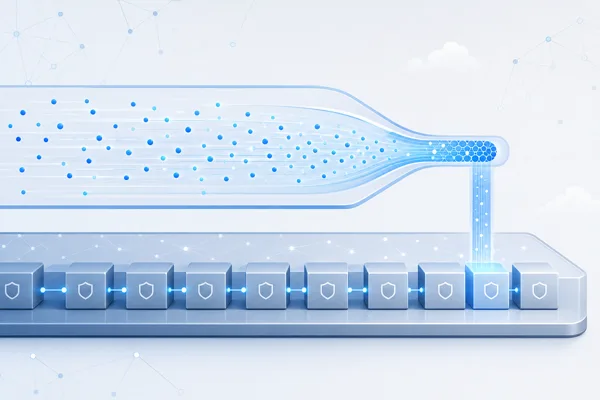
Key Takeaways
- Layer 2 (L2) chains sit on top of a Layer 1 blockchain like Ethereum, processing transactions off-chain and posting compressed data back for security, which means much lower fees and higher speed.
- The main designs are optimistic rollups, zero-knowledge rollups, state channels, and sidechains, each trading off speed, cost, decentralization, and how much security they inherit from Layer 1.
- L2s are now production infrastructure securing billions in value, and they are widely seen as the key to scaling blockchains for mainstream use.
In This Article
If you have ever tried using a busy blockchain during peak hours, you have probably felt the pain of slow confirmations, high fees, and a user experience that feels anything but “next-gen.” That is where Layer 2 chains come in.
Layer 2 (L2) chains are built to make blockchains faster, cheaper, and more usable without sacrificing the security of the underlying network. Instead of replacing major blockchains like Ethereum or Bitcoin, they sit on top of them and handle much of the heavy lifting.
The Core Problem: Blockchains Do Not Scale Easily
Layer 1 blockchains (like Ethereum and Bitcoin) are incredibly secure and decentralized. But they were not designed to handle millions of users making transactions at the same time.
As demand grows:
- Transactions compete for limited blockspace.
- Fees increase.
- Confirmation times slow down.
- Smaller transactions become uneconomical.
For example:
- Swapping $25 in tokens might cost $10 in gas.
- Minting an NFT during high demand can cost more than the NFT itself.
- Deploying smart contracts becomes expensive for builders.
This scalability bottleneck is part of what is often called the blockchain trilemma: balancing security, decentralization, and scalability. Layer 2 chains are one of the clearest attempts to solve this.
So, What Exactly Is a Layer 2 Chain?
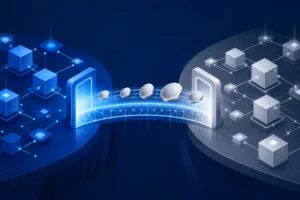
A Layer 2 chain is a separate network built on top of a Layer 1 blockchain. It processes transactions off the main chain and then periodically sends compressed data back to the Layer 1 for security and final settlement.
Think of it like this:
- Layer 1 is the main highway.
- Layer 2 is an express lane built above it.
Traffic moves faster on the express lane, but everything still connects back to the main road. In technical terms, L2 chains:
- Execute transactions off-chain.
- Bundle many transactions together.
- Post summarized data to Layer 1.
- Rely on Layer 1 for final security guarantees.
The result is lower fees, higher throughput, and a better user experience, without compromising the base layer’s decentralization.
How Layer 2 Chains Actually Work
While different L2 designs exist, most follow a similar flow:
- Users submit transactions to the Layer 2 network.
- The L2 processes and sequences them.
- Transactions are grouped (or “rolled up”) into batches.
- A compressed summary and proof is posted to Layer 1.
- Layer 1 verifies and stores the data permanently.

Instead of 1,000 individual transactions clogging the main chain, only one bundled submission hits Layer 1. That is where the scalability comes from.
The Main Types of Layer 2 Chains
Not all L2 chains are built the same. Each design makes tradeoffs between speed, cost, decentralization, and security. Here are the most common ones.
1. Optimistic rollups
Optimistic rollups assume transactions are valid by default unless someone proves otherwise. How they work:
- Transactions are executed on L2.
- Results are posted to Layer 1.
- A challenge window allows a fraud-proof.
- If no one disputes, the transaction is finalized.
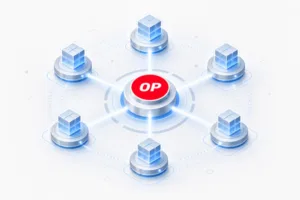
Popular examples include Arbitrum and Optimism. Key characteristics:
- Lower fees.
- Strong Ethereum-level security.
- Withdrawal delays, often around 7 days.
Tradeoff: you get cheaper transactions, but withdrawals back to Ethereum take time.
2. Zero-knowledge (ZK) rollups
ZK rollups take a more math-heavy approach. Instead of assuming transactions are valid, they generate cryptographic proofs that mathematically verify correctness before posting to Layer 1. Examples include Starknet, zkSync Era, and Polygon zkEVM. Key characteristics:
- Faster finality.
- No long challenge window.
- More complex technology.
Tradeoff: proof generation is computationally expensive and the infrastructure is more complex. But ZK tech is advancing fast, and many see it as the long-term scaling path.
3. State channels
State channels allow users to transact off-chain multiple times, only settling the final state on Layer 1. The best-known example is the Lightning Network. They are best for:
- Payments.
- High-frequency microtransactions.
Limitations:
- Not ideal for complex smart contracts.
- No global shared state.
Think of it like running a tab at a bar: settle once at the end instead of paying for every drink separately.
4. Sidechains
Sidechains run in parallel to Layer 1, with their own validator sets and consensus mechanisms. A well-known example is Polygon PoS.
Key difference: sidechains do not fully inherit Layer 1 security. They operate independently but connect through bridges. Pros:
- Fast.
- Flexible.
- Cheap.
Cons:
- Security depends on their own validator set.
- More trust assumptions.
Some people debate whether sidechains are “true” Layer 2s, but they still function as scaling environments.
Why Layer 2 Chains Matter
Layer 2 chains are not just technical upgrades. They are foundational to real-world blockchain adoption. Here is why they are important:
For users
- Lower gas fees.
- Faster confirmations.
- More usable DeFi apps.
- Affordable NFT minting.
- Better gaming experiences.
For developers
- Reduced deployment costs.
- More scalable dApps.
- Access to Ethereum’s ecosystem.
- EVM compatibility in many cases.
For the ecosystem
- Reduced congestion on Layer 1.
- Increased transaction throughput.
- Higher on-chain activity.
- Stronger network effects.
Without Layer 2 scaling, mass adoption would be extremely difficult.
Are Layer 2 Chains as Secure as Ethereum?
This depends on the design.
- Rollups inherit Ethereum’s security through fraud proofs or validity proofs.
- Sidechains rely on their own validator sets.
- State channels rely on smart-contract enforcement.
Properly designed rollups can offer security guarantees very close to Ethereum’s base layer. However, many L2s still use centralized sequencers today, meaning decentralization is still evolving.
Layer 2 vs Layer 1
They are not competitors, they are complementary. Here is how they compare:
| Aspect | Layer 1 | Layer 2 |
| Transactions | Executed and validated directly on-chain | Processed off-chain, with data posted back to Layer 1 |
| Throughput | Limited | Higher |
| Fees | Higher during congestion | Lower |
| Security | Highly secure and decentralized | Relies on Layer 1 for final security |
The Rise of L2 Ecosystems
Just a few years ago, Layer 2 was mostly theoretical. Today:
- Billions in total value are secured across L2s.
- Millions of users interact daily.
- Major DeFi protocols deploy natively on L2s.
- NFT and gaming ecosystems are increasingly L2-native.
We are even seeing:
- L3 chains (application-specific chains).
- Appchains customized for specific use cases.
- Improved L2-to-L2 interoperability.
- Hybrid designs combining optimistic and ZK mechanisms.
The L2 landscape is evolving quickly.
Beyond Layer One
Layer 2 chains are not temporary patches; they are production-grade infrastructure supporting real economic activity. They solve one of blockchain’s biggest limitations: scalability. Instead of forcing Layer 1 networks to compromise on security or decentralization, Layer 2 chains:
- Move computation off-chain.
- Compress data efficiently.
- Preserve base-layer guarantees.
As more users, developers, and institutions enter the crypto space, scaling will become even more important. Layer 2 is not just a technical upgrade; it is the infrastructure layer enabling blockchain to go mainstream. And if Ethereum is the global settlement layer, Layer 2 chains are quickly becoming the execution engines that power everything on top of it.
 Stay Ahead in Crypto