English
  Nederlands
  Deutsch


Key Takeaways
- Crypto is a whole movement, not just Bitcoin: these five books cover its history, the rise of Ethereum, how to value crypto as an asset, token economics, and blockchain in business.
- Beginners can start with The Age of Cryptocurrency for context, while investors get the most from Cryptoassets and builders from Token Economy.
- Books give nuance and depth that short articles and posts cannot, helping you understand both the technology and the economics behind crypto.
In This Article
Crypto is not just one thing; it is an entire technological, economic, and social movement. While Bitcoin is undeniably influential, the space goes far beyond it: smart contracts, decentralized finance (DeFi), NFTs, web3, DAOs, and token economics are all part of today’s landscape.
By reading well-researched books, you gain nuance, context, and depth that short online articles or posts cannot offer. The right book helps you:
- Understand how and why these systems work.
- Learn the economic principles behind crypto adoption.
- See real-world use cases and failures.
- Explore the social, legal, and global impact.
| # | Book | Author | Focus |
|---|---|---|---|
| 1 | The Age of Cryptocurrency | Paul Vigna & Michael J. Casey | How digital money reshapes finance |
| 2 | The Infinite Machine | Camila Russo | The story of Ethereum |
| 3 | Cryptoassets | Chris Burniske & Jack Tatar | Valuing crypto as an asset class |
| 4 | Token Economy | Shermin Voshmgir | Tokens and decentralized economies |
| 5 | The Business Blockchain | William Mougayar | Blockchain for business |
1. The Age of Cryptocurrency (Paul Vigna & Michael J. Casey)
Goodreads Rating: 3.83 (2,883 ratings, 283 reviews)
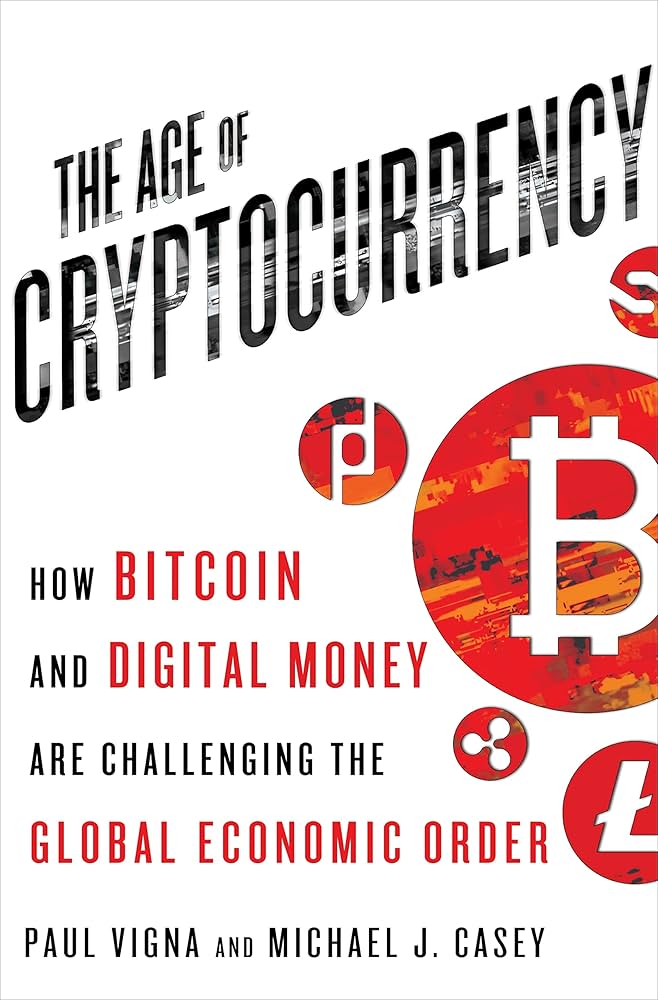
Why it is great: one of the earliest mainstream books that explains how crypto works and why it matters well beyond Bitcoin.
What it covers:
- The origins of cryptocurrency technology.
- How digital money could reshape finance globally.
- Interviews with early developers, economists, and thinkers.
Key takeaways:
- Crypto is not just digital money; it is a new financial infrastructure.
- Even traditional banks and governments must respond to blockchain technology.
- Understanding crypto requires both tech and economics.
Figures and perspective:
- Written when crypto was still young, the book gives historical context from the first decade of blockchain development.
- It helps bridge the gap between tech enthusiasts and mainstream audiences.
Best for: beginners who want a big-picture foundation without jargon.
2. The Infinite Machine (Camila Russo)
Goodreads Rating: 4.10 (2,342 ratings, 249 reviews)
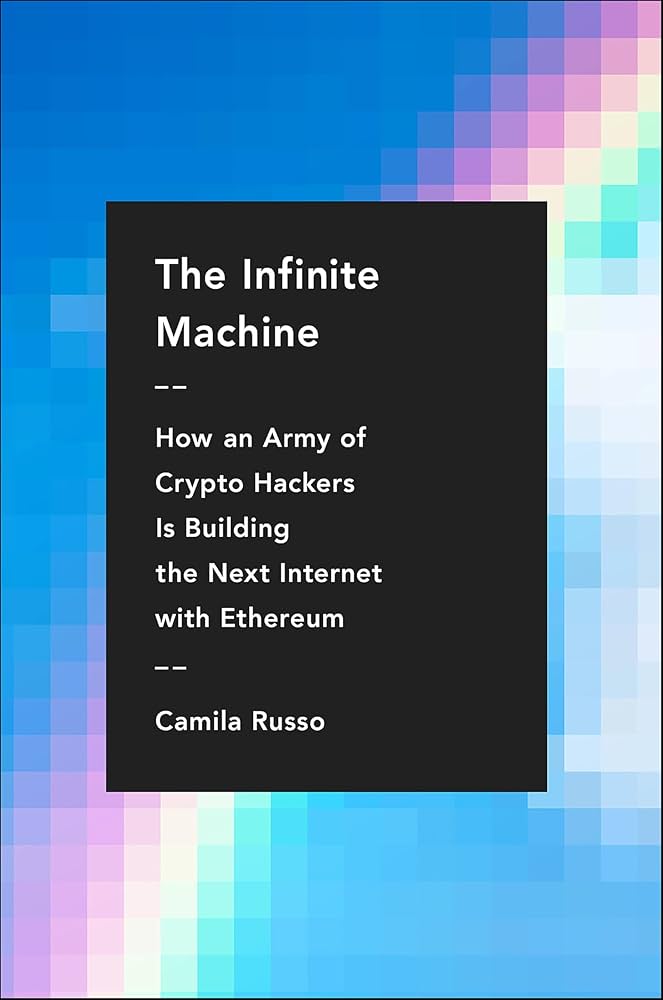
Why it is great: this is the story of Ethereum, the blockchain that unlocked smart contracts and decentralized apps.
What it covers:
- The human narrative of the people behind Ethereum.
- How Ethereum was launched and its early challenges.
- The rise of decentralized applications and tokens.
Key takeaways:
- Ethereum expanded crypto from digital money to programmable money.
- Networks can be shaped by community politics, leadership, and creator vision.
- The story reads like a tech thriller: competition, drama, and ambition.
Figures and perspective:
- Ethereum’s early growth, from pre-sale to major milestones, shows how fast the space evolved.
- It explains concepts like smart contracts, gas fees, and decentralized governance without dry technical language.
Best for: people who want a narrative history rather than pure technical or economic analysis.
3. Cryptoassets (Chris Burniske & Jack Tatar)
Goodreads Rating: 3.92 (2,377 ratings, 217 reviews)
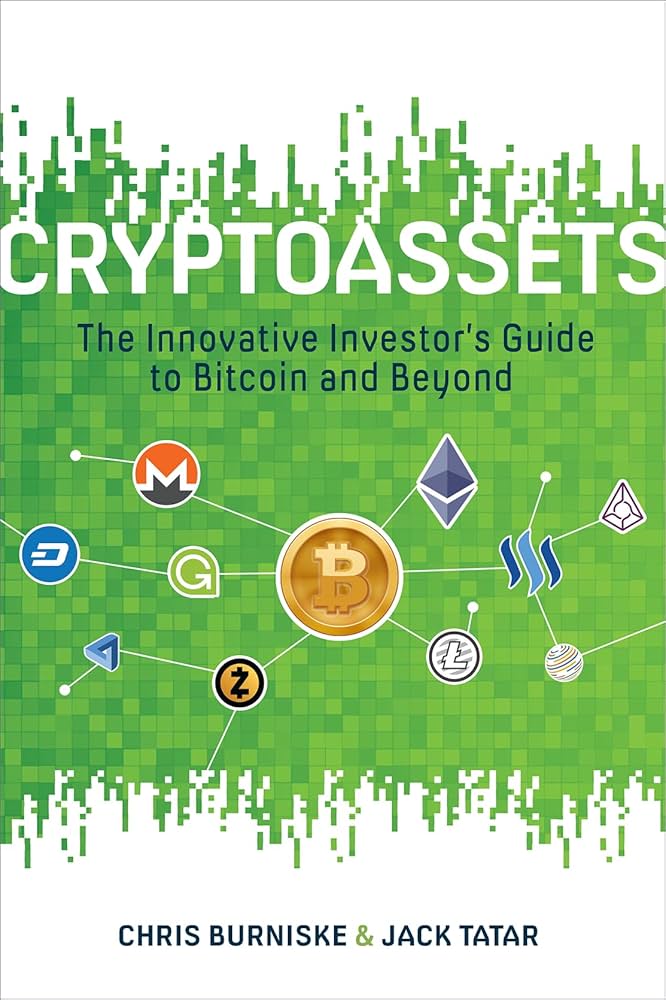
Why it is great: one of the first books to treat crypto as an investable asset class, not just technology.
What it covers:
- Valuation frameworks for crypto projects.
- Portfolio strategies for digital assets.
- Risk analysis and long-term thinking.
Key takeaways:
- Cryptoassets can be categorized into currencies, platforms, tokens, and more.
- Traditional finance tools, like discounted cash flow, need adjustment for crypto.
- Investing in crypto is not gambling if you use disciplined frameworks.
Figures and perspective:
- It uses real charts, risk and return models, and case studies.
- It offers examples of early crypto portfolios that illustrate diversification and volatility.
Best for: investors, analysts, and anyone who wants a structured way to evaluate crypto beyond the hype.
4. Token Economy (Shermin Voshmgir)
Goodreads Rating: 4.14 (476 ratings, 48 reviews)
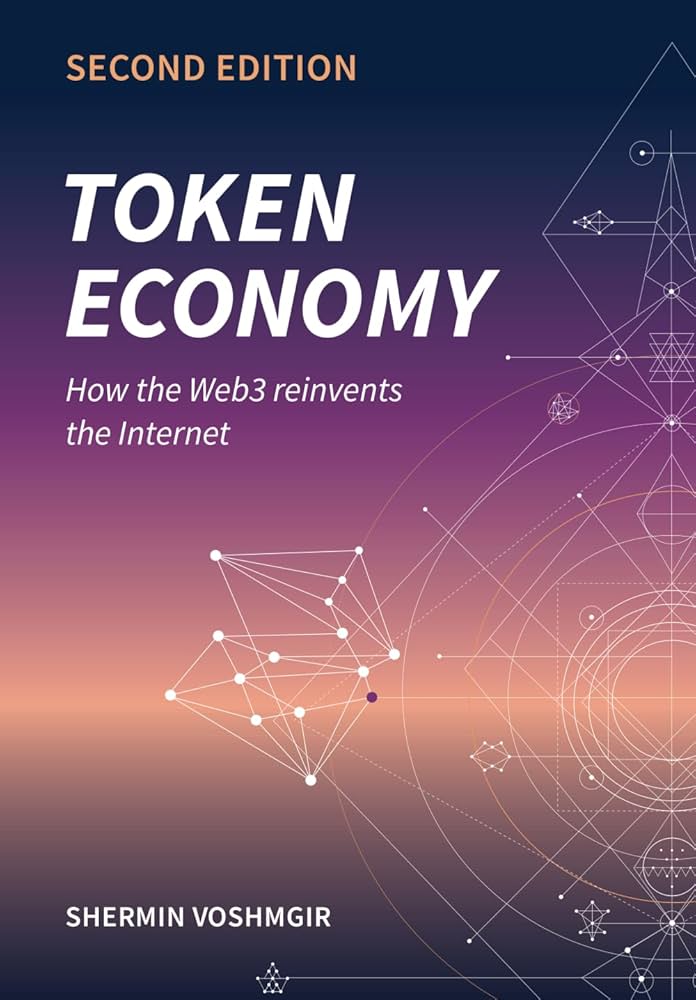
Why it is great: Token Economy is an in-depth exploration of how tokens (not just cryptocurrencies) can create decentralized economies and organizations. It explains the principles behind token economies, their role in blockchain ecosystems, and how they drive innovation in DeFi, NFTs, DAOs, and more.
What it covers:
- How tokens enable decentralized systems and reshape traditional business models.
- The relationship between blockchain, smart contracts, and token-based economies.
- Various token models, governance, and the economic implications of decentralization.
- Real-world case studies from DeFi, NFTs, and DAOs.
Key takeaways:
- Tokens are not just a store of value but a crucial component of decentralized governance and business models.
- Proper token design and governance are key to the success of blockchain projects.
- Tokenomics influences everything from network effects to incentive structures and governance models.
Figures and perspective:
- It provides case studies with practical insights into how tokenomics works in the real world.
- Written by an expert in the field, Shermin Voshmgir offers both theoretical and practical perspectives that connect abstract concepts to real use cases.
Best for: entrepreneurs, innovators, and anyone who wants to understand how tokens (not just currencies) shape decentralized networks, governance, and business models.
5. The Business Blockchain (William Mougayar)
Goodreads Rating: 3.47 (899 ratings, 69 reviews)
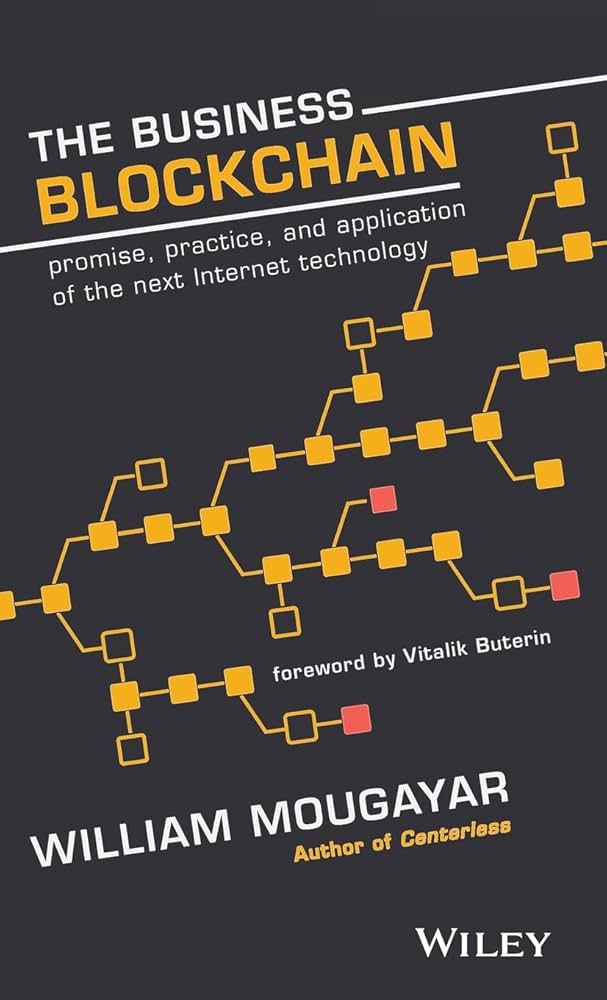
Why it is great: it looks at how blockchain (not just crypto) transforms business and industry.
What it covers:
- Blockchain beyond currency, in supply chains, contracts, and identity.
- The interaction between technology and business strategy.
- Ecosystem thinking across users, developers, investors, and regulators.
Key takeaways:
- Crypto is an entry point, but blockchain can change the structures of trust.
- Businesses need to rethink value creation, not just tech implementation.
- Blockchain is a platform shift similar to the web or mobile.
Figures and perspective:
- It includes case studies from early adopters in finance, logistics, and tech.
- It provides frameworks for evaluating blockchain projects within industries.
Best for: business leaders, managers, and strategists curious about real-world impact.
Honourable Mentions (Worth a Look)
If you want to go deeper after the top five:
- Mastering Ethereum (Andreas Antonopoulos and Gavin Wood): a technical but approachable guide to how Ethereum works, great if you want deep technical knowledge.
- Layered Money (Nik Bhatia): explores how monetary systems evolve and places crypto within that history.
- Books about DAOs, NFTs, and DeFi: newer publications that focus on each niche as the space evolves.
Crypto by the Numbers
Beyond Bitcoin, a few broader figures show how large the crypto ecosystem has become:
- Ethereum ecosystem: billions in value locked in DeFi and tens of thousands of active smart contracts.
- NFT markets: hundreds of millions traded in art, gaming, and collectibles.
- Governance tokens and DAOs: thousands of organizations experimenting with collective decision-making and token-based governance.
These numbers show that crypto is no longer just about price; it is about applications, economics, and new forms of digital participation.
How to Read These Books
Here is a quick way to choose where to start:
| If you want to… | Start with |
|---|---|
| Get a beginner-friendly foundation | The Age of Cryptocurrency |
| Read a story rather than a textbook | The Infinite Machine |
| Learn investment frameworks and risk | Cryptoassets |
| Understand token value and incentives | Token Economy |
| Apply crypto thinking to real industries | The Business Blockchain |
Going Deeper into Bitcoin
This list covers crypto beyond Bitcoin, including Ethereum, token economics, DeFi, and blockchain business models. But some readers prefer to start with the asset that launched the movement. If you want a Bitcoin-only reading path focused on monetary theory, decentralization, and digital scarcity, check out our dedicated guide.
 Stay Ahead in Crypto