
Country Information
 Capital: Phnom Penh
 Continent: Asia
 Language: Khmer
 Population: 15 626 444
 Surface (km2): 181 035
Surface (sq mi): 69 898
Surface (km2): 181 035
Surface (sq mi): 69 898 Extra Information
 Currency: Cambodian riel ៛ (KHR), United States dollar $ (USD)
 ISO Code: KH
 Domain Extension: .kh
 Calling Code: +855
 Time (CET): UTC+07:00
Time (CEST): UTC+07:00
Time (CET): UTC+07:00
Time (CEST): UTC+07:00Website
 Official Website: Gov.kh
 Info Website: Tourismcambodia.com
Extra Links
 Company Registry: Moc.gov.kh
Social Media & News
 Coins: 3
 Total: 3
Ranking
 Overall Rank: 101
 Rank Per Capita: 106
Blockchain Overview
Category:
| Name | Category |
|---|
Frequently Asked Questions
Description
Disclaimer: The regulatory information provided below is for general informational purposes only and may not reflect the most current legal developments. Cryptocurrency regulations are rapidly evolving and can change frequently. This information should not be considered legal or tax advice. Before making any business or investment decisions, please consult with qualified legal, tax, or financial professionals familiar with your specific jurisdiction and circumstances. Always verify current regulations with official government sources and regulatory bodies.
Legal Classification & Regulatory Framework
Cryptocurrency Status
Cambodia’s approach to cryptocurrency has undergone a significant transformation in recent years. For much of the past decade, the Kingdom maintained a restrictive stance on digital assets, with a joint statement issued by the National Bank of Cambodia (NBC), the Securities and Exchange Regulator of Cambodia (SERC), and the General-Commissariat of National Police effectively prohibiting cryptocurrency activities without proper authorization. This created a gray area in which private cryptocurrencies like Bitcoin operated in legal limbo.
The regulatory landscape shifted notably with the introduction of Prakas B7-024-735 Prokor on Transactions Related to Cryptoassets by the NBC. This regulation formally permits commercial banks and payment settlement institutions operating under NBC supervision to provide services related to crypto assets, subject to prior approval. Legal entities may also offer cryptocurrency services upon receiving the appropriate license from the NBC
Under the current framework, cryptoassets are classified into two main groups. Group 1 includes tokenized traditional assets (Group 1a) and stablecoins (Group 1b), which are considered lower risk due to their backing by tangible assets or fiat currencies. Group 2 encompasses unbacked cryptoassets such as Bitcoin and other decentralized cryptocurrencies. Commercial banks are permitted to engage with Group 1 assets but face significant restrictions regarding Group 2 cryptocurrencies, including prohibitions on direct or indirect transactions with unbacked digital assets.
It is important to note that cryptocurrency is not recognized as legal tender in Cambodia. The Cambodian Riel (KHR) and the US Dollar remain the only official currencies for payments and settlements within the country.
Tax Treatment
Cambodia does not currently have a comprehensive tax framework specifically designed for cryptocurrency transactions. The General Department of Taxation (GDT) has issued guidance classifying cryptocurrencies as intangible assets for tax purposes, rather than as currency or legal tender.
Under current interpretations, gains from the sale or exchange of cryptocurrencies may be subject to capital gains tax, calculated as the difference between the selling price and acquisition cost. Income derived from cryptocurrency mining or other revenue-generating crypto activities may be subject to standard income tax provisions. Corporate entities engaged in crypto-related business activities would typically be subject to the standard corporate income tax rate.
However, enforcement and practical application of these tax principles remain inconsistent, and the regulatory environment continues to evolve. Cryptocurrency cannot be used to pay taxes in Cambodia; all tax payments must be made in Cambodian Riel or other officially recognized fiat currencies through approved banking channels and the GDT’s e-payment systems. Individuals and businesses engaged in crypto activities should consult with qualified tax professionals to understand their specific obligations.
Regulatory Oversight
Several government bodies share responsibility for cryptocurrency oversight in Cambodia. The National Bank of Cambodia (NBC) serves as the primary regulator for cryptoasset activities, particularly for commercial banks, payment settlement institutions, and Cryptoasset Service Providers (CASPs). The NBC issues licenses, sets prudential requirements, and supervises all licensed entities to ensure compliance with the regulatory framework.
The Securities and Exchange Regulator of Cambodia (SERC) maintains oversight of cryptoassets that qualify as securities and manages the FinTech Regulatory Sandbox program, which allows limited cryptocurrency experimentation under close supervision. The Cambodia Financial Intelligence Unit (CAFIU), operating under the NBC, enforces anti-money laundering and counter-terrorism financing (AML/CFT) regulations within the financial sector, including crypto-related activities.
The General-Commissariat of National Police handles enforcement actions against unlicensed cryptocurrency operations. At the same time, the Telecommunication Regulator of Cambodia (TRC) has the authority to block access to websites of unauthorized cryptocurrency platforms operating within the country.
Business Environment
Banking Relationships
The relationship between traditional banking and cryptocurrency in Cambodia operates under strict regulatory conditions. Under the new framework, commercial banks may provide cryptoasset services for their own accounts (limited to Group 1 assets only) or for customers, but both require prior approval or authorization from the NBC.
Banks intending to engage in cryptoasset activities must establish board-approved risk management policies and procedures for crypto-related operations. Commercial banks are explicitly prohibited from issuing their own cryptoassets, engaging in transactions with unbacked cryptocurrencies (Group 2), or trading derivatives linked to such assets. Exposure to Group 1a assets (tokenized securities) is capped at five percent of Common Equity Tier 1 Capital.
For individual cryptocurrency traders and investors, the banking landscape presents challenges. Direct purchases of cryptocurrency using fiat currency from local bank accounts, or withdrawals from crypto accounts to local banks, remain restricted for unlicensed platforms. This has historically pushed many Cambodian crypto users toward international peer-to-peer trading and foreign exchanges.
Licensing Requirements
Entities wishing to operate as Cryptoasset Service Providers (CASPs) in Cambodia must obtain a license from the NBC. CASPs are legal entities that provide services on behalf of customers, including exchange services against official currencies or other cryptoassets, transfer services, and the custody and administration of cryptoassets.
The SERC has established a FinTech Regulatory Sandbox program that allows selected entities to trial digital asset services in a controlled environment. Currently, only a limited number of companies have been authorized under this sandbox framework. Licensed entities operating within the sandbox face restrictions, including limitations on facilitating exchanges between digital assets and fiat currencies such as the Cambodian Riel and US Dollar.
All licensed crypto operators must implement comprehensive compliance programs, including Know Your Customer (KYC) procedures, transaction monitoring, record-keeping, and suspicious activity reporting to the Cambodia FIU under AML/CFT regulations. The specific conditions and procedures for licensing are detailed in NBC regulations, with additional guidelines expected to be issued as the regulatory framework matures.
Innovation Support
Despite its cautious approach to private cryptocurrencies, Cambodia has demonstrated significant commitment to blockchain technology and digital financial innovation. The flagship initiative is Project Bakong, a blockchain-based retail payment system developed by the NBC in collaboration with Japanese fintech company SORAMITSU. Launched as one of the first retail CBDCs in Southeast Asia, Bakong enables instant transactions in Cambodian Riel or US Dollars and has achieved widespread adoption nationwide.
The SERC’s FinTech Regulatory Sandbox represents another avenue for innovation, allowing approved companies to test digital asset products and services under regulatory supervision. The government has also signed memoranda of understanding with major industry players to develop regulatory frameworks for digital assets, signaling openness to structured innovation.
Cambodia’s broader digital transformation efforts include the Cambodia Data Exchange Platform (CamDX), which utilizes decentralized ledger technology for secure data exchange between government and private sector IT systems. The National Roadmap for Digitalisation outlines the government’s vision for regulating digital assets, indicating that comprehensive frameworks may continue to develop.
Market Characteristics
Adoption Patterns
Cambodia exhibits notable cryptocurrency adoption despite regulatory restrictions. Surveys indicate that a significant share of the Cambodian population uses digital assets, a rate that compares favorably with regional and global averages. This adoption has been driven partly by a young, digitally oriented population and growing interest in alternative financial instruments.
The widespread success of Bakong has normalized digital payments and blockchain-based transactions for many Cambodians. While Bakong itself is a state-controlled system rather than a decentralized cryptocurrency, its adoption has increased familiarity with digital wallet technology and mobile-based financial services.
Cryptocurrency usage in Cambodia has historically relied heavily on international centralized exchanges, with peer-to-peer trading and decentralized finance (DeFi) platforms also seeing significant activity. The government’s blocking of major foreign exchange websites has complicated access for local users, though mobile applications on some platforms continued to function.
Industry Focus
Cambodia’s cryptocurrency ecosystem remains in early stages of formal development. The first licensed digital asset exchange operating under the SERC sandbox, launched in recent years, offers spot transactions and peer-to-peer trading to Cambodian users. This represents a cautious but meaningful step toward a regulated market.
Beyond trading platforms, blockchain technology has found applications in various sectors, including loyalty programs, charity initiatives, and digital identity verification. Several local projects have emerged to explore tokenization and blockchain-based solutions for specific industry challenges.
The fintech sector more broadly has grown significantly in Cambodia, supported by government digitalization initiatives and increasing smartphone penetration. Payment services, digital banking, and mobile money solutions have expanded rapidly, creating infrastructure that could support future cryptocurrency integration as regulations evolve.
Regulatory Evolution
Cambodia’s cryptocurrency regulations continue to evolve from an initially prohibitive stance toward a more nuanced, permission-based framework. The transition from blanket restrictions to a licensing regime represents a significant policy shift, though implementation remains ongoing and many details are still being defined through subsequent regulations.
The government’s cautious approach reflects concerns about financial crimes, money laundering, and consumer protection. Cambodia’s previous inclusion on the Financial Action Task Force (FATF) gray list heightened scrutiny of AML/CFT compliance, and regulators remain vigilant to maintain the country’s improved standing in international assessments.
Looking forward, additional regulations are expected to provide more detailed guidance on licensing procedures, operational requirements, and permissible activities for CASPs. The relationship between NBC and SERC oversight is also being clarified, with the National Roadmap for Digitalisation suggesting that SERC may take a larger role in digital asset regulation. Stakeholders should monitor developments closely as the regulatory framework continues to mature.
For Current Information:
- National Bank of Cambodia (NBC): https://www.nbc.gov.kh
- Securities and Exchange Regulator of Cambodia (SERC): https://www.serc.gov.kh
- General Department of Taxation (GDT): https://www.tax.gov.kh
- Ministry of Economy and Finance: https://www.mef.gov.kh
- Telecommunication Regulator of Cambodia (TRC): https://www.trc.gov.kh
Country Map
Crypto News



Blockchain Companies





Other Countries





Crypto and Blockchain Articles

What is Aptos?
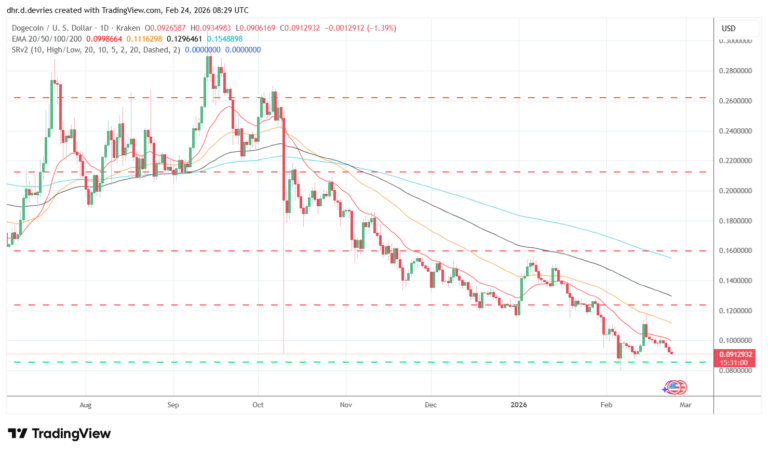
Dogecoin (DOGE) Price Prediction: Weekly Analysis February 24, 2026
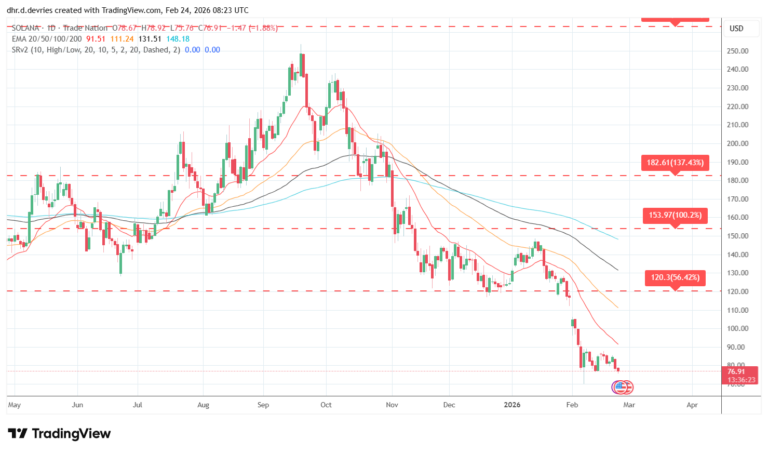
Solana (SOL) Price Prediction: Weekly Analysis February 24, 2026

Ethereum vs. Bitcoin for Online Gambling

What Is Polygon?

What is Aptos?
Dogecoin (DOGE) Price Prediction: Weekly Analysis February 24, 2026
Solana (SOL) Price Prediction: Weekly Analysis February 24, 2026
Press Releases and Contributions