English
  Nederlands
  Deutsch
Key Takeaways
- Trading order types determine when and at what price your buy or sell executes, from instant market orders to price-triggered stop orders.
- Limit orders guarantee your target price but not execution; market orders guarantee execution but not price.
- Advanced types like trailing stop and conditional orders automate your strategy and adjust dynamically as market prices move.
In This Article
Introduction
Trading can be a lucrative investment opportunity for those willing to take the risk. But to succeed in the fast-paced world of trading, it is essential to understand the different types of trading orders. From limit orders to market orders, stop orders, conditional orders, and more, each type can significantly impact your investment outcomes. In this article, we look at these order types and their pros and cons so you can make informed decisions and get better results in your trading journey. Whether you are a beginner or an experienced trader, this guide to trading 101 is a must-read.
Limit Order
As the name implies, a limit order limits the price at which an investor can buy or sell. It is an order to buy or sell at a specified price or better. For instance, if an investor wants to buy shares for no more than $5, they can place a limit order at that amount. The order will only activate when the price reaches $5 or lower.
Consequently, the order will not execute if the price exceeds $5. This prevents investors from buying or selling at a level they do not want. Still, a limit order gives no assurance that the order will actually be filled. It is most suitable when an investor is confident they can enter at a price below the current market level.
Market Order
A market order is the most basic trade order type. It is commonly used when an investor wants to buy or sell immediately at the current price. It is popular with investors who want to buy or sell coins or stocks without delay. This type of order is executed near or equal to the current ask or bid price.
However, there is no guaranteed price as markets are fast-paced and volatile. The last traded price may not be the actual price at which the order is filled. Nonetheless, for assets with high daily volume, the execution price will be close to the quoted bid or ask.
Stop Order
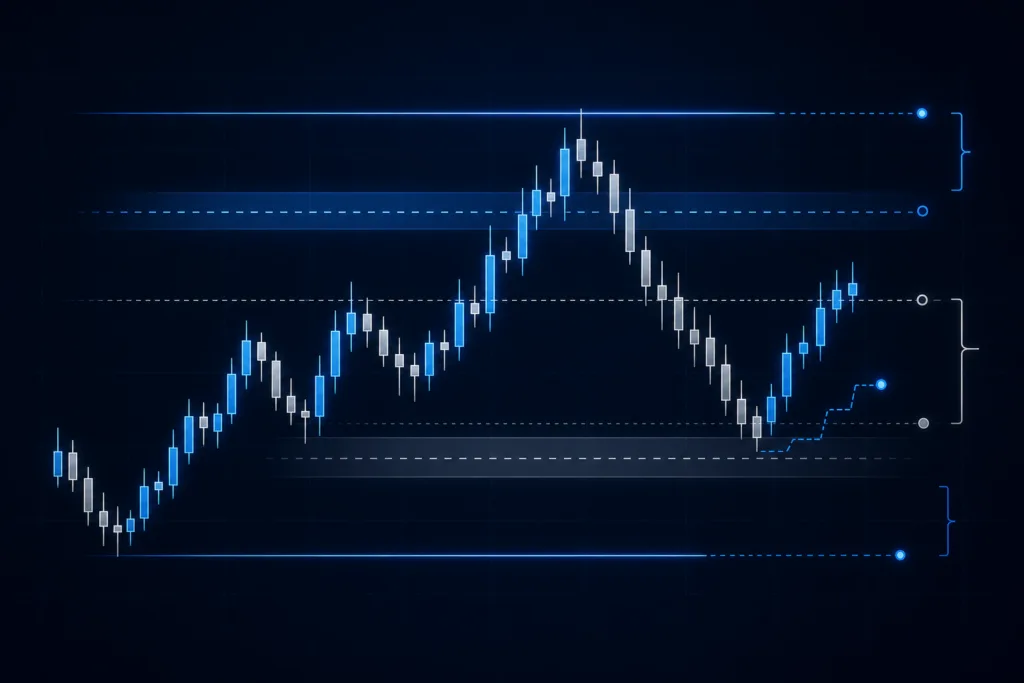
A stop order, also called a stop-loss order, is executed when the asset price reaches a specific threshold called the stop price. Once that level is hit, the stop order converts to a market order. There are two main types of stop orders.
The first is the stop-sell order. If an investor wants to limit losses on a position and sets a stop price of $30, the order remains idle until the price reaches or drops below $30. Once triggered, it becomes a market order and sells at the best available price.
A stop-buy order works on the same principle in reverse. The investor sets a stop price above the current market price. Once the asset reaches that level, the order converts to a market order and executes at the next available price.
Conditional Order
A conditional order consists of two or more criteria set by the investor. The order will not execute unless all conditions are met simultaneously. It is particularly useful for investors who do not want to monitor the market around the clock. A conditional order typically combines different order types, such as limit and stop orders, to function.
For example, suppose a stock trades at $150 and you want to buy when the price falls. You can place a stop-buy order at $130 combined with a day order. This means the asset will be purchased at the stop price if reached, and the order is automatically canceled at the end of the trading day if not triggered.
Trailing Stop Order
A trailing stop order works similarly to a regular stop order, but with one key difference: the stop price is not fixed. Instead, it is expressed as a percentage or dollar amount relative to the current market price, referred to as the trailing stop distance.
True to its name, this order type trails the market price when it moves in a favorable direction. As the price moves favorably, the stop level adjusts automatically, locking in gains. If the price reverses, the stop remains at its last adjusted level and triggers when hit. A trailing stop order is more flexible than a standard stop order because it adapts automatically as conditions change.
Order Types Comparison
Choosing the right order type depends on your goals and market conditions. The table below summarizes the key differences:
| Order Type | Price Control | Execution Guarantee | Best Used When |
|---|---|---|---|
| Limit order | Yes — you set the price | No | You want a specific entry or exit price |
| Market order | No | Yes | You need to trade immediately |
| Stop order | Partial (triggers at stop price) | Once triggered, yes | You want to limit losses or catch breakouts |
| Conditional order | Yes | Only if all conditions are met | You want automated, multi-condition trading |
| Trailing stop order | Dynamic | Once triggered, yes | You want to protect gains while staying in a trend |
Final Thoughts
Understanding the different types of trading orders is essential for any investor looking to succeed in the fast-paced trading world. Each order type has its own pros and cons, and choosing the right one depends on your goals, risk tolerance, and how closely you can monitor the market.
Limit orders are best when you want price certainty; market orders when speed matters most. Stop orders protect against losses; conditional orders automate complex strategies; and trailing stop orders let you ride trends while locking in gains. Learning technical analysis alongside these order types will give you a significant edge in your trading journey.
 Stay Ahead in Crypto