 English
  Nederlands
  Deutsch
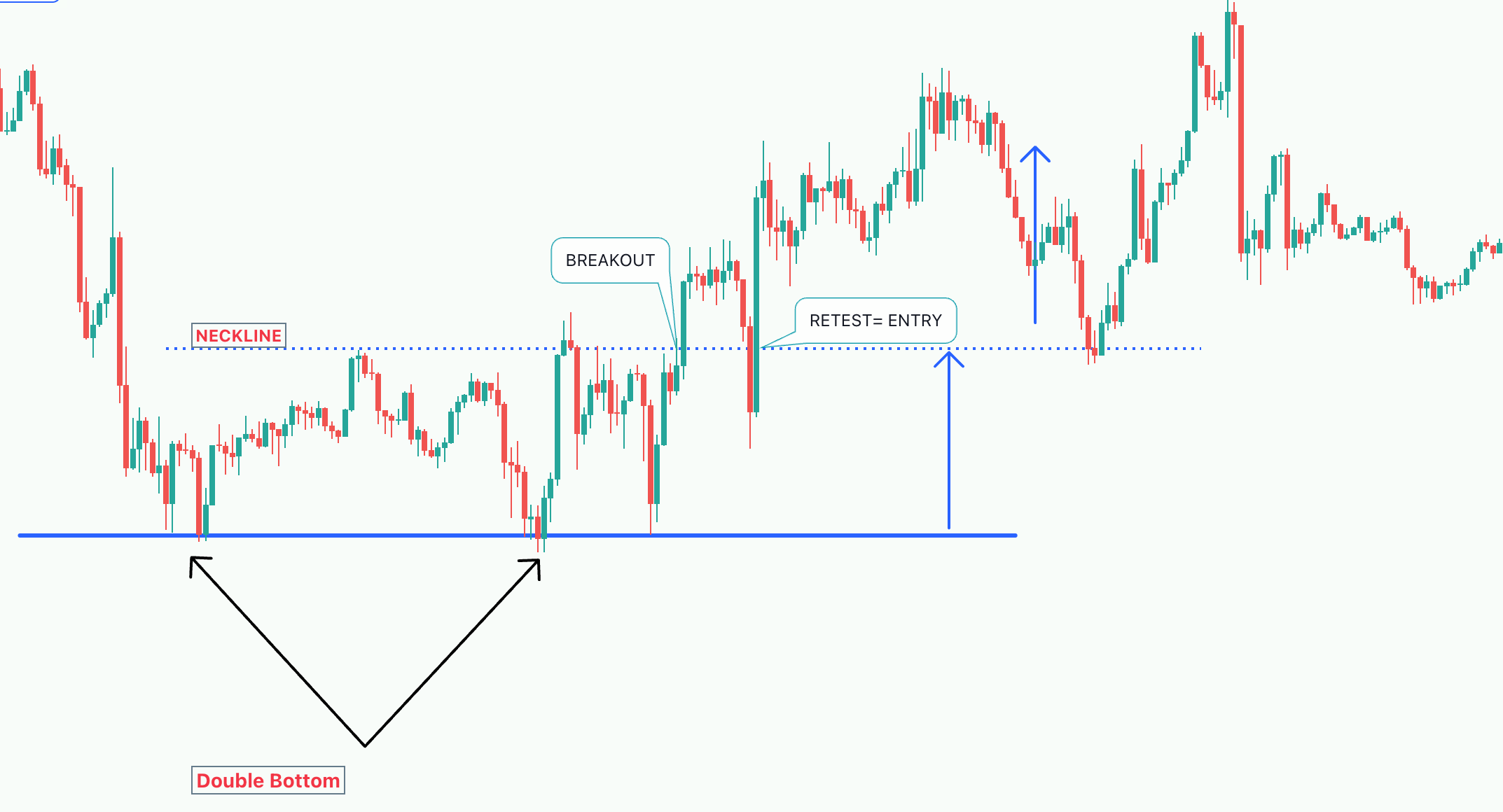
In financial markets, a double bottom is a classic bullish reversal pattern used in technical analysis. It signals a potential change in direction after a downtrend. This pattern forms when an asset’s price hits a low, rebounds, then drops again to a similar low before rising sharply. The shape it forms on a chart resembles the letter “W”.
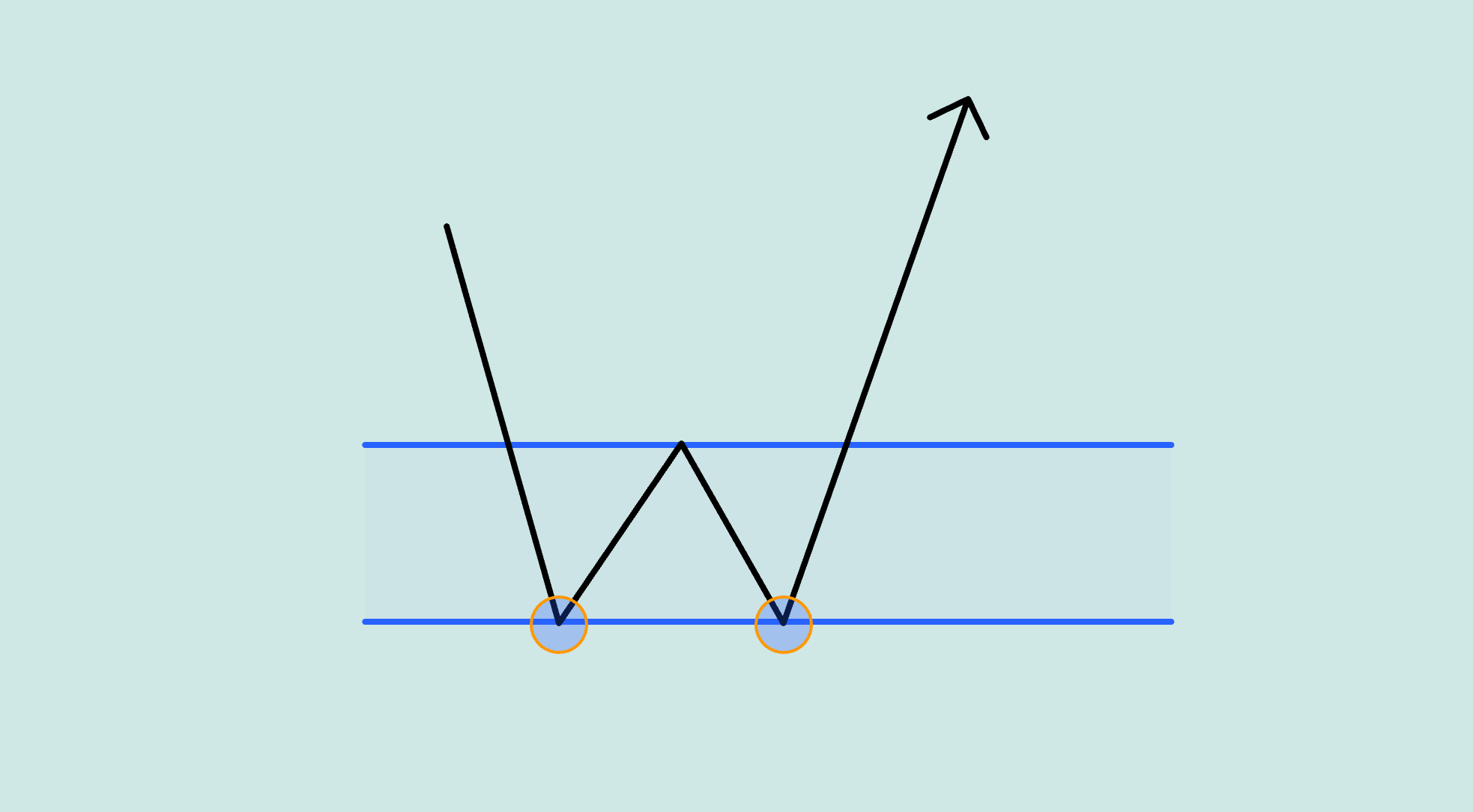
Traders watch for this pattern because it indicates that selling pressure may be weakening. When the price fails to fall below the first low, it suggests strong support. The pattern is confirmed when the price breaks above the intermediate high between the two lows, also called the neckline.
Structure of a Double Bottom Pattern
The double bottom is built in three phases. First, the price moves lower and finds a strong support level, forming the first trough. Then, it rebounds to create a temporary high or neckline. After that, it drops again to roughly the same level as the first trough and bounces a second time.
This second bounce is critical. If the price rallies from this low and breaks above the neckline, the double bottom is considered complete. The confirmation of this breakout is a key buy signal for traders.
Key Features to Identify
To correctly recognize a double bottom, certain conditions should be met. The two lows should be close in value, ideally within 3% to 4% of each other. The time between the two bottoms should allow the pattern to develop naturally, often days or weeks. A quick formation is more likely to be a false signal.
Volume plays an important role. Traders expect to see increased volume during the second rebound and especially during the breakout above the neckline. This shows strong buying interest and adds strength to the signal.
How to Trade a Double Bottom
A double bottom gives traders a clear method for entering and managing trades. Many wait for the price to close above the neckline before opening a position. This reduces the risk of acting on a false breakout.
A stop-loss order is usually placed just below the second low to limit potential losses. The target price is calculated by measuring the distance from the lowest point of the pattern to the neckline and adding that distance above the neckline.
Example:
- First low = $90
- Neckline = $100
- Target = $110
This helps traders plan exits and estimate potential profits.
Trading Strategies
Traders can approach the double bottom with different strategies, depending on their risk tolerance.
- Aggressive approach: Enter at the second bottom before the breakout, aiming for early gains but accepting more risk.
- Conservative approach: Wait for a confirmed breakout above the neckline, which provides a safer but potentially slower entry.
In both cases, using proper risk management is essential.
Double Bottom vs. Double Top
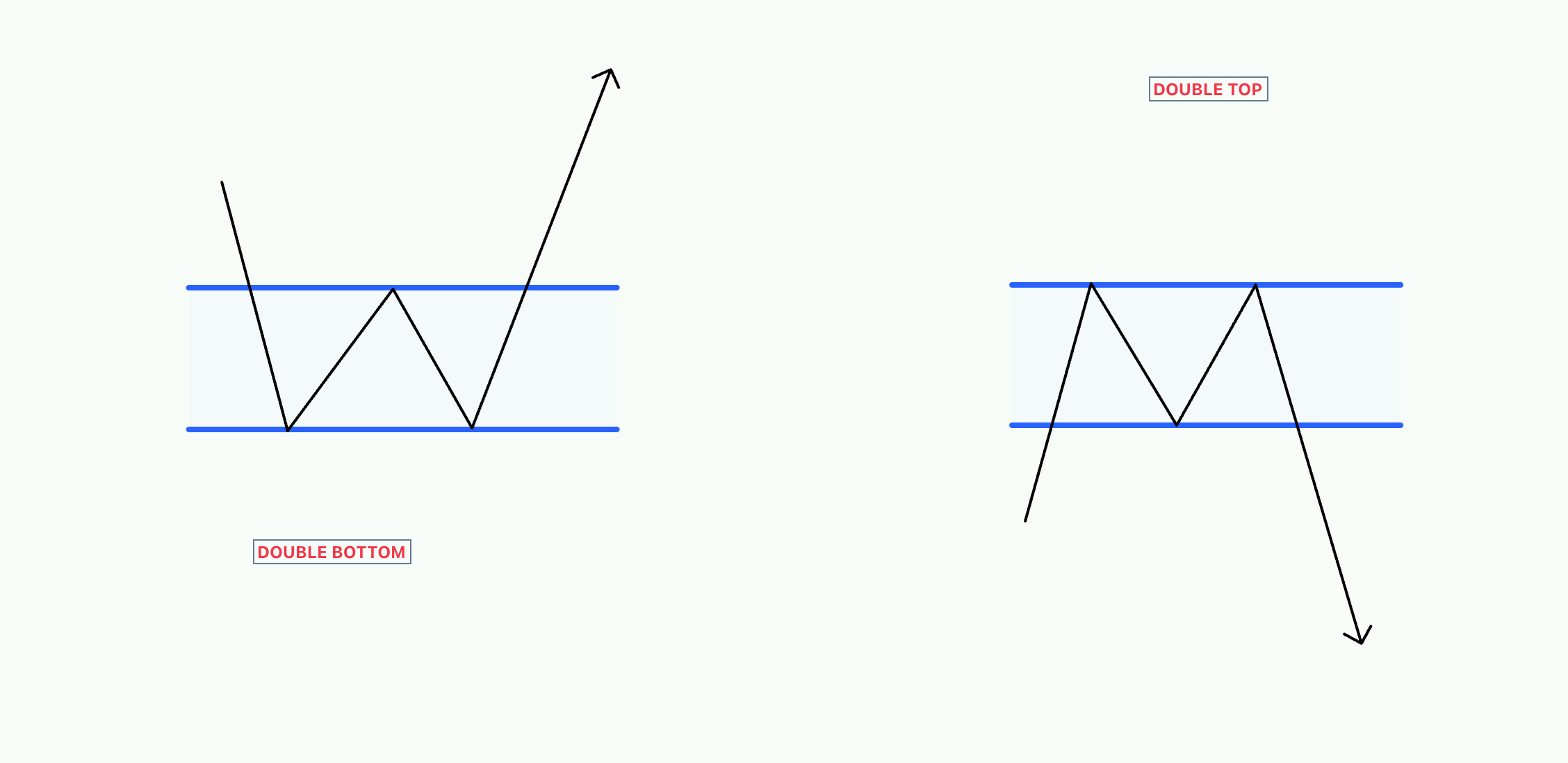
The double bottom is the opposite of a double top, which forms after an uptrend and signals a bearish reversal. While the double bottom shows that the asset has likely found strong support and is set to rise, the double top warns that resistance is strong and a decline could follow.
Traders often use both patterns to identify market turning points and adjust their positions accordingly.
Confirming the Pattern
Traders often use technical tools to confirm the pattern. Moving averages can help spot a new uptrend if a shorter-term moving average crosses above a longer-term one. This is called a “golden cross” and supports a bullish signal.
Momentum indicators like RSI (Relative Strength Index) can also add confidence. An RSI reading rising above 50 during the breakout suggests growing buying momentum. Volume confirmation remains the most important factor, especially during the breakout.
Important Considerations
Although the double bottom pattern is widely used, it isn’t foolproof. Traders must be careful of false breakouts, especially in volatile markets. A breakout that fails to hold above the neckline may lead to losses if stop-loss levels are not used properly.
This pattern is most effective when used on longer timeframes like daily or weekly charts. Shorter timeframes may show similar patterns that lack reliability.
Bullish Trend Reversal
The double bottom is a highly regarded chart pattern in technical analysis. It forms after a sustained downtrend and indicates that the asset has reached a strong support level. When the price rebounds twice from this level and breaks above the neckline, it signals a potential trend reversal to the upside.
Traders who understand how to identify, confirm, and trade the double bottom can use it to enter positions with a favorable risk-reward ratio. Though not guaranteed, the pattern works best when combined with volume analysis and supporting indicators. Like all strategies, it performs best when used with clear risk management rules and consistent execution.
 Stay Ahead in Crypto