English
  Nederlands
  Deutsch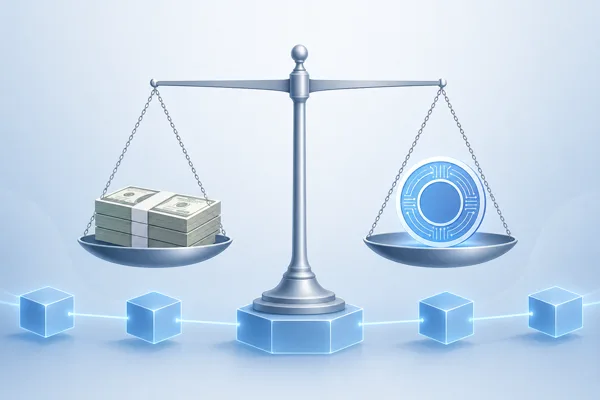



Key Takeaways
- E-money tokens (EMTs) are blockchain tokens fully backed 1:1 by a fiat currency like the euro or dollar, giving them a stable value for payments.
- In the EU they are regulated under MiCA: only licensed institutions can issue them, reserves must cover redemptions, and holders can always redeem at par value.
- Compared with traditional e-money, EMTs add blockchain benefits: transparency, programmability via smart contracts, and cheaper cross-border transfers.
In This Article
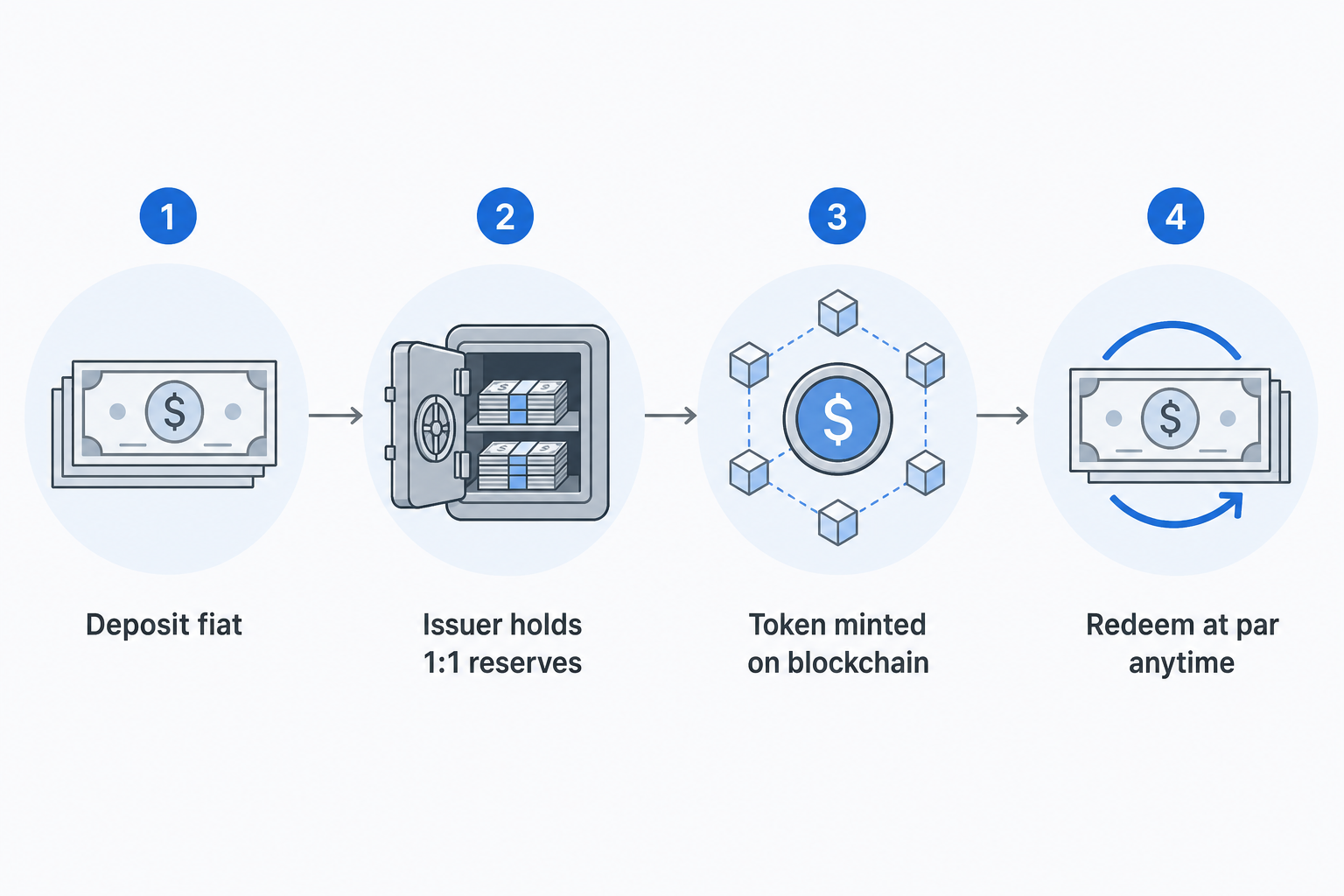
E-money tokens (EMTs) are a regulated type of stablecoin: a digital asset that represents traditional fiat currency, such as the Euro or U.S. Dollar, on a blockchain. These tokens are designed to maintain a stable value by being fully backed by reserves of the corresponding fiat currency in a one-to-one value ratio. This characteristic sets e-money tokens apart from other cryptocurrencies, such as Bitcoin or Ethereum, which are not pegged to any particular fiat currency and can be subject to high volatility.
The key advantage of e-money tokens lies in their stability and transparency, as their value remains consistent, closely mirroring that of the fiat currency they are pegged to. Their utility is primarily in the realm of payments, offering a secure and efficient means of transacting within the digital economy. Examples of popular e-money tokens include USDT (Tether), USDC (USD Coin), EURC (Euro Coin), EURT (Tether Euro), PAX (Paxos Standard), TrueUSD (TUSD), and DAI. These tokens offer a reliable and stable alternative to both traditional fiat currencies and more volatile digital currencies, making them increasingly popular as businesses and consumers turn to digital solutions.
E-Money Tokens in the Regulatory Framework
E-money tokens are gaining regulatory attention, particularly within the European Union’s Markets in Crypto-Assets Regulation (MiCAR). MiCAR, which aims to provide a comprehensive framework for the regulation of crypto assets, explicitly includes e-money tokens under its scope. The regulation ensures that e-money tokens are subject to certain rules designed to protect consumers and maintain financial stability.
MiCAR mandates that issuers of e-money tokens must comply with a range of legal and operational requirements. This includes the obligation to publish a “white paper” containing detailed information about the token’s design, the issuer’s business model, and any associated risks. Additionally, MiCAR stipulates that the value of e-money tokens must be backed by reserves of fiat currency, ensuring their redemption at par value.
Issuer Requirements
- Only credit institutions or regulated electronic money institutions (EMIs) can issue e-money tokens.
- Issuers must provide a white paper that outlines essential information such as the token’s structure, technology, and redemption rights.
- The white paper must be updated regularly to reflect any significant changes or risks.
Consumer Protection and Redemption Rights
- Holders of e-money tokens have the right to redeem their tokens at par value at any time, which is a key feature ensuring liquidity and security for token holders.
- The issuer must maintain sufficient reserves to meet these redemption obligations, safeguarding the value of the tokens.
Technological Foundations of E-Money Tokens
E-money tokens are built on blockchain technology, which offers several benefits over traditional financial systems. Blockchain, a decentralized digital ledger, ensures that transactions involving e-money tokens are secure, transparent, and efficient. Here’s a deeper dive into the technology behind e-money tokens:
Blockchain and Distributed Ledger Technology (DLT)
Blockchain serves as the backbone of e-money tokens, allowing them to be transferred and stored electronically without the need for intermediaries. Each transaction is recorded on a distributed ledger, providing a secure and immutable history of all token transfers.
- Decentralization: The decentralized nature of blockchain eliminates the need for a central authority, which makes transactions faster, cheaper, and more secure compared to traditional banking systems.
- Transparency: Every transaction is visible to all participants in the network, ensuring accountability and trust. This transparency helps in reducing fraud and enhancing security.
Smart Contracts and Programmability
E-money tokens can be integrated into smart contracts, enabling automated, trustless transactions. This means that users can transact with one another directly, without the need for a third party to facilitate the process.
Benefits of E-Money Tokens
E-money tokens offer several advantages over traditional forms of digital payment. These benefits contribute to their growing popularity in the digital economy:
- Stability: Unlike cryptocurrencies such as Bitcoin or Ethereum, e-money tokens are pegged to stable fiat currencies. This provides a much-needed stability in value, making them ideal for everyday transactions and protecting users from the price volatility that characterises many cryptocurrencies.
- Regulatory Oversight: E-money tokens are subject to regulatory scrutiny, which adds an extra layer of security for consumers. In the EU, the MiCAR framework provides detailed rules on the issuance, operation, and supervision of e-money tokens, ensuring that issuers meet the necessary standards to protect consumers and investors.
- Efficiency and Cost-Effectiveness: Blockchain technology, combined with e-money tokens, allows for faster transactions at lower costs compared to traditional banking systems. Transactions are processed almost instantly, and distributed ledger technology reduces fees, especially for cross-border payments.
- Security: Blockchain’s encryption methods ensure that e-money tokens are secure from hacking and fraud. The decentralized nature of blockchain means there is no single point of failure, making it more resistant to attacks than centralized systems.
- Accessibility and Inclusion: E-money tokens provide an opportunity for greater financial inclusion, particularly in regions with limited access to traditional banking. They can be used for cross-border payments, remittances, and micro-transactions, enabling people in underserved markets to participate in the global economy.
E-Money Tokens vs. Traditional E-Money
Although e-money tokens share many characteristics with traditional forms of electronic money (e-money), they differ significantly in terms of underlying technology and regulatory frameworks. Here is how e-money tokens compare to traditional e-money:
| Aspect | E-Money Tokens | Traditional E-Money |
| Fiat backing | Pegged to a fiat currency and backed by reserves held in tangible assets | Backed by the issuing institution’s reserves, but without blockchain technology |
| Technology | Uses blockchain and distributed ledger technology for secure, transparent, efficient transactions | Operates within centralized systems, such as PayPal, that require intermediaries |
| Redemption | Redeemable at par value, plus decentralization, programmability, and smart contract capabilities | Redeemable at par value |
The Future of E-Money Tokens
The rise of e-money tokens marks a significant shift in the digital financial landscape. As more consumers and businesses embrace blockchain-based solutions, e-money tokens are poised to play a central role in the digital economy. Here are some potential future developments:
- Increased Adoption in Payments: E-money tokens are likely to see wider adoption as an alternative to traditional payment systems. As the technology matures and regulatory frameworks solidify, more businesses will likely accept e-money tokens for goods and services.
- Integration with Central Bank Digital Currencies (CBDCs): E-money tokens may serve as a bridge between decentralized finance (DeFi) and central bank digital currencies (CBDCs). While CBDCs are controlled by central banks, e-money tokens offer a private alternative that could coexist alongside them.
- Innovative Financial Products: The use of e-money tokens in smart contracts and DeFi platforms could lead to new financial products and services, facilitating lending, borrowing, and insurance on decentralized networks and expanding their utility beyond simple payments.
Stable Digital Currency
E-money tokens represent a significant evolution in digital money, offering stability, security, and efficiency that traditional cryptocurrencies cannot provide. With the regulatory backing of frameworks like MiCAR, e-money tokens are well-positioned to play a key role in the digital economy, facilitating secure, cost-effective, and transparent transactions. As the technology evolves and adoption increases, e-money tokens could reshape the future of finance, offering new opportunities for consumers and businesses alike.
In the digital age, e-money tokens stand out as a solution that combines the stability of traditional fiat currencies with the advantages of blockchain technology. Whether it is for everyday payments, cross-border transactions, or participation in decentralized finance, e-money tokens offer a promising glimpse into the future of money.
 Stay Ahead in Crypto