English
  Nederlands
  Deutsch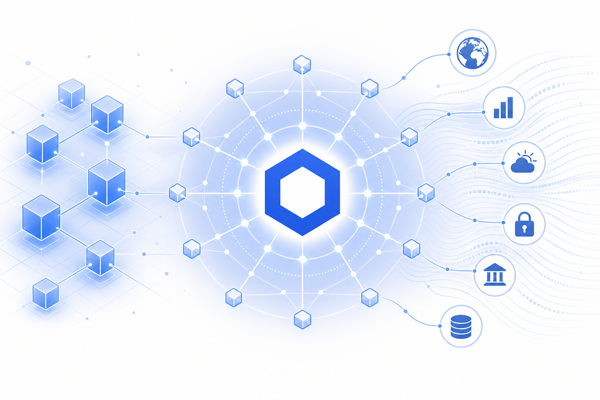



Key Takeaways
- Chainlink is a decentralized oracle network that lets smart contracts securely access off-chain information such as asset prices, weather data, and verifiable randomness.
- Its native token, LINK, pays node operators, rewards reliable data, and is staked as collateral, with a fixed maximum supply of 1 billion tokens.
- Beyond price feeds, Chainlink offers cross-chain messaging (CCIP), verifiable randomness (VRF), and smart contract automation used across DeFi, gaming, insurance, and tokenized assets.
In This Article
Blockchain technology has introduced a new way to store value, transfer assets, and run applications without centralized control. Networks like Bitcoin and Ethereum allow users to send money, create digital assets, and deploy smart contracts. However, blockchains have an important limitation: they cannot directly access real-world information.
This limitation is known as the blockchain oracle problem, and it is where Chainlink plays a critical role. Chainlink is a decentralized oracle network that enables blockchains to securely connect with external data sources, APIs, and traditional financial systems.
By acting as a bridge between on-chain and off-chain environments, Chainlink helps smart contracts interact with real-world data such as market prices, weather information, payment systems, and more.
Understanding the Blockchain Oracle Problem
Blockchains are designed as secure, closed systems. This design ensures that the network remains decentralized, tamper-resistant, and reliable. However, this also means blockchains cannot directly retrieve data from outside sources.
For example, a smart contract might need to know:
- The current price of Bitcoin
- Weather conditions for an insurance contract
- Results of a sports match
- Stock market prices
Without access to this information, smart contracts would be limited to simple on-chain operations.
This challenge is called the oracle problem. To solve it, blockchain networks require oracles, which are systems that bring external data into the blockchain environment.
Chainlink provides a decentralized solution to this problem.
What Is Chainlink?
Chainlink is a decentralized oracle network that enables smart contracts to securely interact with external data sources, web APIs, and traditional financial infrastructure.
Instead of relying on a single centralized data provider, Chainlink gathers information from multiple independent nodes. These nodes verify and aggregate the data before delivering it to smart contracts.
This decentralized approach helps ensure:
- Data accuracy
- Security
- Resistance to manipulation
Chainlink was proposed in 2017 and later launched on the Ethereum network. The project was founded by Sergey Nazarov and Steve Ellis with the goal of expanding what smart contracts can do.
Today, Chainlink has become one of the most widely used oracle solutions in the blockchain ecosystem.
How Chainlink Works
The Chainlink network operates through a system of oracle nodes that retrieve and verify external data before sending it to a blockchain.
Here is a simplified example of how it works:
- A smart contract requests external data (for example, the price of an asset).
- The request is sent to the Chainlink oracle network.
- Multiple oracle nodes retrieve data from different sources.
- The data is aggregated and verified for accuracy.
- The final result is delivered back to the smart contract.
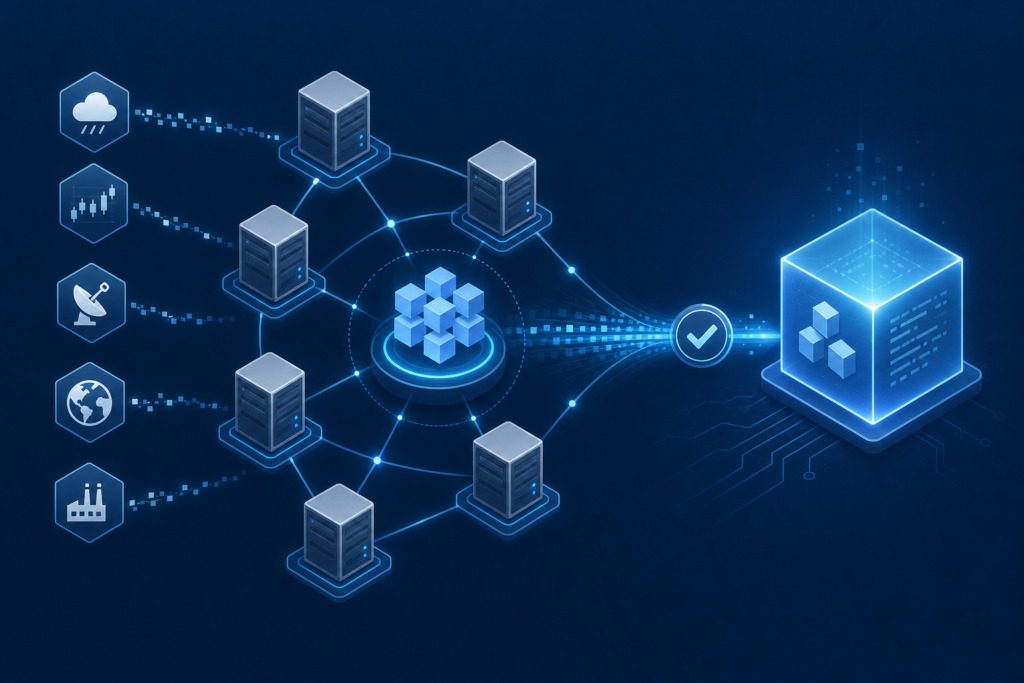
Using multiple independent nodes helps prevent a single point of failure or data manipulation.
This process allows smart contracts to operate based on real-world information while maintaining the security and decentralization of the blockchain.
Key Features of Chainlink
Decentralized Data Feeds
One of Chainlink’s most widely used services is its decentralized price feeds.
These price feeds provide accurate market data for cryptocurrencies and other assets. Many decentralized finance applications rely on this data to determine asset prices, manage loans, and settle derivatives.
Protocols such as Aave and Compound use Chainlink price feeds to support their lending and borrowing platforms.
Cross-Chain Interoperability
The blockchain ecosystem consists of many different networks, each with its own tokens and applications. Chainlink helps these networks communicate through its Cross-Chain Interoperability Protocol (CCIP).
CCIP allows blockchains to securely exchange data and assets across networks such as:


Cross-chain communication is important for building decentralized applications that operate across multiple blockchains.
Verifiable Randomness
Some blockchain applications require secure and unpredictable randomness. Chainlink provides a feature called Verifiable Random Function (VRF), which generates cryptographically secure random numbers.
This feature is commonly used in:
- Blockchain gaming
- NFT distribution
- Lotteries and reward systems
Because the randomness can be verified on-chain, users can trust that the results are fair and tamper-proof.
Smart Contract Automation
Chainlink also supports automated execution of smart contracts.
Through automation services, smart contracts can trigger actions automatically when certain conditions are met. Examples include:
- Automatic loan liquidations in DeFi platforms
- Scheduled payments
- Portfolio rebalancing
This capability allows decentralized applications to operate more efficiently without manual intervention.
The LINK Token
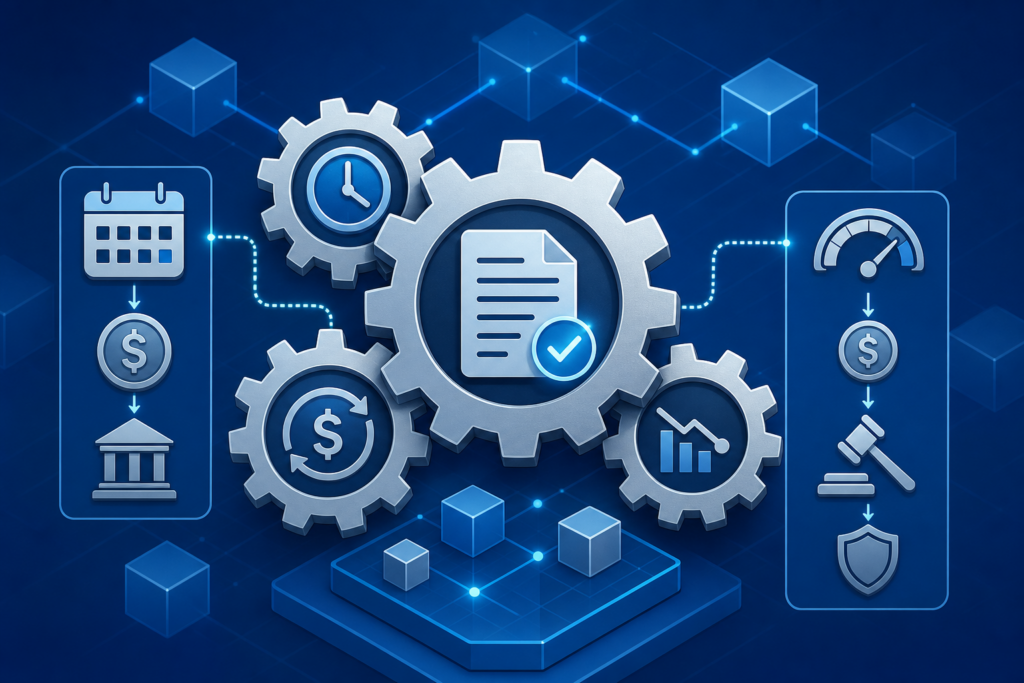
The Chainlink network is powered by its native cryptocurrency, LINK.
LINK tokens play several important roles within the ecosystem.
Payment for Oracle Services
Developers and projects pay node operators in LINK to retrieve and deliver external data.
Incentives for Node Operators
Oracle nodes earn LINK rewards for providing reliable data and maintaining the network.
Staking and Network Security
Node operators can stake LINK tokens as collateral. Staking helps ensure that nodes provide accurate data because dishonest behavior can lead to penalties.
The LINK token has a maximum supply of 1 billion tokens, making it a limited digital asset within the Chainlink ecosystem.
Real-World Applications of Chainlink
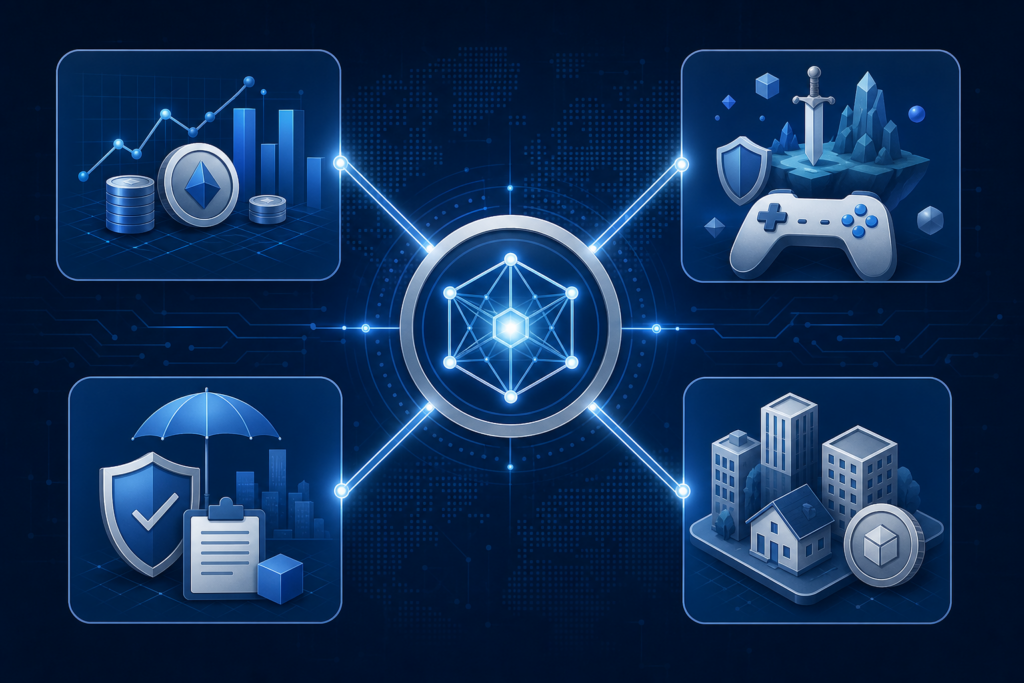
Chainlink technology is used across multiple sectors within the blockchain industry.
Decentralized Finance (DeFi)
Chainlink is widely used in decentralized finance, where accurate market data is essential.
Price feeds provided by Chainlink help DeFi platforms determine collateral values, trigger liquidations, and settle derivatives.
Tokenized Real-World Assets
As financial institutions explore blockchain technology, many are experimenting with tokenized assets. These assets represent real-world items such as stocks, bonds, or commodities.
Chainlink provides data services that help keep these assets synchronized with real-world information.
Insurance
Insurance applications can use Chainlink to automate claims processing.
For example, a crop insurance contract could automatically pay farmers if rainfall levels drop below a certain threshold.
This type of system is known as parametric insurance, where payouts are triggered by real-world data.
Gaming and NFTs
Blockchain games often require randomness and secure data feeds.
Chainlink enables fair distribution of rewards, random loot generation, and transparent gaming mechanics.
Risks and Limitations of Chainlink
Chainlink solves a critical problem, but it is not without trade-offs. Understanding these limitations helps developers and users make informed decisions.
- Oracle reliability: Chainlink reduces, but does not fully eliminate, the risk of bad data. If a feed depends on faulty sources or compromised nodes, the values delivered on-chain can still be wrong.
- Node decentralization: Some data feeds rely on a limited set of node operators, which can raise questions about how decentralized a particular feed truly is.
- Smart contract risk: An oracle delivers data, but the contract that consumes it can still contain bugs. Reliable data cannot protect against flawed application logic.
- Cost and complexity: Requesting external data and using services such as VRF or automation consumes LINK and adds engineering overhead compared with purely on-chain logic.
These considerations do not undermine Chainlink’s value, but they highlight why careful design and trusted data sources remain essential.
Chainlink’s Growing Adoption
Chainlink has become a key infrastructure provider within the blockchain ecosystem. Thousands of blockchain projects integrate its services for data feeds and oracle functionality.
Beyond crypto-native platforms, traditional financial institutions have also explored Chainlink’s technology. Organizations such as SWIFT and Mastercard have experimented with blockchain integrations involving oracle services.
As blockchain adoption grows, the need for reliable data infrastructure is expected to increase as well.
Why Chainlink Matters for the Future of Blockchain
For blockchain technology to support complex applications, it must interact with external systems. Without reliable data connections, many real-world use cases would not be possible.
Chainlink helps solve this challenge by creating a secure and decentralized method for connecting blockchains with external information.
This capability allows developers to build applications that combine the reliability of blockchain networks with real-world data and services.
As decentralized finance, tokenized assets, and enterprise blockchain solutions continue to evolve, oracle networks like Chainlink are likely to remain an important part of the ecosystem.
Conclusion
Chainlink is a decentralized oracle network designed to connect blockchains with the outside world. By providing secure access to external data sources, Chainlink enables smart contracts to support a wide range of real-world applications.
Through features such as decentralized data feeds, cross-chain communication, verifiable randomness, and smart contract automation, Chainlink has become a foundational technology within the blockchain industry.
As blockchain networks continue to expand into finance, gaming, insurance, and other sectors, Chainlink’s role in providing reliable data infrastructure may remain essential for enabling advanced decentralized applications.
 Stay Ahead in Crypto