English
  Nederlands
  Deutsch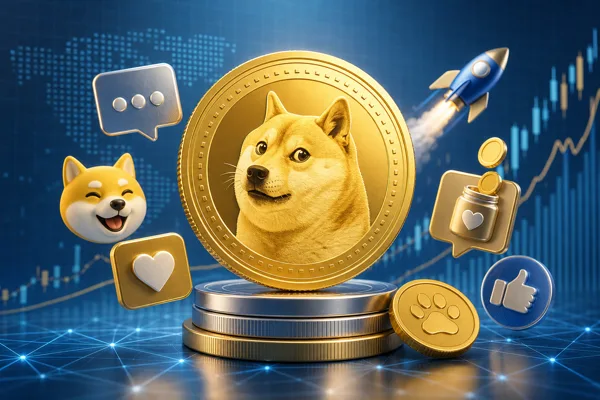


Key Takeaways
- Dogecoin (DOGE) launched in December 2013 as a meme-based joke and grew into a widely used cryptocurrency for tipping and small payments.
- It runs on a Scrypt proof-of-work blockchain, is merge-mined with Litecoin, and has an uncapped, inflationary supply with around 10,000 new DOGE added roughly every minute.
- Its value is driven largely by its community and culture, and in 2026 it has drawn fresh attention through spot DOGE ETFs and corporate adoption efforts.
In This Article
From Internet Joke to Digital Currency
Few cryptocurrencies have a backstory quite like Dogecoin (DOGE). It began in 2013 as a lighthearted parody of the crypto market, complete with the Shiba Inu “Doge” meme as its mascot. What started as a joke turned into one of the most recognized digital currencies in the world.
Today Dogecoin is a working peer-to-peer payment network with a famously active community, real merchant acceptance, and a habit of landing in the headlines. Understanding it means looking at both the technology and the internet culture that carried it this far.
Dogecoin Explained
Dogecoin is a peer-to-peer, open-source cryptocurrency built for fast, low-cost transactions. Like other coins, it records transfers on a public blockchain maintained by a distributed network rather than a bank or central authority.
It was created as a more approachable, less serious alternative to Bitcoin. Where Bitcoin leans toward being a store of value, Dogecoin was designed to be spent: quick to confirm, cheap to send, and easy for newcomers to use. The friendly Shiba Inu branding was part of the point, signaling that crypto did not have to be intimidating.
Origins and Early Development
Dogecoin was launched on December 6, 2013 by software engineers Billy Markus and Jackson Palmer. Markus was an engineer at IBM and Palmer a product manager at Adobe, and the two wanted a cryptocurrency that felt accessible and fun rather than speculative.
Technically, Dogecoin was built on Litecoin‘s foundation by way of Luckycoin, a Litecoin derivative. It adopted the Scrypt proof-of-work algorithm, which made mining less resource-intensive than Bitcoin’s SHA-256. The response was immediate: Dogecoin.com drew more than a million visitors in its first month, and the coin built a sizable following within weeks.
How Dogecoin Works
Dogecoin secures its blockchain with Scrypt proof-of-work mining. Miners compete to solve a cryptographic puzzle, and the winner adds the next block and receives a fixed reward of 10,000 DOGE. Blocks arrive about once a minute, far faster than Bitcoin’s roughly ten-minute interval.
Merge mining with Litecoin
One detail that is often misunderstood is how Dogecoin is actually mined. Since 2014 it has used merge mining, also called Auxiliary Proof of Work (AuxPoW), with Litecoin. Merge mining is not a separate step that happens after a block is found. It is the method itself: because both networks share the Scrypt algorithm, miners submit the same computational work to Litecoin and Dogecoin at the same time, securing both chains in a single effort. This shared security is a big reason a meme coin can run a robust proof-of-work network without commanding its own massive mining ecosystem.
An Inflationary Supply Model
Dogecoin’s economics set it apart from Bitcoin. Instead of a fixed 21 million coin cap, Dogecoin has no maximum supply. Roughly 10,000 new DOGE enter circulation every minute, which means the total keeps growing over time.
This inflationary design is deliberate. A steady, predictable stream of new coins discourages hoarding and keeps fees extremely low, often a fraction of a cent. The trade-off is that DOGE was never meant to be a scarce store of value in the way Bitcoin is. It was built to be used.
Other technical traits reinforce that goal:
- Fast confirmations: a new block roughly every minute
- Very low fees: ideal for microtransactions and tipping
- Accessible mining: no need for the most advanced hardware
Community and Culture
More than any single feature, Dogecoin’s identity rests on its community, affectionately known as “Shibes.” From the start, this group turned online enthusiasm into real-world action. In 2014 the community raised around $50,000 in DOGE to send the Jamaican bobsled team to the Sochi Winter Olympics, and contributed more than $30,000 in DOGE to build a clean-water well in Kenya.

That meme-driven energy keeps DOGE in the public eye. It thrives on Reddit, X, and TikTok, and high-profile attention, especially from Elon Musk, has repeatedly moved both the conversation and the market. The culture has produced its own milestones too: a 2021 surge that pushed DOGE to about $0.68, the SpaceX-launched DOGE-1 mission to the Moon, and sponsorships ranging from NASCAR cars to professional sports teams.
How Dogecoin Compares
Dogecoin shares technical DNA with Bitcoin and Litecoin, but its purpose is distinct. The table below sums up the main differences.
| Feature | Dogecoin | Bitcoin | Ethereum |
|---|---|---|---|
| Block time | About 1 minute | About 10 minutes | About 12 seconds |
| Supply | Unlimited (inflationary) | Capped at 21 million | No fixed cap |
| Main use | Tipping and payments | Store of value | Smart contracts and apps |
| Fees | Very low | Variable, can be high | Variable, can spike |
In short, Dogecoin does not try to out-engineer Bitcoin or Ethereum. It carves out a niche as a simple, fast, low-fee coin that is easy for beginners to pick up.
What Dogecoin Is Used For
Dogecoin’s practical strengths show up in everyday, small-value payments:
- Online tipping: rewarding creators on platforms like Reddit, Discord, and X
- Donations and crowdfunding: charity drives, sponsorships, and relief efforts
- Merchant payments: accepted by some businesses for goods, merchandise, and tickets
- Microtransactions: tiny payments that would be impractical on high-fee networks
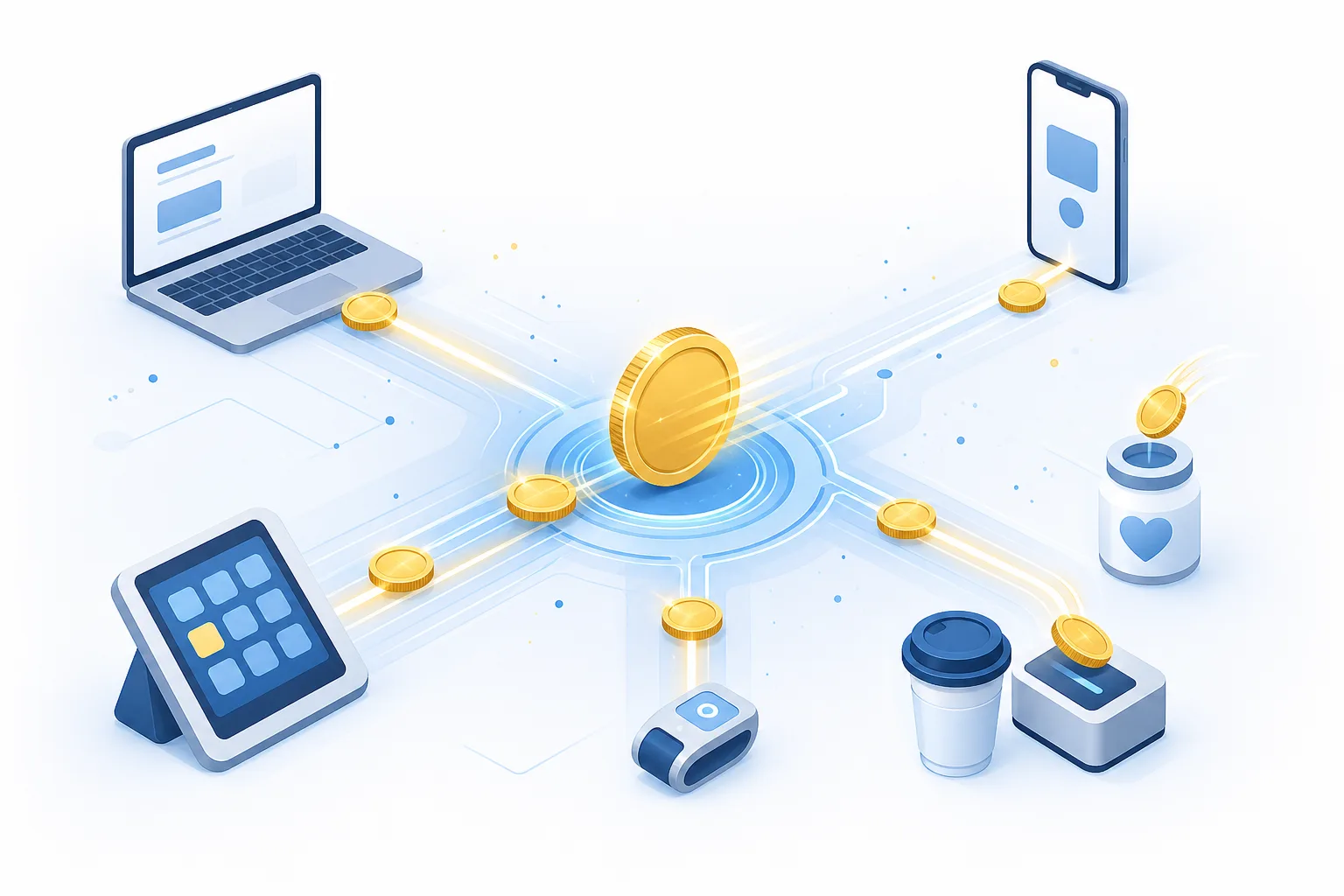
Its low fees and quick confirmations make Dogecoin a natural fit for online communities and for regions where traditional banking is limited.
Criticism and Challenges
Dogecoin’s joke origins cut both ways, and the project faces genuine criticism:
- Speculative reputation: critics argue DOGE lacks intrinsic value and trades largely on hype
- Inflationary supply: an unlimited supply raises questions about long-term value retention
- Limited functionality: the network does not natively support smart contracts
- Influencer-driven swings: sharp price moves tied to figures like Elon Musk draw concerns about manipulation, even where no rules are broken
These are familiar debates for any meme-driven asset. For a wider look at the risks involved, see our guide on whether meme coins are safe to invest in. Despite the criticism, an engaged community and steady volunteer development keep Dogecoin relevant.
Why Dogecoin Matters in 2026
Dogecoin’s staying power comes from its community, its simplicity, and its cultural reach rather than from cutting-edge technology. In 2026 that profile has widened in a notable way: the arrival of spot DOGE exchange-traded funds (ETFs) has opened a regulated path for investors to gain exposure, and inflows into these products have become a closely watched market signal. Corporate efforts such as the House of Doge initiative have also worked to broaden real-world adoption and partnerships.
None of this changes what Dogecoin is at its core: a fast, low-fee coin that is easy to use. That approachability still makes it a common first step for newcomers entering crypto, and its momentum in tipping, payments, and emerging markets continues. Whether or not it ever sheds the “meme coin” label, Dogecoin remains a striking example of how an internet community can turn a joke into a lasting financial and cultural phenomenon.
 Stay Ahead in Crypto