English
  Nederlands
  Deutsch

Key Takeaways
- XRP is a digital asset built for fast, low-cost cross-border payments, settling transactions in 3–5 seconds.
- The XRP Ledger uses a validator-based consensus mechanism, not energy-intensive mining, to confirm transactions.
- While Ripple builds products using XRP, the XRP Ledger is an independent, decentralized network maintained by validators worldwide.
In This Article
XRP is a digital asset designed for fast, low-cost global payments. It serves as the native cryptocurrency of the XRP Ledger (XRPL), an open-source blockchain network built to move value quickly across borders.
Launched in 2012, XRP was created to address inefficiencies in traditional financial systems, particularly slow and expensive cross-border transactions. Unlike many cryptocurrencies that rely on energy-intensive mining, XRP uses a unique consensus mechanism that allows transactions to settle in just a few seconds.
Although XRP is widely associated with the fintech company Ripple, the XRP Ledger itself is an independent, decentralized network maintained by validators around the world. Ripple builds payment solutions that use XRP, but it does not control the underlying blockchain.
Today, XRP remains one of the longest-running digital assets in the crypto market and is often used as a bridge currency for international transfers and liquidity management.
The Origins of XRP
The XRP Ledger was developed by three engineers, David Schwartz, Jed McCaleb, and Arthur Britto, who wanted to build a blockchain that could process payments faster and more efficiently than early cryptocurrencies.
The project officially launched in 2012 and soon attracted the involvement of entrepreneur Chris Larsen. Together, they created a company called OpenCoin, which later became Ripple.
The idea behind the XRP Ledger was simple: create a decentralized network capable of moving value globally as easily as sending an email.
Unlike many blockchain projects that focus primarily on decentralization for its own sake, XRP was designed with a practical financial use case, improving international payments.
How the XRP Ledger Works
The XRP Ledger is a distributed blockchain maintained by independent servers called validators. These validators verify transactions and maintain the network without relying on mining or staking.
Instead, XRPL uses a consensus algorithm where validators agree on the order and validity of transactions.
Transaction Process
- A user submits a transaction to the XRP Ledger.
- Validators review and verify the transaction.
- If a majority of trusted validators agree, the transaction is confirmed.
- The ledger updates and records the new state.
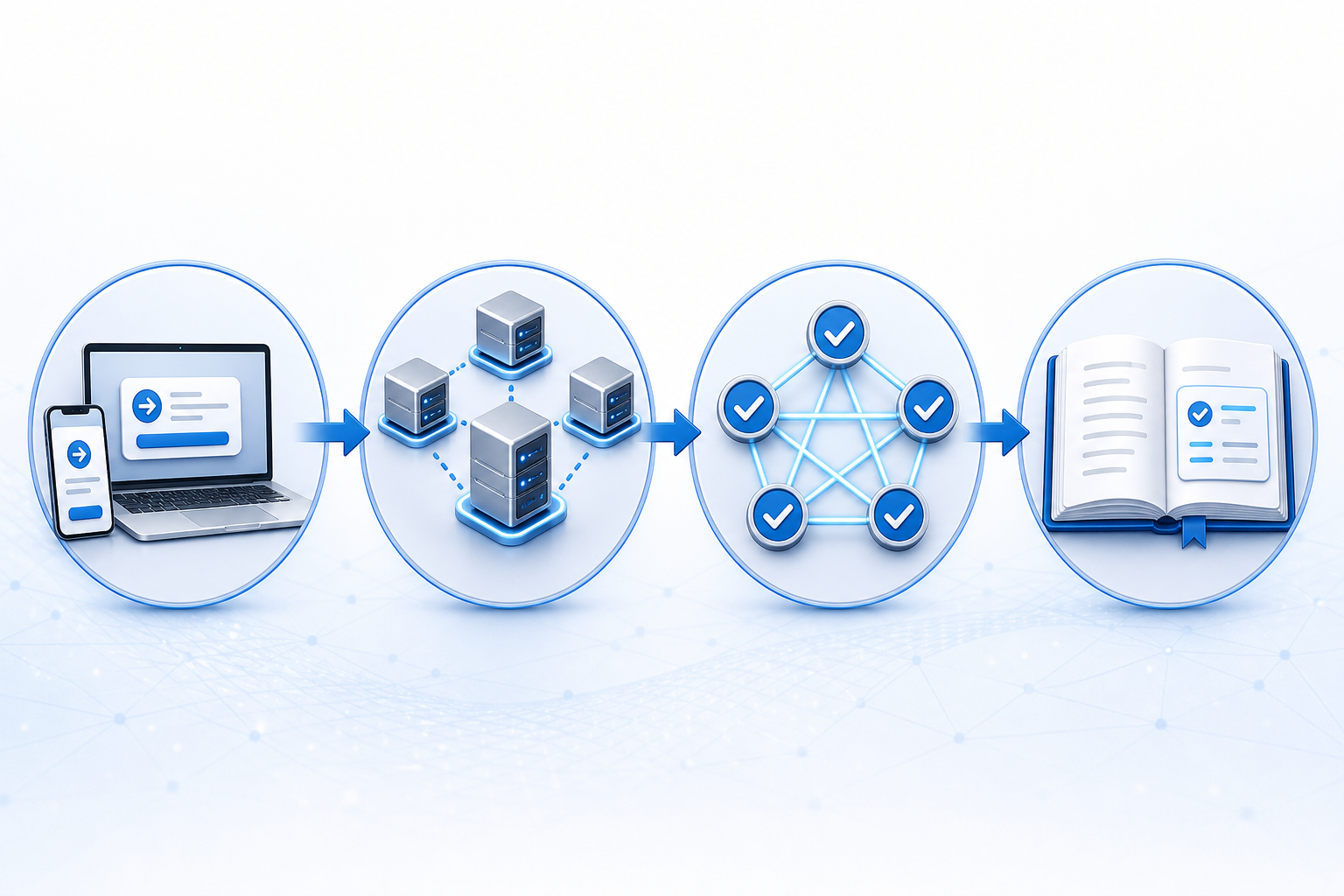
This consensus process allows the network to confirm transactions within seconds.
XRP Supply and Tokenomics
One unique characteristic of XRP is its fixed supply model.
- Total supply: 100 billion XRP
- All tokens were created at launch (pre-mined)
- A large portion of tokens was allocated to Ripple to support development and ecosystem growth.
To manage the supply responsibly, Ripple placed 55 billion XRP into escrow accounts, releasing portions periodically to ensure market stability.
Another important feature is that every XRP transaction burns a small amount of the token. This tiny fee helps prevent spam on the network and slowly reduces the total supply over time.
 XRP vs Bitcoin
 XRP vs
  Bitcoin
Although both XRP and Bitcoin are cryptocurrencies, they were designed for different purposes.
| Feature | XRP | Bitcoin |
| Main Purpose | Global payments | Store of value |
| Consensus | Validator-based consensus | Proof-of-work mining |
| Transaction Speed | 3–5 seconds | ~10 minutes |
| Energy Consumption | Very low | High |
| Maximum Supply | 100 billion | 21 million |
Bitcoin prioritizes decentralization and security for storing value, while XRP focuses on efficient money movement and payment infrastructure.
Is XRP Decentralized?
The decentralization of XRP is often debated.
Critics point out that Ripple initially received a large share of the token supply. However, the XRP Ledger itself is operated by a distributed network of validators, including:
- universities
- financial institutions
- independent developers
- blockchain infrastructure providers
Ripple runs only a small number of validators and cannot unilaterally control the network.
Over time, governance of the XRP Ledger has become more distributed as more independent validators joined the ecosystem.
Real-World Use Cases of XRP
XRP’s main goal is to improve the speed and efficiency of financial transactions.
1. Cross-Border Payments
Traditional international payments can take several days and involve multiple intermediaries.
Using XRP, financial institutions can move funds within seconds while reducing settlement costs.
Ripple’s payment network uses XRP in a system known as On-Demand Liquidity (ODL), which allows institutions to convert currencies instantly without pre-funding foreign bank accounts.
2. Liquidity for Financial Institutions
Banks and payment providers often need large reserves of foreign currencies to process international transfers.
XRP can act as a bridge asset, allowing one currency to be exchanged for another quickly.
For example:
USD → XRP → EUR
This process can significantly reduce the capital requirements for cross-border payments.
3. Micropayments
Because transaction fees on XRPL are extremely small, XRP can support micropayments.
This makes it suitable for:
- digital content payments
- tipping systems
- microtransactions in apps or games
4. Tokenization and Digital Assets
The XRP Ledger also supports tokenized assets.
Developers can issue tokens representing:
- fiat currencies
- commodities
- stablecoins
- digital collectibles
This functionality expands XRPL’s role beyond payments into broader financial infrastructure.
Advantages of XRP
Fast Transactions
XRP transactions settle within 3–5 seconds, much faster than many other blockchain networks.
Low Fees
Transaction costs are typically fractions of a cent, making XRP efficient for high-volume transfers.
Energy Efficiency
Since XRPL does not rely on mining, its energy consumption is significantly lower than that of proof-of-work networks.
Established History
Launched in 2012, XRP is one of the longest-running blockchain projects, giving it a strong track record in the industry.
Potential Challenges
Despite its advantages, XRP faces several challenges.
Centralization Concerns
Some critics argue that Ripple’s large XRP holdings could influence the market.
Regulatory Uncertainty
Cryptocurrencies often face evolving regulatory frameworks in different jurisdictions.
Competition
Other blockchain networks and payment systems are also developing solutions for cross-border payments.
The Role of Ripple in the XRP Ecosystem
Ripple is a blockchain technology company that builds payment infrastructure for financial institutions.
Its products include:
- global payment networks
- liquidity solutions
- blockchain infrastructure tools
While Ripple uses XRP within some of its products, the company does not control the XRP Ledger itself, which remains open-source and community-driven.
The Future of XRP
The long-term outlook for XRP depends on several factors, including:
- adoption by financial institutions
- technological development on the XRP Ledger
- global regulatory clarity around digital assets
As blockchain technology continues to evolve, networks designed for efficient payments and financial infrastructure may play an important role in the broader digital economy.
XRP’s focus on speed, low fees, and cross-border liquidity positions it as a cryptocurrency aimed at real-world financial use cases rather than speculation alone.
 Stay Ahead in Crypto