 English
  Nederlands
  Deutsch
The rise of cryptocurrencies has brought millions of new investors into digital finance. But with opportunity comes one major question: how do you store crypto safely? Whether you hold Bitcoin, trade NFTs, or explore decentralized finance (DeFi), a reliable crypto wallet is essential.
What Is a Crypto Wallet?
A cryptocurrency wallet is a tool, either software or hardware, that lets you send, receive, and store digital assets. Instead of holding physical money, it stores private keys, unique codes that give you ownership of your coins on the blockchain.
There are two main types of wallets:
- Custodial wallets: Managed by a company or exchange that keeps your keys. Easy to use, but you don’t have full control.
- Non‑custodial wallets: You hold your own keys, giving you total ownership and independence.
Wallets also fall into two categories based on internet connection:
- Hot wallets: Stay online, offering convenience and fast transactions (mobile or desktop apps).
- Cold wallets: Stay offline, offering maximum security (hardware devices or paper backups).
The 10 Best Crypto Wallets in 2025
Below are the leading wallets this year covering different blockchains, features, and security levels.
1. Exodus Wallet Best for Beginners and Multi‑Asset Use
Type: Hot Wallet
Platforms: Desktop, Mobile, Web
Supports: 350+ cryptocurrencies
Exodus is designed for simplicity. Its clean interface and integrated charts make it ideal for newcomers. The wallet supports hundreds of coins, including Bitcoin, Ethereum, and Solana, and allows you to swap assets instantly using built‑in exchange APIs.
Why users like Exodus:
- Intuitive dashboard with live price updates
- Non‑custodial keys are stored locally on your device
- Syncs across mobile, desktop, and web
- Integrates with Trezor hardware wallets for extra safety
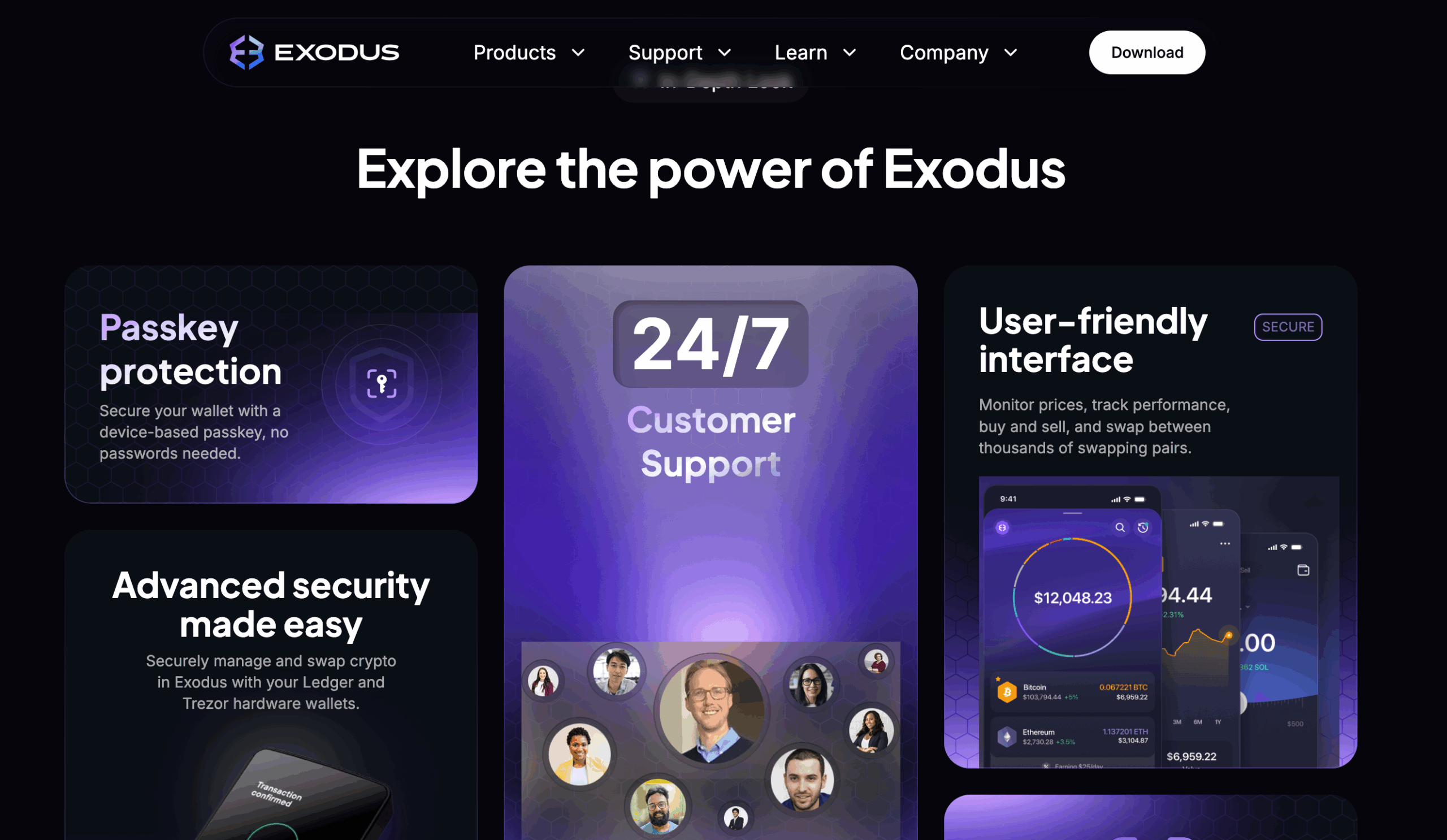
Best for beginners who want a multi‑chain wallet with exchange features.
2. Zengo – Keyless Wallet with MPC Security
Type: Hot Wallet (non‑custodial)
Platform: Mobile
Supports: 120+ cryptocurrencies
Zengo takes a new approach by removing traditional private keys entirely. It uses Multi‑Party Computation (MPC) to split your credentials between your device and its servers. Even if one side is compromised, your funds remain safe.
Highlights:
- No seed phrase or key to lose uses biometric login
- 3‑Factor Authentication (3FA) for secure recovery
- 24/7 live customer support
- Integrated tools to buy, sell, or swap crypto easily
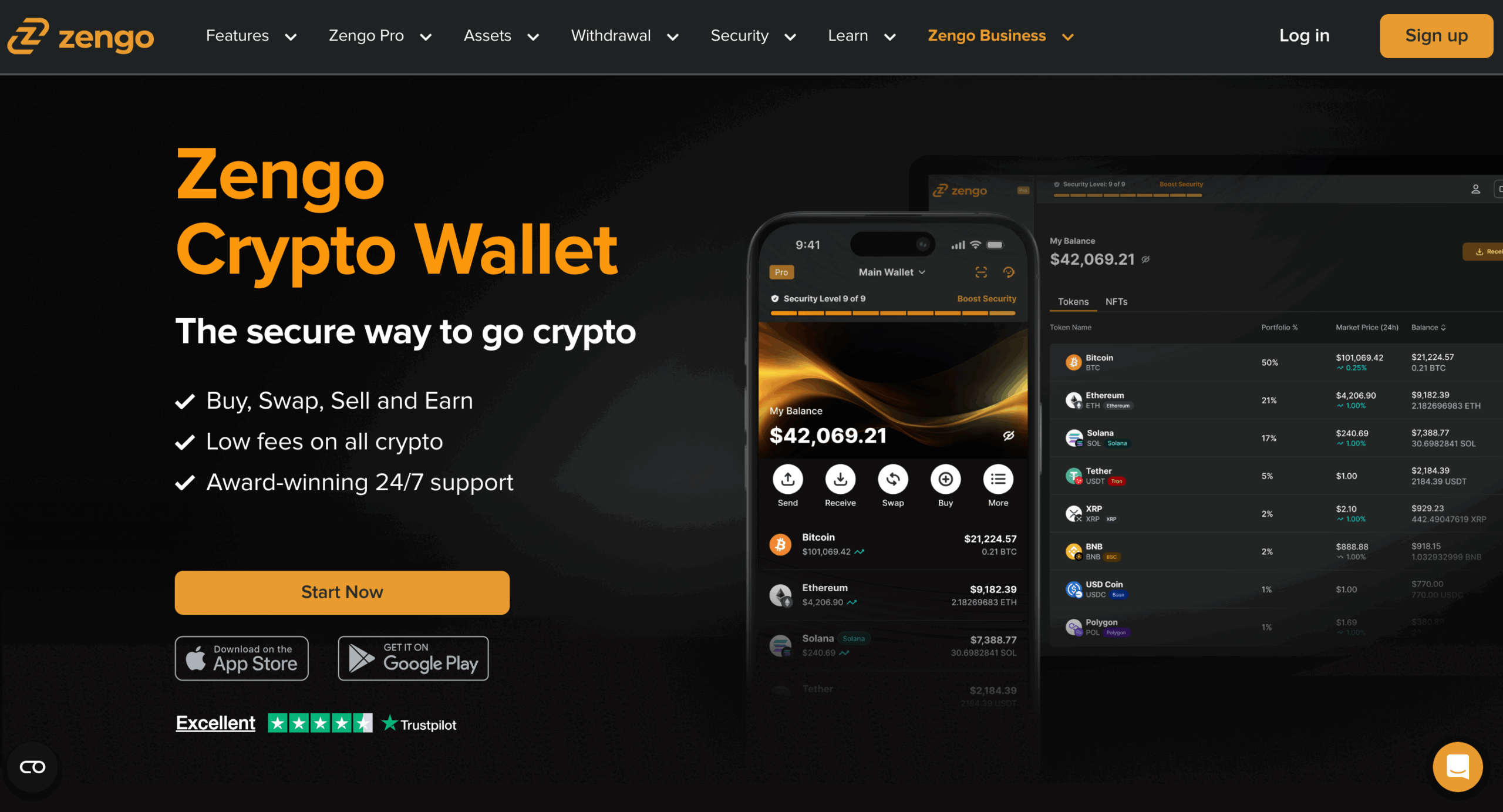
Perfect for beginners who fear losing private keys or passwords.
3. Sparrow Wallet Advanced Bitcoin‑Only Wallet
Type: Hot/Cold Wallet
Platform: Desktop (Windows, macOS, Linux)
Supports: Bitcoin only
Sparrow Wallet is a professional‑grade Bitcoin wallet built for users who value privacy and control. It connects directly to your own Bitcoin node, giving you complete transparency over your transactions.
Key Features:
- Advanced coin control and multi‑signature support
- Integration with hardware wallets like Ledger, Trezor, Coldcard
- CoinJoin transactions for privacy
- Visual tools for inspecting UTXOs and transaction paths

Best for Bitcoin experts and privacy‑focused investors.
4. BlueWallet Bitcoin & Lightning Made Simple
Type: Hot Wallet
Platform: Mobile (iOS, Android)
Supports: Bitcoin and Lightning Network
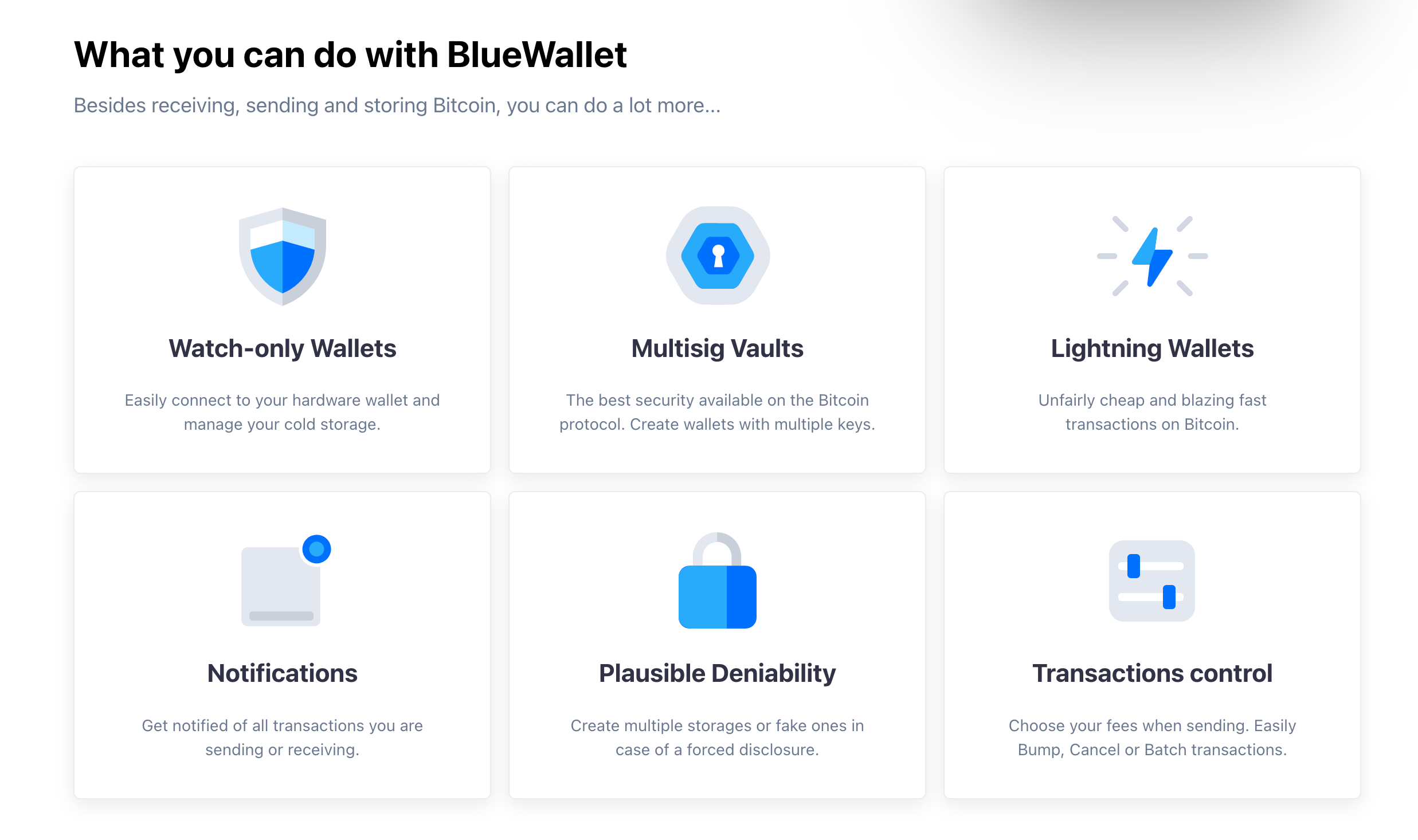
BlueWallet brings Bitcoin to your pocket. It’s fast, lightweight, and supports the Lightning Network, enabling instant, low‑fee BTC payments.
Main Benefits:
- Easy setup and clean design
- Supports watch‑only wallets for secure monitoring
- Open‑source and privacy‑oriented
- Lightning Network for instant transactions
Ideal for Bitcoin users who want mobile access and speed.
5. Trust Wallet All‑in‑One DeFi and Multi‑Chain Wallet
Type: Hot Wallet
Platform: Mobile (iOS, Android)
Supports: 10M+ assets on 100+ blockchains
Owned by Binance but fully decentralized, Trust Wallet is one of the most versatile mobile wallets. It’s a non‑custodial app that gives you access to DeFi, NFTs, and dApps directly through its built‑in Web3 browser.
Why It Stands Out:
- Access to NFTs, staking, and token swaps
- Built‑in Web3 browser for decentralized apps
- Secure 12‑word recovery phrase stored locally
- Supports Ledger hardware for added protection
Excellent for DeFi users and mobile investors managing multiple blockchains.
6. MetaMask Gateway to Ethereum and Web3
Type: Hot Wallet
Platform: Browser extension, Mobile
Supports: Ethereum, Polygon, BNB Chain, Arbitrum, and other EVM chains
MetaMask remains the go‑to wallet for Ethereum and Web3 users. It’s both a crypto wallet and a key to decentralized apps, letting users explore NFT marketplaces, DeFi protocols, and Layer‑2 networks.
Core Features:
- Supports ERC‑20 tokens and NFTs
- Built‑in DEX aggregator for token swaps
- Compatible with Ledger and Trezor hardware wallets
- Over 30 million active users

Perfect for anyone using Ethereum or connecting to Web3 platforms.
7. Ledger Nano X / Flex – Cold Storage for Long‑Term Safety
Type: Cold Wallet (Hardware)
Platform: Hardware device + Ledger Live app
Supports: 5,500+ cryptocurrencies
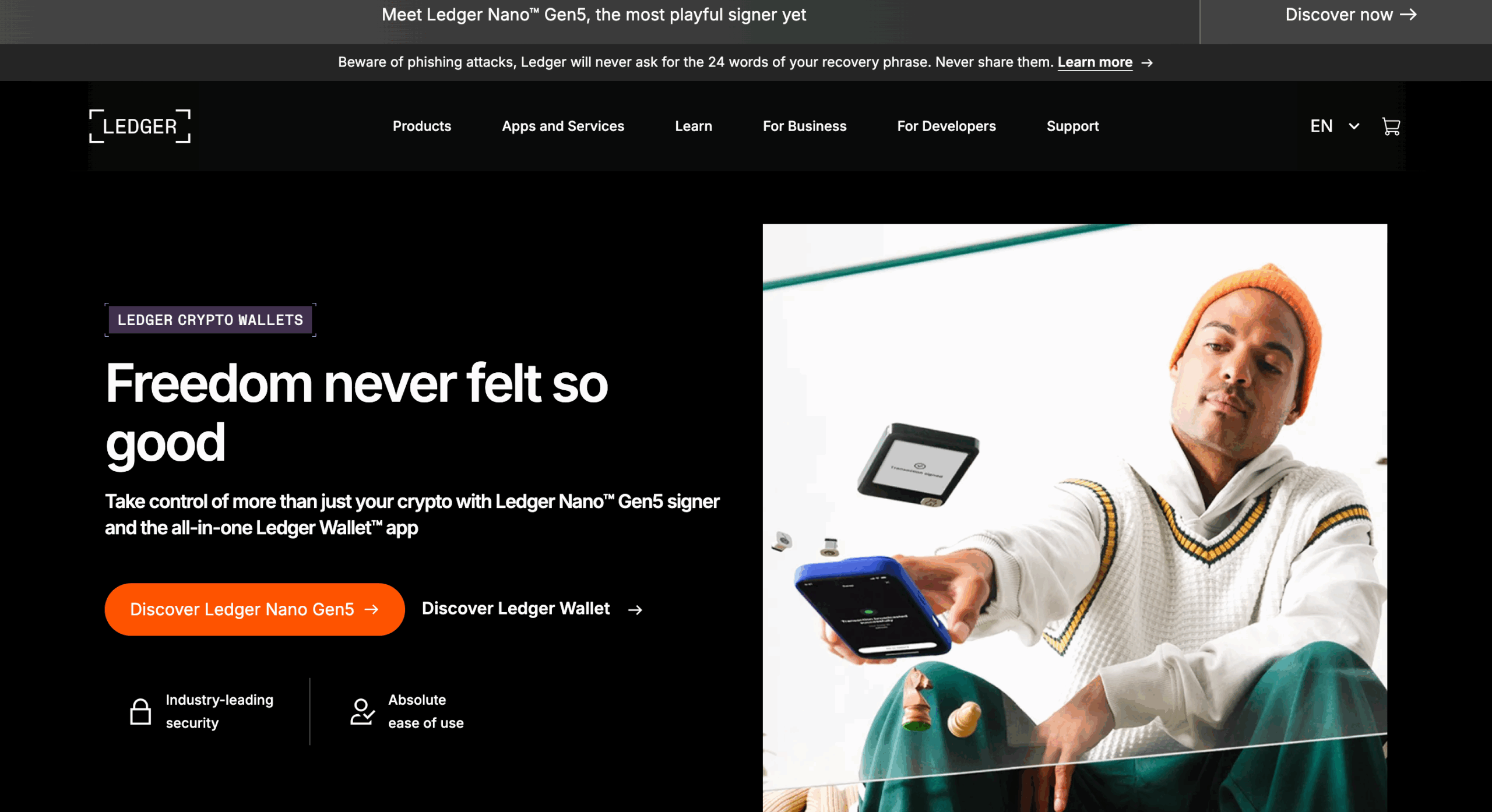
Ledger is a world leader in hardware wallets. The Nano X and new Ledger Flex models store your private keys offline, safe from hackers or malware. The devices connect via Bluetooth or USB to the Ledger Live app, allowing secure management of assets.
Key Highlights:
- Offline private key storage (cold wallet)
- Manage crypto, NFTs, and staking through Ledger Live
- CC EAL5+ security certification
- Supports thousands of coins and tokens
Best for investors who hold crypto long‑term or have large balances.
8. Trezor Model T / Safe 3 Transparent, Open‑Source Hardware Wallet
Type: Cold Wallet (Hardware)
Platform: Hardware + Trezor Suite
Supports: 9,000+ assets
Trezor, created by SatoshiLabs, was the first hardware wallet and remains one of the most trusted names in crypto security. The Model T features a color touchscreen, while the Safe 3 (released in 2024) includes an advanced EAL6+ chip.
Notable Features:
- Fully open‑source firmware for transparency
- Passphrase protection and Shamir Backup recovery
- Integration with Trezor Suite app for asset management
- Supports Bitcoin, Ethereum, Cardano, Solana, and more
Great for users who want an open, transparent, and offline solution.
9. Phantom Wallet Best for Solana and NFT Enthusiasts
Type: Hot Wallet
Platform: Browser extension, Mobile
Supports: Solana, Ethereum, Polygon
Phantom quickly became the most popular wallet for the Solana blockchain, known for its speed and simplicity. It supports staking, NFT management, and token swaps directly in the app, and now extends support to Ethereum and Polygon networks.
Top Features:
- Fast transactions with low Solana fees
- Visual NFT gallery built into the app
- Phishing protection and biometric login
- Integration with DeFi platforms like Raydium and Magic Eden

Ideal for Solana users and NFT collectors.
10. Coinbase Wallet Trusted Brand, Full Self‑Custody
Type: Hot Wallet (Non‑custodial)
Platform: Mobile, Browser Extension
Supports: Thousands of tokens on 100+ networks
Developed by the major crypto exchange, Coinbase Wallet gives users the independence of self‑custody with the convenience of Coinbase’s ecosystem. It’s beginner‑friendly and supports DeFi, NFTs, and multi‑chain transactions.
What Makes It Stand Out:
- Connects seamlessly to Coinbase Exchange for transfers
- Secure seed phrase and optional cloud backup
- Access to NFTs and dApps
- Supports staking and token swaps across networks
Perfect for beginners who want self‑custody from a regulated, trusted company.
How to Choose the Right Wallet
Selecting the right wallet depends on your goals, activity level, and comfort with managing security. Consider:
- Your usage:
Frequent trader → Hot wallet (Exodus, MetaMask, Trust Wallet)
Long‑term holder → Cold wallet (Ledger, Trezor)
- Your assets:
Bitcoin‑only → Sparrow or BlueWallet
Multi‑asset portfolio → Exodus or Trust Wallet
- Your experience level:
New user → Zengo or Coinbase Wallet
Power user → Sparrow or MetaMask
Security Tips for Crypto Wallets
Protecting your crypto is your responsibility. Follow these best practices:
- Back up your seed phrase and store it offline in a safe location.
- Use hardware wallets for significant amounts of crypto.
- Enable 2FA on exchanges and wallet apps.
- Avoid fake wallet apps, only download from official sources.
- Keep devices updated and secure with antivirus protection.
For the highest level of safety, store your private keys offline in cold storage and use multi‑signature setups where possible.
 Stay Ahead in Crypto