English
  Nederlands
  Deutsch

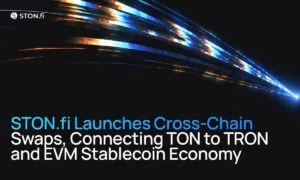
STON.fi Launches Cross-Chain Swaps, Connecting TON to TRON and EVM Stablecoin Economy
Road Town, British Virgin Islands, 21st July 2026, Chainwire

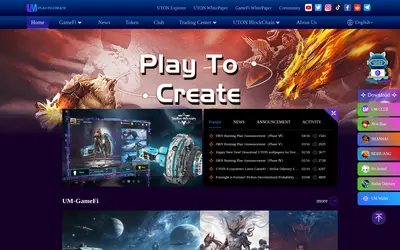
DRN (DRN) is the play-to-earn token associated with the UTON Blockchain ecosystem. The supply of DRN is fixed from the onset of the game, with tokens minted as players accomplish specific in-game tasks. Players can earn DRN through various means, including defeating enemies in personal and multiplayer dungeons, completing both main and side quests, and excelling in Player vs. Environment (PvE) battles. Each week, the generation of DRN is capped, ensuring that the in-game economy remains balanced and sustainable.
The economy surrounding DRN is influenced by the number of active players, with fluctuations in supply and demand reflecting player engagement and activity. DRN serves multiple purposes within the UTON ecosystem, including executing specific tasks that require its use. Furthermore, the token can be traded on various centralized and decentralized exchanges, allowing players to exchange DRN freely and enhancing its utility and liquidity.
Besides its role as a token, DRN is part of a larger ecosystem encompassing NFT capabilities and a range of blockchain services. The UTON blockchain's innovative architecture supports high transaction concurrency and is designed for scalability. This advanced foundation enables developers and users to engage with decentralized applications (DApps) effectively, promoting innovation in the game finance sector. As part of its commitment to building a decentralized digital economy, DRN plays a vital role in connecting users and facilitating a rich interactive gaming experience.
 2026-04-20
| # | Exchange | Pair | Volume (24h) | Price | Volume (24h) | Price | Volume (24h) | Price | Volume (%) | Updated |
|---|---|---|---|---|---|---|---|---|---|---|
Road Town, British Virgin Islands, 21st July 2026, Chainwire
Auckland, New Zealand, 20th July 2026, Chainwire
Key takeaways The Awesome Oscillator (AO) measures momentum by subtracting a 34-period moving average from a 5-period one, both taken from each bar’s median price rather than its
Key takeaways The Hull Moving Average (HMA) is a trend-following line built to react quickly to price while staying smooth, cutting the lag that slows down traditional moving
San Francisco, CA, 17th July 2026, Chainwire
London, United Kingdom, 17th July 2026, Chainwire
Willemstad, Curaçao, 17th July 2026, PlayNewswire
Kingstown, St. Vincent and the Grenadines, 16th July 2026, Chainwire
Key takeaways Williams %R is a momentum oscillator that shows whether price is closing near the top or the bottom of its recent range, on a scale of
 Stay Ahead in Crypto
Get the latest insights on coins, exchanges, and blockchain trends delivered to your inbox.
No spam. Unsubscribe anytime.


Advertise with Blockspot.io
Get your project in front of crypto traders, investors, and builders.
Or publish a PR directly.
Set a price alert
This feature is still under development. Leave your email to be notified when it is ready.