English
  Nederlands
  Deutsch
Crypto Overview in Sierra Leone
 Regulatory data is for informational purposes only and may not reflect the most current legal developments. Always consult qualified professionals before making decisions.
Key Takeaways
- The Bank of Sierra Leone (BSL) is the primary financial regulator; there is no dedicated crypto or virtual asset legislation, and no VASP licensing framework has been established.
- Cryptocurrency is not banned but operates in a regulatory grey zone: the BSL has not authorised any crypto business and has acted against unlicensed schemes.
- No crypto-specific tax guidance has been issued; default rules under the Income Tax Act apply, with personal income tax progressive up to 30% and corporate income tax at 25%.
- The Financial Intelligence Agency (FIA), established by the Anti-Money Laundering and Combating of Financing of Terrorism and Financing of Proliferation of Weapons of Mass Destruction Act 2024, is the national AML/CFT authority; Sierra Leone remains under GIABA enhanced follow-up but had FATF Recommendation 15 upgraded to Largely Compliant in November 2024.
Table of Contents
Sierra Leone is a small West African economy with a young digital financial services ecosystem, a pioneering fintech regulatory sandbox, and a cautious central bank stance on cryptocurrency. There is no dedicated crypto statute, no Virtual Asset Service Provider (VASP) licensing regime, and no published tax guidance on digital assets. The Bank of Sierra Leone (BSL) has not authorised any business to take deposits for crypto investment or trading, and its public actions against unlicensed schemes define how the local financial sector treats the asset class.
Legal Classification and Regulatory Framework
Cryptocurrency Status
Cryptocurrencies are not recognised as legal tender in Sierra Leone, where the leone (SLE) is the sole sovereign currency following the July 2022 redenomination that removed three zeros from the previous leone and introduced a new ISO code. There is no statute that classifies crypto as property, commodity, or security. The BSL has not issued a comprehensive policy statement endorsing or banning private crypto, but it acted against two named unlicensed schemes in 2019 and consistently emphasises that no deposit-taking crypto business holds its authorisation. The practical result is a regulatory grey zone in which individuals may transact on offshore venues at their own risk and no domestic exchange operates under a licence.
Tax Treatment
The National Revenue Authority (NRA) has not published crypto-specific guidance. Default rules under the Income Tax Act therefore apply: corporate income tax is 25% for general companies and 30% for mining and petroleum, personal income tax is progressive up to 30%, and the Goods and Services Tax rate is 15%. Crypto gains realised in the course of trade would in principle be treated as ordinary income; personal disposals fall into an untested area that revenue practice has not addressed. Operators and investors should obtain individual advice and document the basis of any tax position taken.
Regulatory Oversight
The Bank of Sierra Leone is the monetary authority, banking supervisor, and operator of the country’s fintech regulatory sandbox. The Ministry of Finance leads fiscal and digital financial services policy. The National Revenue Authority handles taxation. AML/CFT supervision is the responsibility of the Financial Intelligence Agency (FIA), established under the Anti-Money Laundering and Combating of Financing of Terrorism and Financing of Proliferation of Weapons of Mass Destruction Act 2024, which replaced the earlier Anti-Money Laundering and Combating of Financing of Terrorism Act 2012 (as amended in 2019) and redesignated the former Financial Intelligence Unit Sierra Leone (FIU-SL) as the FIA with expanded powers. Sierra Leone is a member of the Inter-Governmental Action Group against Money Laundering in West Africa (GIABA), and the country’s most recent full Mutual Evaluation Report was adopted by the GIABA Plenary in December 2020. A November 2024 follow-up assessment re-rated eight recommendations, including FATF Recommendation 15 on virtual assets and VASPs, from Partially Compliant to Largely Compliant. Sierra Leone remains under GIABA enhanced follow-up as of the 5th Enhanced Follow-Up Report adopted in 2025.
Business Environment
Banking Relationships
Banking access for crypto-related activity is restricted. Commercial banks treat virtual asset business as high risk given the BSL stance and the AML/CFT framework, and no public guidance authorises bank services for exchanges or custodians. In practice, on-ramps and off-ramps run through peer-to-peer platforms settled via the two dominant mobile money services, Orange Money and Afrimoney, rather than through traditional bank rails. Mobile money has expanded rapidly and is the primary instrument of digital financial inclusion, with 70% of adults historically lacking access to formal financial services.
Innovation Support
Innovation support is notable for a country of this size. The Bank of Sierra Leone launched a fintech regulatory sandbox in 2018, making Sierra Leone the second African country to do so. The sandbox was developed with support from the United Nations Capital Development Fund (UNCDF) and Financial Sector Deepening Africa and has admitted cohorts focused on payments, savings, and identity. The BSL’s National Strategy for Financial Inclusion 2022-2026 lists the sandbox as a flagship achievement alongside tiered KYC guidelines and agent banking rules. In 2025 the BSL began commissioning a comprehensive FinTech Strategy and Regulatory Policy Framework, signalling a move toward more structured oversight of digital finance. An International Conference on Central Bank Digital Currencies and FinTech is scheduled in Freetown for June 2026, indicating active government engagement with CBDC concepts. The country also hosted an early national blockchain-based digital identity pilot: the National Digital Identity Platform (NDIP), developed in partnership with Kiva, UNCDF, UNDP, and the National Civil Registration Authority, was launched in August 2019 and was the first blockchain-based national ID system in Africa.
Crypto License in Sierra Leone
Sierra Leone has no VASP licensing regime and no dedicated crypto legislation. Exchanges, custodians, brokers, wallet providers, and stablecoin issuers cannot obtain a Sierra Leonean authorisation because none exists. The regulatory environment follows a no-framework model in which general financial laws apply by default, but their reach to crypto-native businesses remains undefined. Understanding this gap is essential for any operator considering Sierra Leone as a base or target market.
Current Status
As of 2026, the Bank of Sierra Leone has not transposed FATF Recommendation 15 into an operational VASP licensing or registration regime, despite that recommendation being re-rated to Largely Compliant in November 2024. The Largely Compliant re-rating reflects legislative progress, primarily through the AML/CFT Act 2024 which extended reporting-entity obligations to a broader set of financial actors, rather than the existence of a working licensing window. The BSL has not published rules defining which crypto activities qualify as regulated financial services, and no entity has been granted a crypto-specific authorisation. Sierra Leone is not a member of the European Union and has no access to MiCA passporting. The country is not part of the CEMAC, UEMOA, or ECCU currency unions that carry their own regional frameworks, so no supranational licensing pathway applies.
Why No Framework
Several structural factors explain the absence of a formal VASP regime. Sierra Leone’s financial sector capacity is limited: the BSL’s regulatory bandwidth is focused on banking supervision, mobile money oversight, and the ongoing fintech sandbox, with crypto regarded as a peripheral risk rather than a priority reform. The GIABA enhanced follow-up status means the country is still working to meet core AML/CFT effectiveness measures before adding the complexity of a new licensing class. The 2025 FinTech Strategy work suggests that a policy framework is being scoped, but commissioning the strategy is a precursor step, not a regulatory outcome. Domestically, there is no organised crypto industry lobby and no licensed exchange pressing for a framework, removing market-side impetus for reform.
What Operators Should Know
Operators serving Sierra Leonean users from offshore jurisdictions are subject to their home-country licensing rules but face no Sierra Leonean registration requirement. Customer due diligence obligations under the AML/CFT Act 2024 apply to reporting entities operating in Sierra Leone, and any business that falls within the Act’s scope for financial institutions must comply regardless of whether crypto-specific rules exist. The Banking Act 2019 may also apply to entities accepting deposits or offering payment services. Businesses holding client funds or offering exchange services should seek legal advice on whether their activities trigger existing financial institution definitions. The FATF Travel Rule has not been transposed into domestic law, so no technical implementation obligation exists yet, but the Largely Compliant R15 rating suggests this is likely to change as the FinTech Strategy develops. Operators should monitor BSL guidance and any output from the June 2026 CBDC and FinTech conference as potential leading indicators of forthcoming regulation.
Market Characteristics
Adoption Patterns
The Sierra Leonean crypto market is among the smaller ones in West Africa. Adoption is concentrated in remittances, diaspora flows, and dollar-denominated value preservation against periods of leone depreciation. US dollar-pegged stablecoins are commonly used by peer-to-peer traders for that purpose. The national mobile money infrastructure and growing interoperability between operators are the dominant rails for everyday digital payments, with crypto serving as a marginal but slowly growing channel for cross-border value transfer. Estimated crypto revenue in Sierra Leone was approximately USD 142,200 in 2024, with a user penetration rate of around 0.77%.
Industry Focus
There is effectively no domestic crypto industry. No licensed exchanges, custodians, or stablecoin issuers operate from Sierra Leone, and the visible blockchain footprint is concentrated in public-sector pilot projects and academic conferences rather than commercial services. The widely cited claim that Sierra Leone held the world’s first blockchain election in 2018 has been corrected by the national election commission and independent fact-checkers: the official tally was paper-based and recorded on conventional systems, while the blockchain layer was an independent observer activity limited to a small share of polling stations. The more durable blockchain achievement is the Kiva Protocol national digital identity platform, which remains the country’s most significant and verified deployment of distributed ledger technology.
Regulatory Evolution
The trajectory through 2026 is one of deliberate capacity building rather than imminent licensing reform. The AML/CFT Act 2024, the FATF R15 re-rating, the FinTech Strategy work, and the upcoming CBDC conference collectively signal that the BSL is building toward a more structured digital finance regime. The country is not on the FATF blacklist or greylist, and continued AML/CFT progress under GIABA enhanced follow-up will likely remain a precondition for any future VASP licensing framework. Operators and investors should expect the first substantive policy signals to emerge from the FinTech Strategy process and the June 2026 conference output.
Regulatory data is for informational purposes only and may not reflect the most current legal developments. Always consult qualified professionals before making decisions.
Upcoming Events
-
JUL 13-14WebXLIVE Asia's leading Web3 conference organized by CoinPost covering DeFi, gaming, enterprise blockchain, and tokenization.Conference
 Tokyo
In Person
Tokyo
In Person
-
JUL 21-22Blockchain Futurist Conference Canada's largest and longest-running Web3 and AI event, anchoring Canada Crypto Week in Toronto.Conference
Toronto
In Person
-
JUL 24-26ETHGlobal Lisbon ETHGlobal in-person Ethereum hackathon in Lisbon, part of the 2026 global circuit for developers.Hackathon
Lisbon
In Person
-
JUL 28-31Rare Evo Four-day blockchain convention featuring expo hall, keynotes, hackathons, workshops, and the Rare Evo Poker Classic.Conference
Las Vegas
In Person
-
AUG 12-13Blockchain Rio Latin America's largest blockchain and Web3 conference bringing industry leaders, developers, and entrepreneurs to Rio.Conference
Rio de Janeiro
In Person
 Tokyo
Tokyo  Toronto
  Lisbon
  Las Vegas
  Rio de Janeiro
 Crypto News
-
 BYDFi Participates in Peru Blockchain Conference 2026, Engaging the LATAM Web3 Community
 -
Zoomex Debuts at Wimbledon 2026, Connecting Users to Elite Sporting Moments via Predict Market
-
Bitcoin Suisse Advances Middle East Expansion, Receives Financial Services Permission in Abu Dhabi
-
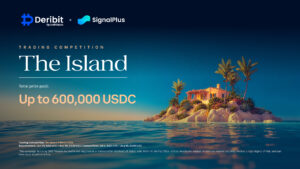
Deribit and SignalPlus Launch The Island Trading Competition With Up to $600,000 USDC in Prizes


Blockchain Companies




Other Countries




 Stay Ahead in Crypto
 Stay Ahead in Crypto
Get the latest insights on coins, exchanges, and blockchain trends delivered to your inbox.
No spam. Unsubscribe anytime.