English
  Nederlands
  Deutsch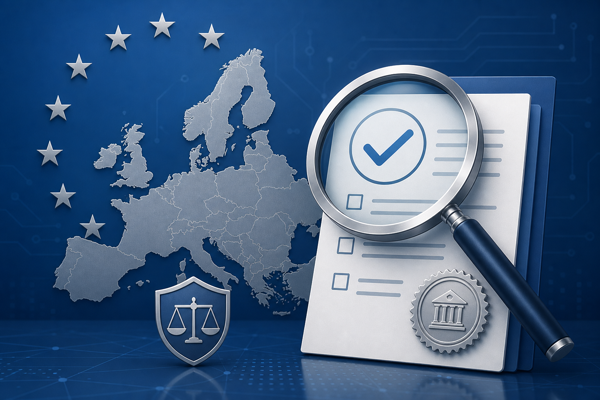
Key Takeaways
- A MiCA CASP authorisation is the single licence that lets a crypto exchange legally serve customers across all 27 EU countries plus Norway, Iceland, and Liechtenstein.
- The quickest way to verify any platform is the EU-wide ESMA register, and every national regulator also keeps its own public list you can search.
- The grandfathering window for older national registrations closes on 1 July 2026, after which only fully authorised providers may operate in the EU.
In This Article
- Why a MiCA Licence Matters
- What a MiCA CASP Licence Is
- The ESMA Register: Europe’s Master List
- How to Read a Register Entry
- Western Europe
- Northern and Baltic Europe
- Southern Europe
- Central and Eastern Europe
- Beyond the EU: The EEA States
- What a MiCA Licence Means for You
- Red Flags of an Unlicensed Exchange
- Verifying a Licence in 2026
Why a MiCA Licence Matters
Before you deposit a single euro, one question decides almost everything about how protected you are: is this platform actually licensed to operate where you live? For years that was hard to answer in Europe. Each country ran its own patchwork of registrations, and a crypto firm registered for anti-money-laundering purposes in one place could market itself almost anywhere with little real oversight.
The Markets in Crypto-Assets Regulation (MiCA) changed that. It created a single EU rulebook for crypto platforms and a single type of licence: the Crypto-Asset Service Provider, or CASP, authorisation. A licensed exchange has to meet capital, governance, and customer-protection standards, and it is supervised by a named national regulator. Checking that licence takes a few minutes, and it is the most useful habit you can build before choosing where to trade. If you want to see which platforms are active in the market, you can browse the full list of crypto exchanges on Blockspot first, then verify each one against the registers below.
What a MiCA CASP Licence Is
A CASP is any company that provides crypto services to the public: running a trading platform, exchanging crypto for euros or for other crypto, holding assets in custody, executing orders, or offering transfer and advice services. Under MiCA, providing those services in the EU requires authorisation from a national competent authority, the official regulator in that country.
The key feature is passporting. A firm authorised in one member state can serve customers across the entire EU and the wider European Economic Area without applying again in each country. That is why an exchange you use in Spain might actually be licensed in Ireland or Luxembourg. For the full background on what the regulation covers and how it was phased in, see our guide to the Markets in Crypto-Assets Regulation.
The ESMA Register: Europe’s Master List
The single most efficient place to start is the European Securities and Markets Authority. ESMA maintains an EU-wide register that aggregates every national CASP authorisation into one consolidated list, precisely because a licence in one country is valid across all of them. If a platform holds a genuine MiCA licence anywhere in the EU, it should appear here.
You can search the consolidated data on the ESMA MiCA register, which also lists authorised stablecoin issuers and a separate list of entities flagged as non-compliant. Treat ESMA as your first stop and the relevant national register as your confirmation.
How to Read a Register Entry
Registers list legal entities, not app names. The exchange you know by its brand is often operated by a separate company, so search for the operating entity rather than the marketing name. A real entry shows the firm’s exact legal name, the specific services it is authorised to provide, the regulator that granted the licence, and the date of authorisation.
One nuance trips people up: absence from a single national list does not always mean a platform is illegal. It may be authorised elsewhere and passported in, or its application may still be pending during the transition period. That is exactly why the EU-wide ESMA register is the better cross-check, and why each country below links to the official source rather than a third-party summary.
Western Europe
 Germany (BaFin)
 Germany (BaFin)
The Federal Financial Supervisory Authority supervises crypto in Germany, which leads the EU by number of authorised CASPs and favours bank-grade institutions such as Commerzbank and Trade Republic.
Official register: BaFin company database
France (AMF)
 France (AMF)
The Autorité des marchés financiers, working with the prudential regulator ACPR, oversees crypto providers in France, where the new MiCA status replaces the older national PSAN regime.
Official register: AMF white lists
Netherlands (AFM)
 Netherlands (AFM)
The Netherlands Authority for the Financial Markets is the lead CASP authority in the Netherlands, with the central bank handling prudential rules for stablecoin issuers.
Official register: AFM crypto register
Belgium (FSMA)
 Belgium (FSMA)
The Financial Services and Markets Authority licenses CASPs in Belgium, sharing supervision with the National Bank of Belgium for firms that already hold a banking or payments licence.
Official register: FSMA list of authorised CASPs
Luxembourg (CSSF)
 Luxembourg (CSSF)
The Commission de Surveillance du Secteur Financier authorises providers in Luxembourg, which became Coinbase’s chosen EU hub after the CSSF granted its MiCA licence.
Official register: CSSF register of supervised entities
Austria (FMA)
 Austria (FMA)
The Financial Market Authority is the competent regulator in Austria, where firms such as Bitpanda are authorised and the transition for older registrations runs to mid-2026.
Official register: FMA company database
Ireland (CBI)
 Ireland (CBI)
The Central Bank of Ireland authorises CASPs in Ireland, replacing the older anti-money-laundering registration that applied before MiCA.
Official register: Central Bank of Ireland registers
Northern and Baltic Europe
Denmark (Finanstilsynet)
 Denmark (Finanstilsynet)
The Danish Financial Supervisory Authority oversees crypto in Denmark, which chose one of the earlier cut-offs by ending its transition period in December 2025.
Official register: Danish FSA company register
Sweden (Finansinspektionen)
 Sweden (Finansinspektionen)
Finansinspektionen is the financial regulator in Sweden, and its public database has a dedicated category for crypto-asset service providers.
Official register: FI company register
Finland (FIN-FSA)
 Finland (FIN-FSA)
The Financial Supervisory Authority licenses providers in Finland, which adopted one of the shortest transition periods in the EU; Coinmotion was its first authorised CASP.
Official register: FIN-FSA register of supervised entities
Estonia (Finantsinspektsioon)
 Estonia (Finantsinspektsioon)
The Estonian Financial Supervision and Resolution Authority now supervises crypto in Estonia. The country’s historic reputation for thousands of crypto licences refers to old anti-money-laundering registrations, not MiCA authorisations.
Official register: Finantsinspektsioon supervised entities
Latvia (Latvijas Banka)
 Latvia (Latvijas Banka)
The central bank, Latvijas Banka, is the single competent authority in Latvia, and recently licensed firms include the exchange operator Backpack EU.
Official register: Latvijas Banka CASP page
Lithuania (Lietuvos bankas)
 Lithuania (Lietuvos bankas)
The Bank of Lithuania authorises CASPs in Lithuania, where licensed providers include Robinhood Europe and CoinGate.
Official register: Lietuvos bankas market participants register
Southern Europe
Italy (CONSOB)
 Italy (CONSOB)
In Italy, CONSOB authorises crypto providers after an opinion from the Bank of Italy, splitting conduct and prudential supervision between the two.
Official register: CONSOB MiCAR-CASP page
Spain (CNMV)
 Spain (CNMV)
The Comisión Nacional del Mercado de Valores supervises crypto providers in Spain, and its list mixes firms authorised in Spain with those passporting in from other states.
Official register: CNMV providers register
Portugal (Banco de Portugal)
 Portugal (Banco de Portugal)
Banco de Portugal authorises CASPs in Portugal, with the markets regulator CMVM handling conduct oversight.
Official register: Banco de Portugal CASP page
Greece (HCMC)
 Greece (HCMC)
The Hellenic Capital Market Commission was designated as the crypto authority in Greece under national law passed in 2025, with sanctions for unlicensed providers.
Official register: HCMC markets in cryptoassets page
Malta (MFSA)
 Malta (MFSA)
The Malta Financial Services Authority has regulated crypto since its 2018 virtual financial assets framework, giving Malta a head start and a place among the leaders by number of authorisations.
Official register: MFSA financial services register
Cyprus (CySEC)
 Cyprus (CySEC)
The Cyprus Securities and Exchange Commission runs one of the busiest first-wave registers, and providers authorised in Cyprus include eToro and Revolut’s crypto arm. Always use the dedicated MiCAR list rather than the older anti-money-laundering one.
Official register: CySEC MiCAR CASPs register
Central and Eastern Europe
Poland (KNF)
 Poland (KNF)
The Polish Financial Supervision Authority is the intended regulator, but as of mid-2026 Poland had not yet enacted its crypto law, so no Polish CASPs exist yet and firms serve the market by passporting in from elsewhere.
Official register: KNF entity search
Czech Republic (CNB)
 Czech Republic (CNB)
The Czech National Bank is the sole CASP authority in the Czech Republic, which took the full transition and issued its first authorisations in early 2026 after a large volume of applications.
Official register: CNB list of regulated entities
Slovakia (NBS)
 Slovakia (NBS)
The National Bank of Slovakia licenses crypto providers in Slovakia, which shortened its transition so that only authorised firms could operate from the start of 2026.
Official register: NBS financial market entities register
Hungary (MNB)
 Hungary (MNB)
The central bank, Magyar Nemzeti Bank, is the CASP authority in Hungary, where a short transition and an extra national requirement led some providers to suspend services and prompted an EU infringement procedure.
Official register: MNB market participants search
Slovenia (ATVP)
 Slovenia (ATVP)
The Securities Market Agency authorises CASPs in Slovenia, with the central bank covering stablecoin issuers; the national transition closed in mid-2025 and Ilirika was the first licensed provider.
Official register: ATVP list of issued licences
Croatia (HANFA)
 Croatia (HANFA)
The Croatian Financial Services Supervisory Agency runs a dedicated MiCA register for Croatia, with early licensees including the local exchange Electrocoin.
Official register: HANFA register of authorised CASPs
Romania (ASF)
 Romania (ASF)
The Financial Supervisory Authority is the designated regulator in Romania, which applies the full grandfathering window to 1 July 2026 while secondary rules are finalised.
Official register: ASF public register
Bulgaria (FSC)
 Bulgaria (FSC)
The Financial Supervision Commission licenses providers in Bulgaria, which runs a dedicated CASP register whose first entries were Alarik Securities and Belayer.
Official register: FSC register of licensed CASPs
Beyond the EU: The EEA States
MiCA’s reach does not stop at the EU’s borders. The regulation was incorporated into the European Economic Area agreement in 2025, so it now applies in the three EEA member states outside the EU, and a CASP licence passports to and from them. Each one transposed MiCA into national law on its own timeline, with supervision in this part of the EEA coordinated through the EFTA Surveillance Authority.
Norway (Finanstilsynet)
 Norway (Finanstilsynet)
The Financial Supervisory Authority of Norway brought MiCA into force through a national Crypto-Assets Act in July 2025, and has already authorised firms such as Firi and Týr Markets in Norway.
Official register: Finanstilsynet business register
Iceland (Central Bank of Iceland)
 Iceland (Central Bank of Iceland)
The Central Bank of Iceland, through its financial supervisory arm, was the last of the three to implement MiCA, with its national act taking effect at the end of 2025 in Iceland.
Official register: Central Bank of Iceland CASP register
Liechtenstein (FMA)
 Liechtenstein (FMA)
The Financial Market Authority was the earliest mover, with its EEA-MiCA implementation act in force from February 2025 in Liechtenstein. Its long-standing national Blockchain Act register is separate and does not grant an EU passport on its own.
Official register: FMA register of licensees
What a MiCA Licence Means for You
A licence is not just a stamp. It commits the provider to a set of standards that a national regulator can enforce, and it gives you a clear authority to turn to if something goes wrong.
- Capital and governance requirements the provider must meet on an ongoing basis
- Rules requiring client crypto and funds to be safeguarded separately from company assets
- Clear disclosure, complaint-handling, and conflict-of-interest obligations
- One authorisation recognised across the EU and the wider European Economic Area
- Continuous supervision by a named regulator you can contact and verify
Red Flags of an Unlicensed Exchange
If a platform cannot be matched to a real entry under its legal name, treat that as a reason to stop and look closer. The most common warning signs are easy to spot once you know them.
- No entry under the operator’s exact legal name in any EU register or the ESMA list
- Vague or missing detail about which company actually holds your funds
- Claims of being “licensed” that point only to a non-EU or anti-money-laundering registration
- Pressure to deposit quickly, promises of guaranteed returns, or unsolicited contact
- A public warning from a regulator that names the platform directly
Verifying a Licence in 2026
The transitional period that let older registered firms keep operating ends on 1 July 2026. After that date, any platform serving EU customers should hold a full CASP authorisation, which makes the registers above more useful than ever: a firm that still cannot be found in any of them is a firm to avoid. The picture also keeps changing as regulators work through their application backlogs, so a quick check before each significant deposit is worth the minute it takes.
Two habits will keep you safe. First, search the legal entity name, not the brand, in the ESMA register and then in the relevant national list. Second, cross-reference against a maintained overview rather than trusting a platform’s own marketing. For a curated starting point, see our roundup of the best MiCA-licensed crypto exchanges in Europe, then confirm each one against its home regulator using the official links in this guide.
For full background on the regulation itself, see our guide to what MiCA is and how it works. You can also browse our complete list of MiCA-licensed exchanges, kept up to date as new authorisations are issued.
 Stay Ahead in Crypto