English
  Nederlands
  Deutsch


Key Takeaways
- A bull market is a sustained period in which asset prices rise by 20% or more from a recent low, often lasting months or years.
- Bull markets typically progress through four phases: accumulation, bullish transition, uptrend (markup), and acceleration into a peak.
- Recognising the early indicators and the warning signs of a top is more useful than trying to time the exact start or end.
In This Article
A bull market is a period in which asset prices experience sustained growth, typically rising by at least 20%. It can occur in various markets, including stocks, real estate, and even cryptocurrencies. Investors often view bull markets as opportunities for growth, but it is important to understand the key factors driving them and the risks involved.
What Is a Bull Market?
- Definition: A bull market refers to a period when prices of securities consistently rise.
- Key Characteristic: Price increase of 20% or more from a recent market low.
- Duration: Can last for months or even years, depending on economic conditions.
In essence, a bull market is fueled by strong economic conditions, investor optimism, and increased demand for assets. Investors feel confident about future returns, driving prices even higher.
How Bull Markets Form
Bull markets typically progress through four phases, each reflecting a shift in investor sentiment and price action.
1. Accumulation Phase
- Price Action: Prices are low and range-bound after a downtrend, often lasting for weeks or months.
- Investor Behavior: Smart money gradually accumulates assets, while retail investors remain cautious due to the fear of further declines. Negative news has little impact.
2. Bullish Transition Phase
- Price Action: Prices break the previous downtrend and begin rising slowly, signaling a potential uptrend.
- Investor Behavior: Gradual, cautious buying opportunities emerge, but excitement is still low.
3. Uptrend or Markup Phase
- Price Action: Prices consistently rise, forming higher highs and higher lows.
- Investor Behavior: As positive sentiment grows, more participants enter the market, driving further price increases.
4. Bullish Acceleration Phase
- Price Action: Prices rise rapidly in a parabolic pattern due to extreme excitement and greed.
- Investor Behavior: Dips are quickly bought up, and technical indicators may enter overbought territory, signaling that the bull market is nearing its peak.
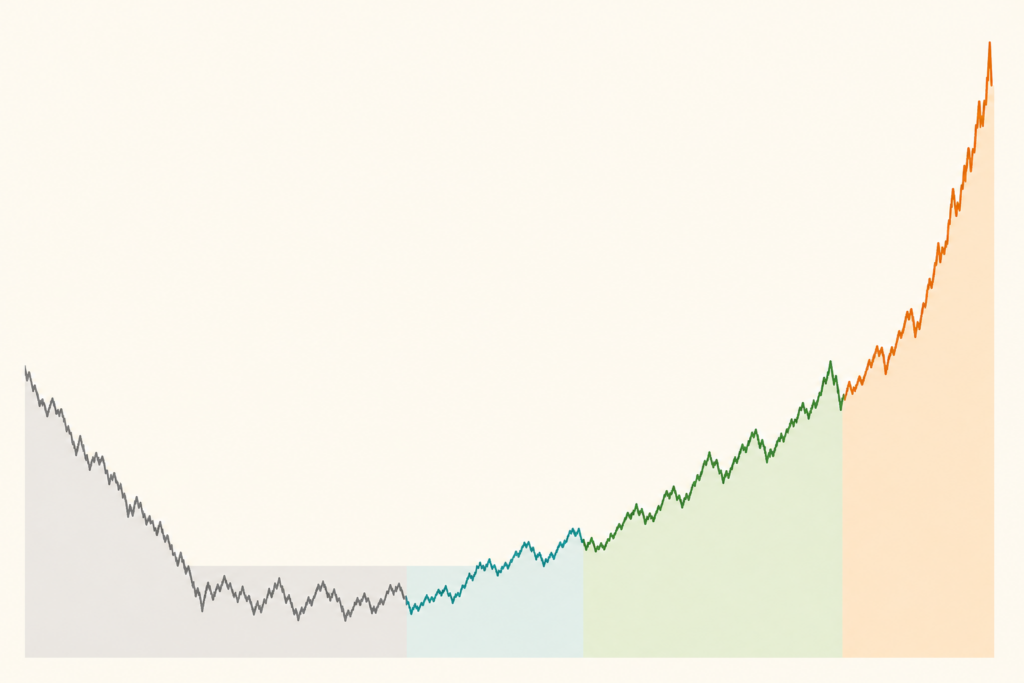
Recognizing these phases helps investors spot opportunities and manage risks effectively.
Key Indicators of a Bull Market
Several factors signal the start of a bull market. Investors and analysts keep an eye on these key indicators:
- Sustained Price Increases: A consistent rise of 20% or more from the previous market low.
- Economic Growth: Positive GDP growth, low unemployment, and strong corporate earnings.
- Investor Sentiment: High investor confidence, reflected in increased market participation.
- Low Interest Rates: When central banks keep borrowing costs low, more capital flows into the market.
These indicators create an environment ripe for a bull market, but they do not guarantee continuous upward movement.
Famous Historical Bull Markets
Several bull markets have shaped history and left lasting impacts on investors:
- The 1982-2000 Bull Market: The S&P 500 rose more than 1,400% over nearly two decades, fueled by technology growth, deregulation, and falling interest rates.
- The 2009-2020 Bull Market: After the 2008 financial crisis, this bull market lasted over a decade, driven by low interest rates and strong tech company performance.
- Cryptocurrency Bull Markets: In 2017, Bitcoin surged to nearly $20,000; the 2020-2021 cycle pushed it from under $10,000 to roughly $69,000; and the 2024-2025 cycle saw Bitcoin cross $100,000 for the first time.
These examples demonstrate that bull markets can vary significantly depending on the sector and economic backdrop.
How to Capitalize on a Bull Market
Investors have several strategies to make the most of a bull market:
1. Buy and Hold Strategy
Buy and hold is a simple yet effective strategy. Investors purchase assets and keep them over time, allowing them to benefit from long-term capital appreciation.
2. Momentum Investing
In this strategy, investors focus on buying assets that are already showing strong upward momentum, riding the wave of price increases.
3. Sector Rotation
In a bull market, different sectors perform better at different times. Sector rotation involves shifting investments to sectors that are outperforming the market.
4. Options Strategies
Investors can use options, such as call options, to leverage their positions in rising markets while limiting downside risk.
Risks of a Bull Market
Despite the profit potential, bull markets are not without risks. These include:
- Overvaluation: In the later stages of a bull market, asset prices can become inflated, leading to a correction or crash.
- Speculation: Speculative behavior can drive prices higher than fundamentals justify, creating bubbles.
- Volatility: Even in a bull market, short-term corrections (e.g., 10% pullbacks) are common, which can cause panic and risk exposure.
While the opportunities are tempting, investors should be aware of these risks and prepare accordingly.
When Do Bull Markets End?
Bull markets do not last forever. Several factors can lead to their end:
- Rising Interest Rates: Central banks may increase interest rates to control inflation, reducing liquidity and slowing down the economy.
- Economic Slowdown: A decline in corporate earnings or a recession can trigger the end of a bull market.
- Market Bubbles: When asset prices become excessively high relative to their intrinsic value, a bubble may form, leading to a sharp decline.
- Geopolitical Events: Events like wars or economic sanctions can create uncertainty, causing market sell-offs.
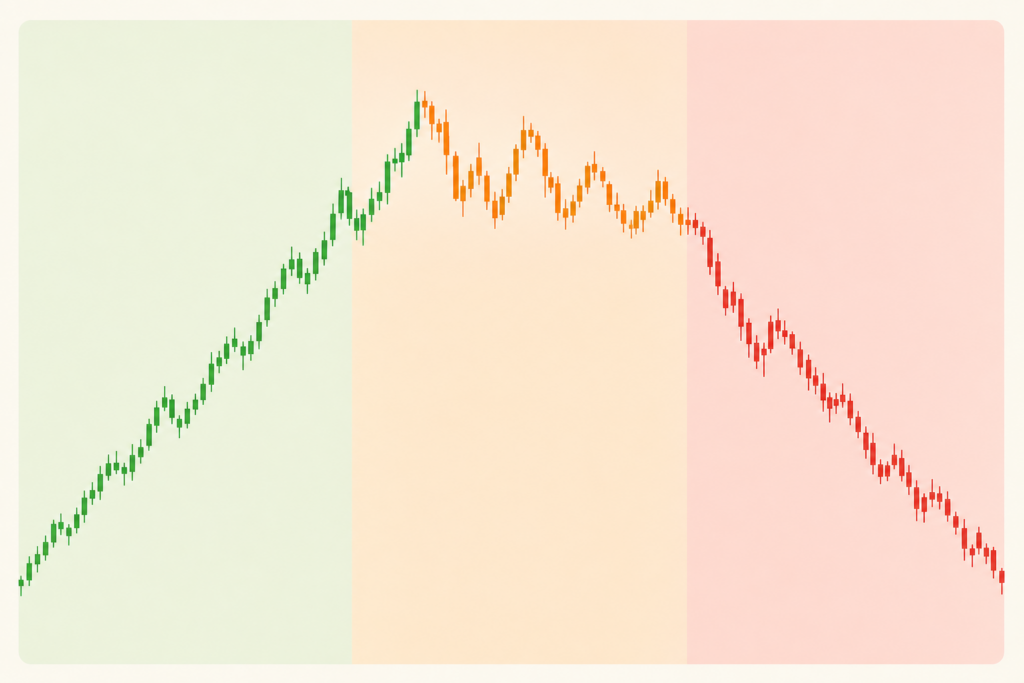
Recognizing these signs early can help investors avoid significant losses when the market turns.
Navigating a Bull Market
Bull markets offer substantial opportunities for investors, but they require careful strategy and risk management. Whether investing in stocks, real estate, or cryptocurrencies, the key to success lies in recognizing indicators, timing entries and exits, and maintaining a diversified portfolio. Although the future is always uncertain, understanding the dynamics of bull markets can help investors make informed decisions and maximize their returns.
By staying disciplined and prepared for market fluctuations, investors can thrive during a bull market while minimizing potential risks.
 Stay Ahead in Crypto