English
  Nederlands
  Deutsch
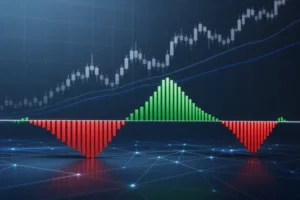
What is the Awesome Oscillator?
Key takeaways The Awesome Oscillator (AO) measures momentum by subtracting a 34-period moving average from a 5-period one, both taken from each bar’s median price rather than its


Non-custodial software wallet for iOS, Android and Windows
 The website of Agama (komodoplatform.com/agama-mobile) is offline since 2026-05-15. If you have any new information, please use the "Update Wallet Data" link.
Agama was the original desktop wallet developed by Komodo Platform, released around 2018 to give users a non-custodial way to hold and transact in Komodo (KMD) and the various assetchains built on Komodo's technology. Built as an Electron application, it supported Windows, macOS, and Linux, and integrated Komodo-specific features such as delayed Proof of Work (dPoW) anchoring to Bitcoin and direct access to the project's notary node network. Private keys were generated and stored locally on the user's device.
In June 2019, Agama was at the centre of a significant npm supply chain incident. An attacker injected malicious code into a dependency called electron-native-notify, targeting Komodo and Verus wallet users. Roughly 13 million KMD and around 96,000 VRSC were at risk. Komodo's security team responded with a coordinated counter-action, moving at-risk funds to safe addresses before the attackers could withdraw, and returning the recovered balances to users. Following the incident, Komodo formally deprecated Agama and stopped issuing new releases.
Users were migrated to a successor wallet initially codenamed AtomicDEX, which combined wallet functionality with built-in atomic swap trading. AtomicDEX was later rebranded to Komodo Wallet and remains available as a desktop, mobile, and web application supporting hundreds of cryptocurrencies. Komodo Platform itself is still active. The original Agama source code is archived on GitHub under the KomodoPlatform organisation but should not be used to manage funds.
 2026-04-29
 Stay Ahead in Crypto
Get the latest insights on coins, exchanges, and blockchain trends delivered to your inbox.
No spam. Unsubscribe anytime.

Key takeaways The Awesome Oscillator (AO) measures momentum by subtracting a 34-period moving average from a 5-period one, both taken from each bar’s median price rather than its
Key takeaways The Hull Moving Average (HMA) is a trend-following line built to react quickly to price while staying smooth, cutting the lag that slows down traditional moving
San Francisco, CA, 17th July 2026, Chainwire
London, United Kingdom, 17th July 2026, Chainwire
Willemstad, Curaçao, 17th July 2026, PlayNewswire
Kingstown, St. Vincent and the Grenadines, 16th July 2026, Chainwire
Key takeaways Williams %R is a momentum oscillator that shows whether price is closing near the top or the bottom of its recent range, on a scale of
Key Takeaways A regular crypto exchange uses an order book and trading tools that give users control over price, while an instant exchange converts one coin directly into
Key Takeaways Large token settlements increasingly route through OTC desks to avoid order-book slippage, but moving off-exchange shifts settlement and counterparty risk onto the two parties. Escrow-based atomic

Advertise with Blockspot.io
Get your project in front of crypto traders, investors, and builders.
Or publish a PR directly.