English
  Nederlands
  Deutsch
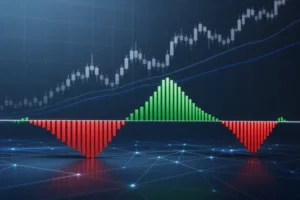
What is the Awesome Oscillator?
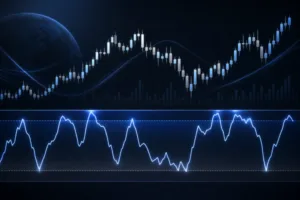
Key takeaways The Awesome Oscillator (AO) measures momentum by subtracting a 34-period moving average from a 5-period one, both taken from each bar’s median price rather than its


Non-custodial hardware wallet for iOS, Android and Web
 The website of BITHD (Bithd.com) is offline since 2025-04-17. If you have any new information, please use the "Update Wallet Data" link.
BITHD was a Chinese hardware wallet manufacturer that produced two self-custody devices: the BITHD Watch, a wearable form-factor device, and the BITHD Razor, a more conventional hardware wallet. Both ran open-source firmware derived from the Trezor architecture and communicated with companion apps via Bluetooth. The project launched its first firmware release in February 2018 and published both its firmware and hardware designs under open-source licenses.
The wallet operated as a self-custody device, meaning private keys were generated and stored entirely on the hardware and never exposed to connected computers or phones. Transaction signing happened on the device, with users verifying details on its built-in display before confirming. Bluetooth pairing with a mobile companion app was the primary method for initiating transactions.
BITHD supported a broad range of assets across its firmware lifetime. Core support covered Bitcoin, Litecoin, Dogecoin, Dash, Zcash, Decred, Bitcoin Cash, Bitcoin SV, Bitcoin Gold, DigiByte, Groestlcoin, Vertcoin, Monacoin, and Namecoin. Later firmware versions added Ethereum and EVM-compatible chains, TRON with TRC20 tokens including USDT, EOS, OMNI-layer tokens, and eCash.
Development activity continued through late 2022, with firmware v4.2.0 released in December of that year as the final update. The official website, bithd.com, went offline in April 2025, and the project appears to no longer be operational. The GitHub repositories remain publicly accessible, preserving the open-source firmware and hardware design files.
 Stay Ahead in Crypto
Get the latest insights on coins, exchanges, and blockchain trends delivered to your inbox.
No spam. Unsubscribe anytime.

Key takeaways The Awesome Oscillator (AO) measures momentum by subtracting a 34-period moving average from a 5-period one, both taken from each bar’s median price rather than its
Key takeaways The Hull Moving Average (HMA) is a trend-following line built to react quickly to price while staying smooth, cutting the lag that slows down traditional moving
San Francisco, CA, 17th July 2026, Chainwire
London, United Kingdom, 17th July 2026, Chainwire
Willemstad, Curaçao, 17th July 2026, PlayNewswire
Kingstown, St. Vincent and the Grenadines, 16th July 2026, Chainwire
Key takeaways Williams %R is a momentum oscillator that shows whether price is closing near the top or the bottom of its recent range, on a scale of
Key Takeaways A regular crypto exchange uses an order book and trading tools that give users control over price, while an instant exchange converts one coin directly into
Key Takeaways Large token settlements increasingly route through OTC desks to avoid order-book slippage, but moving off-exchange shifts settlement and counterparty risk onto the two parties. Escrow-based atomic

Advertise with Blockspot.io
Get your project in front of crypto traders, investors, and builders.
Or publish a PR directly.