English
  Nederlands
  Deutsch
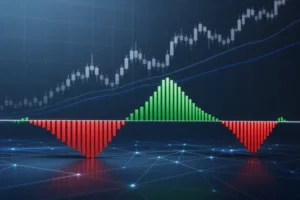
What is the Awesome Oscillator?
Key takeaways The Awesome Oscillator (AO) measures momentum by subtracting a 34-period moving average from a 5-period one, both taken from each bar’s median price rather than its


Non-custodial software wallet for iOS, Android and Web
 The website of Bundil (enjoybundil.com) is offline since 2026-05-15. If you have any new information, please use the "Update Wallet Data" link.
Bundil was a United States-based mobile application that allowed users to invest spare change from everyday purchases into cryptocurrency. Operated by Bundil, Inc. and founded by Dmitri Love, the app used a round-up model: users linked a bank account or debit/credit card, and each transaction was rounded up to the nearest dollar, with the difference automatically invested in digital assets. The service launched in 2018 and gained national attention when Love appeared on Shark Tank Season 10 in October 2018, pitching the concept as an accessible entry point into crypto for everyday consumers.
On the show, Kevin O'Leary offered $100,000 for a 50% stake, and Love accepted on air. The deal did not close during due diligence. Despite the outcome, Bundil continued operating and expanded its bank integrations and asset offerings after the episode aired.
The app was available on iOS and Android. Bundil acted as a custodial layer, executing purchases on behalf of users through Coinbase integration rather than providing direct on-chain wallet access. Supported assets included Bitcoin (BTC), Ethereum (ETH), and Litecoin (LTC). The service charged a flat monthly fee and offered adjustable round-up multipliers so users could increase their contribution rate above the default spare-change amount.
Bundil shut down in early 2023. The founder later confirmed the closure on LinkedIn, noting the company had failed and that a pivot had not been pursued early enough. The official website at enjoybundil.com is offline, and the iOS and Android applications have been removed from their respective app stores. This page is preserved for historical reference; the service is no longer accepting users or funds.
 Stay Ahead in Crypto
Get the latest insights on coins, exchanges, and blockchain trends delivered to your inbox.
No spam. Unsubscribe anytime.

Key takeaways The Awesome Oscillator (AO) measures momentum by subtracting a 34-period moving average from a 5-period one, both taken from each bar’s median price rather than its
Key takeaways The Hull Moving Average (HMA) is a trend-following line built to react quickly to price while staying smooth, cutting the lag that slows down traditional moving
San Francisco, CA, 17th July 2026, Chainwire
London, United Kingdom, 17th July 2026, Chainwire
Willemstad, Curaçao, 17th July 2026, PlayNewswire
Kingstown, St. Vincent and the Grenadines, 16th July 2026, Chainwire
Key takeaways Williams %R is a momentum oscillator that shows whether price is closing near the top or the bottom of its recent range, on a scale of
Key Takeaways A regular crypto exchange uses an order book and trading tools that give users control over price, while an instant exchange converts one coin directly into
Key Takeaways Large token settlements increasingly route through OTC desks to avoid order-book slippage, but moving off-exchange shifts settlement and counterparty risk onto the two parties. Escrow-based atomic

Advertise with Blockspot.io
Get your project in front of crypto traders, investors, and builders.
Or publish a PR directly.