English
  Nederlands
  Deutsch
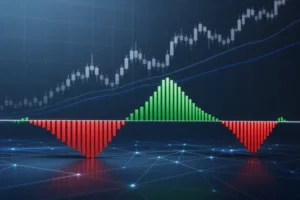
What is the Awesome Oscillator?
Key takeaways The Awesome Oscillator (AO) measures momentum by subtracting a 34-period moving average from a 5-period one, both taken from each bar’s median price rather than its


Custodial hardware wallet for iOS, Android and Windows
 The website of Sugi (Sugi.io) is offline since 2025-04-17. If you have any new information, please use the "Update Wallet Data" link.
Sugi was a credit-card-form-factor hardware wallet developed by Sofitto NV, a Belgian fintech company founded in 2016 in Leuven, Belgium. The product combined a PIN-protected NFC smart card with a paired mobile app, letting users store private keys offline and sign transactions by tapping the card against an NFC-enabled smartphone. Sofitto was founded by Alexander Vasylchenko, who had previously served as CTO of Mycelium between 2012 and 2014. The Sugi card opened for pre-orders in 2018, with initial shipments dispatched from late 2018 onward. The sugi.io domain is now offline and Sofitto NV is permanently closed.
The Sugi card stored private keys inside an on-card secure element, keeping them offline at all times. Transactions required both a PIN entry and a physical tap of the card to the phone, so neither the card alone nor the phone alone was sufficient to authorize a transfer. The card complied with the European ISO/IEC 14443 NFC security standard and was shipped in tamper-proof, NFC-shielded packaging. Recovery was handled through a standard backup phrase that allowed funds to be restored if the card was lost, stolen, or damaged.
The Sugi mobile app served as the interface for checking balances and initiating send and receive operations. It was available for both Android and iOS. The card was designed to be customizable in appearance, and Sofitto offered a limited-edition shield variant for early pre-order customers.
Sugi supported the following assets: Bitcoin (BTC), Ethereum (ETH), Bitcoin Cash (BCH), Litecoin (LTC), Ripple (XRP), and ERC-20 tokens. Sofitto indicated plans to expand coin support further, but the company closed before those additions were publicly confirmed.
 Stay Ahead in Crypto
Get the latest insights on coins, exchanges, and blockchain trends delivered to your inbox.
No spam. Unsubscribe anytime.

Key takeaways The Awesome Oscillator (AO) measures momentum by subtracting a 34-period moving average from a 5-period one, both taken from each bar’s median price rather than its
Key takeaways The Hull Moving Average (HMA) is a trend-following line built to react quickly to price while staying smooth, cutting the lag that slows down traditional moving
San Francisco, CA, 17th July 2026, Chainwire
London, United Kingdom, 17th July 2026, Chainwire
Willemstad, Curaçao, 17th July 2026, PlayNewswire
Kingstown, St. Vincent and the Grenadines, 16th July 2026, Chainwire
Key takeaways Williams %R is a momentum oscillator that shows whether price is closing near the top or the bottom of its recent range, on a scale of
Key Takeaways A regular crypto exchange uses an order book and trading tools that give users control over price, while an instant exchange converts one coin directly into
Key Takeaways Large token settlements increasingly route through OTC desks to avoid order-book slippage, but moving off-exchange shifts settlement and counterparty risk onto the two parties. Escrow-based atomic

Advertise with Blockspot.io
Get your project in front of crypto traders, investors, and builders.
Or publish a PR directly.