English
  Nederlands
  Deutsch


How Does Crypto OTC Trading Work?
Crypto OTC trading lets institutions execute large trades privately, with deeper liquidity and custom pricing outside public exchanges.

Crypto OTC trading lets institutions execute large trades privately, with deeper liquidity and custom pricing outside public exchanges.

Web3 is the emerging internet phase where blockchains, smart contracts, and tokens give users direct control over data, identity, and digital assets.

A Dutch auction in crypto starts at a high token price and drops it until buyers accept, giving fair price discovery for token sales, IDOs,...

A nonce, or "number used once," is vital in crypto for validating blocks, preventing replay attacks, and securing blockchain networks like Bitcoin and Ethereum.
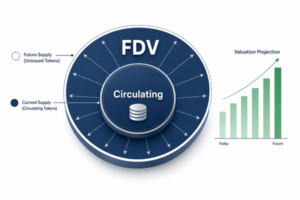
Fully Diluted Valuation (FDV) shows what a token's market cap would be if every coin were already in circulation. It helps spot future dilution risk.

Perpetual futures let traders speculate on crypto prices with no expiry and high leverage. Learn how funding rates, margin and risk management shape successful perp...

Wrapped tokens bridge different blockchains, enhancing liquidity and enabling participation in DeFi apps. Learn about their process, benefits, and risks.

Oracles bridge blockchain and real-world data, letting smart contracts power DeFi, gaming, and insurance with secure, reliable off-chain information.

Liquid staking lets you earn staking rewards while a tradeable LST keeps your tokens usable across DeFi, replacing the lock-up of traditional staking.

The Nakamoto Coefficient counts the minimum number of entities required to compromise a blockchain's consensus, flagging where decentralization is at risk.