English
  Nederlands
  Deutsch


Key Takeaways
- Zcash (ZEC) is a privacy-focused cryptocurrency that lets users choose between fully transparent and fully shielded transactions using zero-knowledge proofs.
- It launched in October 2016 with a Bitcoin-style cap of 21 million coins and proof-of-work mining built on the Equihash algorithm.
- In June 2026 developers patched a critical Orchard-pool flaw that could have allowed undetectable counterfeit ZEC, fixed through the emergency NU6.2 hard fork.
In This Article
- Privacy as an Option, Not a Default
- Understanding Zcash
- The Origins of Zcash
- How Zcash Works
- Transparent vs Shielded Transactions
- Mining and Network Security
- Supply and Economics
- Why People Use Zcash
- The 2026 Orchard Pool Vulnerability
- Challenges and Controversies
- The Future of Zcash and Why It Matters in 2026
Privacy as an Option, Not a Default
Most public blockchains broadcast every transaction for anyone to inspect. That openness builds trust, but it also means your financial history can be pieced together over time. Zcash (ZEC) was built to give people another choice: the ability to transact on a public blockchain while keeping the sender, receiver, and amount private when they want to.
Launched in 2016, Zcash treats privacy as a feature you can switch on rather than a rule forced on everyone. That single design decision shaped the project and made it one of the most closely studied privacy systems in crypto.
Understanding Zcash
Zcash is a decentralized cryptocurrency that runs on its own blockchain, where transactions are verified by a distributed network rather than a central authority. In that sense it works much like other coins: balances move between addresses, and the network keeps a shared record everyone can rely on.
What makes it different is an optional privacy layer. Zcash was inspired by the design of Bitcoin but set out to solve one of its limitations. Bitcoin transactions are pseudonymous: they do not show real names, yet every address and transaction sits on a public ledger that can sometimes be traced back to individuals. Zcash introduced cryptography that can hide those details entirely, letting users pick between transparency and confidentiality on a per-transaction basis.
The Origins of Zcash
The roots of Zcash reach back to academic research on financial privacy. A group of cryptographers proposed a concept called Zerocoin to improve anonymity for Bitcoin users. That idea evolved into a more capable system known as Zerocash, which could conceal transaction details using cryptographic proofs.
Those breakthroughs became the foundation of a new blockchain led by security specialist Zooko Wilcox-O’Hearn. The Zcash network went live in October 2016 with a simple goal: create digital cash that works in the open but protects user privacy. Development has since been supported by organizations such as the Electric Coin Company and the Zcash Foundation, which maintain the protocol, ship upgrades, and fund ecosystem work.
How Zcash Works
At a basic level, Zcash behaves like many blockchains. Transactions are broadcast to the network, nodes verify the data, miners group valid transactions into blocks, and each confirmed block is added to the chain.
The difference is what happens to the transaction details. Zcash uses zero-knowledge proofs, specifically a technique called zk-SNARKs (Zero-Knowledge Succinct Non-Interactive Arguments of Knowledge).
Proving without revealing
A zero-knowledge proof lets the network confirm that a transaction is valid without seeing what is inside it. The math can verify that the sender actually owns the funds, that the transaction follows the rules, and that no new coins were created out of thin air, all without exposing who sent what to whom. This is how Zcash keeps security and privacy in the same system.

Transparent vs Shielded Transactions
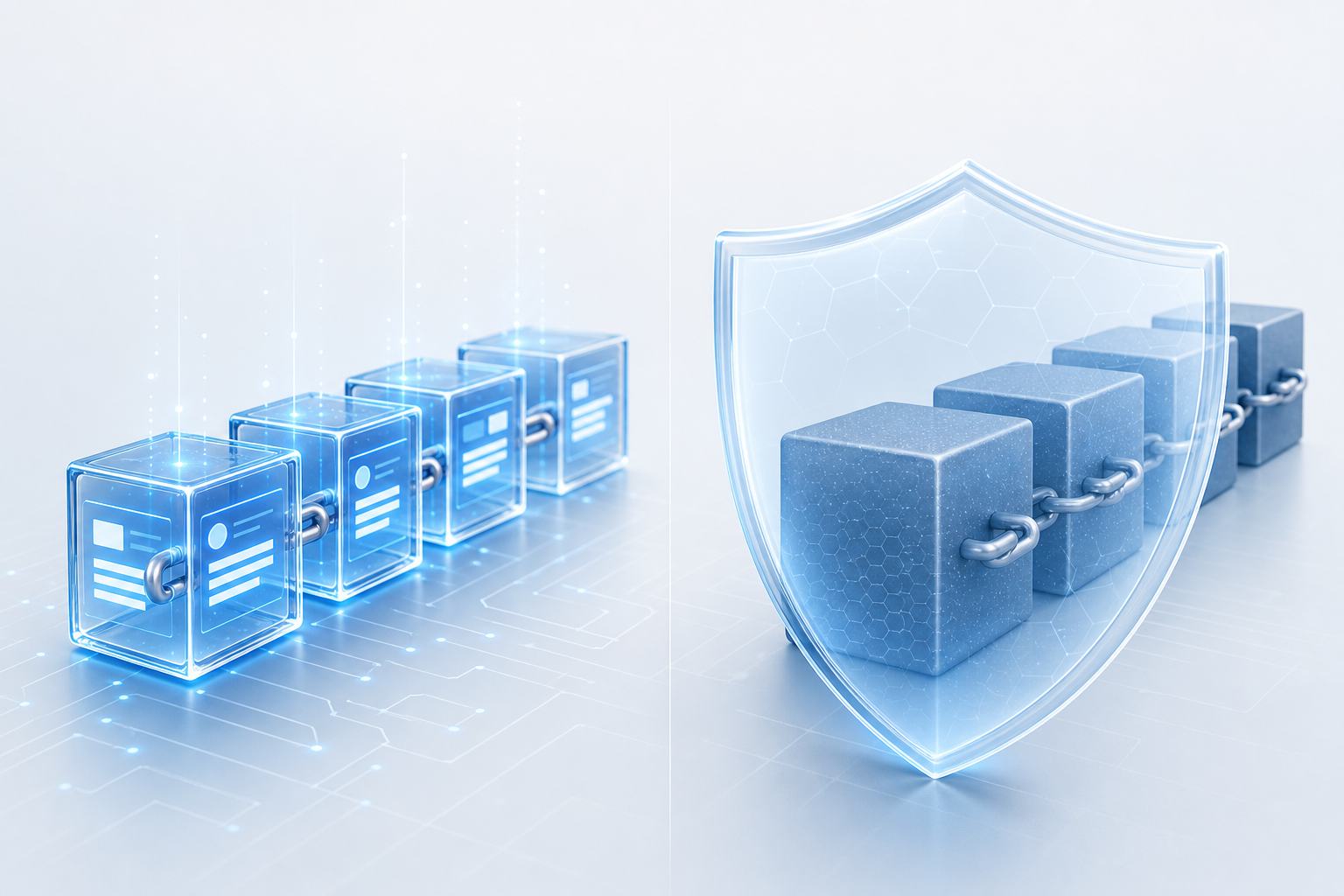
A defining trait of Zcash is that privacy is optional. The network supports two address types, and users can move funds between them depending on whether they need an open record or a confidential one.
Transparent addresses
Transparent addresses work much like Bitcoin addresses. Sender and receiver are visible, amounts are recorded publicly, and anyone can inspect the data on the blockchain. This format suits exchanges, businesses, and users who prefer open accounting.
Shielded addresses
Shielded addresses add the privacy layer Zcash is known for. The sender, the recipient, and the amount are all encrypted, and only the parties involved can view the full details. Thanks to zero-knowledge proofs, the network can still confirm the transaction is valid even though the contents stay hidden.
Mining and Network Security
Zcash secures its blockchain with proof-of-work mining, similar to Bitcoin. Miners compete to solve cryptographic puzzles, and the first to succeed adds the next block and earns a reward in ZEC.
Where it differs is the hashing algorithm. Zcash uses Equihash, which was designed to be memory-intensive so that ordinary hardware could compete rather than only specialized machines. Over the years professional operations and dedicated equipment have still come to dominate, but Equihash remains a core part of how the network reaches consensus.
Supply and Economics
Zcash follows an economic model close to Bitcoin’s:
- Maximum supply: 21 million ZEC
- Block rewards: new coins enter circulation through mining
- Halving cycles: the block reward drops by half roughly every four years
A capped supply is meant to create scarcity, one of the factors that can influence an asset’s market value. This cap, though, is only as strong as the cryptography that enforces it. Because shielded balances are encrypted, the network relies on the soundness of its zero-knowledge proofs to guarantee that nobody can quietly mint coins that should not exist. That guarantee was put to the test in 2026.
Why People Use Zcash
Zcash appeals most to users who want privacy-preserving financial tools. Common use cases include:
- Private digital payments where transaction details stay confidential
- Financial privacy for individuals and businesses that do not want balances exposed
- Secure cross-border transfers
- Experimentation with zero-knowledge cryptography
Because privacy is optional, the same coin can operate transparently when a situation calls for open records, which makes the network flexible across very different scenarios.
The 2026 Orchard Pool Vulnerability
In late May 2026, a security researcher named Taylor Hornby, using AI-assisted code analysis, discovered a critical flaw in Orchard, the shielded pool that had powered Zcash’s strongest privacy since 2022. The development group Shielded Labs disclosed that the bug could in theory have allowed an attacker to create unlimited, undetectable counterfeit ZEC inside the shielded pool, striking directly at the network’s supply guarantee.
What made it especially serious is the very property that makes Zcash private. Because shielded activity is encrypted, there is no way to prove from cryptography alone whether the flaw was ever exploited during the years it went unnoticed.
Developers responded within days. The Zcash Foundation and Electric Coin Company coordinated a two-phase emergency response: a soft fork that temporarily disabled all Orchard transactions, followed quickly by the NU6.2 hard fork in early June 2026 that re-enabled Orchard with a corrected circuit. The market reaction was severe, with ZEC losing roughly half its value within 48 hours before partially recovering.
To rebuild confidence, Zcash founder Zooko Wilcox proposed an upgrade named Ironwood that would let anyone independently verify the circulating supply and confirm that no counterfeit coins are present. The episode was a reminder that advanced privacy and provable scarcity are hard to hold together, and that the security of a shielded system depends on continual auditing.
Challenges and Controversies
Like most privacy technology, Zcash attracts both enthusiasm and criticism:
- Regulatory pressure: some authorities worry privacy coins can be misused, which has led certain exchanges to review or delist them in some regions. Zcash’s optional transparency helps it stay compliant on many platforms.
- Competition: other projects pursue privacy differently, including Monero, Beam, and Grin, each making its own trade-offs.
- Security complexity: as the 2026 Orchard incident showed, the cryptography behind shielded transactions is powerful but difficult to get exactly right.
These tensions are not unique to Zcash. They reflect the broader challenge of building financial privacy that regulators, exchanges, and everyday users can all live with.
The Future of Zcash and Why It Matters in 2026
Nearly a decade after launch, Zcash is still evolving. Developers are working to improve wallet usability, make shielded transactions more efficient, and strengthen the supply assurances highlighted by the Orchard fix, with the proposed Ironwood and later NU7 upgrades on the roadmap. At the same time, the zero-knowledge cryptography Zcash helped pioneer has spread far beyond it, and now sits at the center of blockchain scaling, privacy-preserving identity, and confidential smart contracts.
For readers comparing the wider field, our overview of privacy coins puts Zcash in context alongside its peers. Whether or not it remains the largest privacy coin, Zcash has already earned a place as one of the projects that pushed confidential transactions into the mainstream, and the lessons from its 2026 security scare are shaping how the next generation of private money gets built.
 Stay Ahead in Crypto