English
  Nederlands
  Deutsch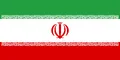
Crypto Overview in Iran
 Regulatory data is for informational purposes only and may not reflect the most current legal developments. Always consult qualified professionals before making decisions.
Key Takeaways
- The Central Bank of Iran (CBI / Bank Markazi) consolidated its position as the lead crypto-asset regulator in late 2024 through a series of directives, most notably the 27 December 2024 blocking of rial payment gateways for crypto exchanges; the Ministry of Industry, Mine and Trade (MIMT) issues industrial mining licences under the 2019 cabinet decree.
- Industrial cryptocurrency mining is a licensed, legal activity; domestic use of cryptocurrencies as a payment method is prohibited, and all crypto service providers are required to hold a CBI licence under the 2024 framework.
- An August 2025 Majlis law on taxation of speculation introduced the first capital gains tax on crypto trading; licensed industrial miners may qualify for tax exemptions when foreign-currency proceeds are repatriated through the official NIMA FX settlement system.
- Iran has been on the FATF black list (Call for Action) since 2020; FATF’s October 2025 plenary retained that status and added virtual-asset-specific countermeasures, compounding US OFAC and EU sanctions that impose broad restrictions on crypto transactions with Iranian persons.
Table of Contents
The Islamic Republic of Iran has one of the most distinctive cryptocurrency regulatory architectures in the world. Industrial Bitcoin mining is a legalised, licensed activity that doubles as a state-managed channel for trade settlement, while the use of cryptocurrencies as a domestic payment method is prohibited. The Central Bank of Iran has been formally designated as the sole regulator of crypto-related activity, a Digital Rial central bank digital currency is in public pilot, and the entire framework operates within the constraints imposed by Iran’s placement on the Financial Action Task Force black list and a dense web of international sanctions. The result is a jurisdiction where state-directed crypto use is actively promoted for specific strategic purposes, yet retail and commercial crypto activity faces escalating restrictions.
Legal Classification and Regulatory Framework
Cryptocurrency Status
A 2019 cabinet decree recognised cryptocurrency mining as an industrial activity subject to ministerial licensing. The same framework prohibits the use of cryptocurrencies as a domestic means of payment, although possession by individuals is tolerated at the user’s own risk. There is no securities-law classification for tokens under Iranian law. From late 2024, the Central Bank of Iran (CBI, known in Persian as Bank Markazi Jomhouri Eslami Iran) consolidated its position as the lead authority for crypto-related activity through a sequence of directives covering payment-gateway access, exchange-linked banking, and reporting obligations. The most consequential of these was the 27 December 2024 decision to block rial payment gateways for crypto exchanges. Reopening access has been made conditional on exchanges integrating with a CBI-managed API providing real-time visibility into user identities and transaction data.
Tax Treatment
Licensed industrial miners can qualify for tax exemptions where foreign-currency proceeds are repatriated through Iran’s official foreign exchange settlement mechanism, known as NIMA; otherwise, they are treated as productive industrial entities subject to the standard corporate income tax rate. In August 2025, the Majlis (Iranian parliament) passed a law on the taxation of speculation and profiteering that, for the first time, introduces a capital gains tax on crypto trading. The Iranian National Tax Administration (INTA, Sazman-e Amur-e Maliyati) has proposed a three-regime structure for exchanges covering capital gains, fixed base, and occupational tax categories. Bringing previously untaxed exchanges into the tax net has been a stated motivation for tightening regulation through 2024 and 2025.
Regulatory Oversight
Beyond the CBI, several other bodies hold pieces of the framework. The Ministry of Industry, Mine and Trade (MIMT) issues industrial mining licences. The Ministry of Energy and the state grid operator Tavanir set electricity tariffs for licensed miners and pursue enforcement against illegal mining operations. The Ministry of Economic Affairs and Finance houses the Financial Intelligence Center of Iran (FIC), which serves as Iran’s financial intelligence unit. The Customs Administration administers import-settlement procedures that permit Iranian importers to pay for foreign goods using cryptocurrency acquired through CBI-supervised channels, a mechanism piloted from 2022 onward. The Iranian National Tax Administration handles crypto tax policy and compliance.
Business Environment
Banking Relationships
Iranian banks have long been barred from direct cryptocurrency dealings. Through late 2024, the CBI escalated this stance in a series of steps: restricting rial-to-crypto conversions on the national payment switch Shaparak, freezing exchange-linked bank accounts, suspending payment processing for crypto exchanges, and, on 27 December 2024, blocking rial payment gateways for crypto exchanges entirely. Reopening payment-gateway access has been made conditional on exchanges integrating with a government API that grants the CBI live visibility into user-level transaction and identity data. For any entity outside Iran, the combination of OFAC primary sanctions, EU sanctions, and FATF black-list status makes establishing banking relationships with Iranian crypto businesses effectively impossible through conventional channels.
Innovation Support
The headline state initiative is the Digital Rial, also referred to as Ramzrial, built on a Hyperledger-based platform branded Borna. After a closed pilot in 2022, a public pilot launched on Kish Island in June 2024, with the CBI signalling a planned nationwide rollout. The Digital Rial features offline payments, programmability, and contactless use. The CBI has also integrated with Russia’s MIR payment system and the Asian Clearing Union to provide cross-border payment rails that substitute for the SWIFT network access that Iran lost due to sanctions. These initiatives are positioned as instruments of sanctions circumvention and financial sovereignty rather than fintech innovation in the conventional sense.
Crypto License in Iran
Iran operates a dual-track licensing regime. Industrial cryptocurrency mining has been a formally licensed activity since the 2019 cabinet decree, overseen by the Ministry of Industry, Mine and Trade. Since December 2024, a broader CBI licensing requirement covers all entities transacting in crypto, including exchanges and service providers. The two tracks differ sharply in their strategic rationale: mining licences serve Iran’s energy-export substitution and trade-settlement strategy, while the CBI licensing framework for exchanges is primarily an instrument of financial surveillance and capital-flow control.
Licensing Requirements
Industrial mining licences issued by the MIMT require submission of a business plan, a full equipment list, and demonstration of minimum operational capacity, which in practice excludes home-scale operations. Licensed miners must pay for electricity at Iran’s export-equivalent rial rate, or a fixed percentage of the prevailing export price of natural gas, rather than at subsidised domestic tariffs. They are prohibited from drawing subsidised household, agricultural, or industrial electricity, and are barred from operating during peak demand hours. Licensed miners are also required to sell a portion of mined coins to the Central Bank of Iran as part of the trade-settlement mechanism that allows importers to pay for approved foreign goods using cryptocurrency acquired through CBI-supervised channels.
Under the CBI’s late-2024 framework, entities transacting in digital assets, including domestic exchanges, wallets, and service providers, must obtain CBI authorisation to access the national payment system. The framework imposes mandatory integration with a CBI-managed API providing real-time visibility into user identities and transaction data as a condition of payment-gateway access. Entities operating without a licence face account freezes and payment suspension.
Authorized Activities
Licensed industrial miners may mine, hold, and sell approved cryptocurrencies to the CBI through official settlement channels. Importers participating in the CBI trade-settlement pilot may acquire cryptocurrency through CBI-supervised channels and use it to pay foreign suppliers, subject to Customs Administration oversight. Exchanges that obtain a CBI licence and integrate with the government surveillance API may resume rial payment-gateway access. Possession of crypto by individuals is tolerated but carries no legal protection. Domestic use of cryptocurrencies as a means of payment remains prohibited. There is no provision for public token issuance, securities-token offerings, or crypto-collateralised lending under current rules.
Application Process and Timeline
Mining licence applications are submitted to the MIMT, with the Ministry of Energy and Tavanir assessing grid-capacity impact before a licence is granted. Processing timelines have not been publicly standardised, and approvals have in practice been linked to grid capacity management, with new licence issuance paused during periods of electricity shortages. For exchanges and service providers, the CBI authorisation framework that emerged from the late-2024 directives is relatively recent, and no formal public timeline or fee schedule had been published as of mid-2025. Applicants are expected to demonstrate AML/KYC procedures, technical integration with the CBI API, and compliance with capital conditions to be specified by the CBI. Given Iran’s FATF black-list status, AML and customer-screening standards required by the CBI may differ substantially from those of international standard-setters, but FATF compliance gaps remain a barrier to cross-border recognition of Iranian-licensed entities.
Market Characteristics
Adoption Patterns
On-chain analytics firms have measured multi-billion-dollar annual inflows to Iranian wallets, with most retail and trade-related activity concentrated on a small number of large local exchanges. After the December 2024 payment-gateway blockade, year-on-year retail volumes on domestic exchanges declined, although stablecoin-denominated trade-settlement flows have continued through state-managed channels. Adoption is partly driven by a structural need for dollar-denominated instruments in an economy where access to foreign currency is heavily restricted. Peer-to-peer trading and informal networks remain active alongside the regulated segment.
Industry Focus
The industry is bifurcated between two distinct segments. Licensed industrial mining is presented by authorities as an export-substituting industrial activity that converts domestically priced energy into US-dollar-denominated assets, reducing pressure on foreign-exchange reserves. At peak, Iran was estimated to account for approximately 4 to 6 percent of global Bitcoin hash rate around 2021 and 2022, reflecting the scale of both licensed and unlicensed operations. Illegal mining is large in absolute terms: the Ministry of Energy and Tavanir have reported the seizure of hundreds of thousands of unauthorised rigs, with illegal crypto mining cited as a meaningful contributor to Iran’s electricity deficit, particularly during winter peak seasons. The domestic exchange sector handles retail demand and acts as a settlement layer for sanctioned trade flows, and it is increasingly subject to direct CBI supervision under the 2024 framework.
Regulatory Evolution
Iran has been on the FATF black list, formally termed the Call for Action list, since 2020, alongside North Korea and Myanmar. At the October 2025 plenary, FATF retained Iran on the black list, rejected its conditional ratification of the Palermo Convention as overly broad, and adopted virtual-asset-specific countermeasures. These countermeasures include refusing to allow Iranian VASP representative offices abroad, prohibiting foreign VASP offices in Iran, and directing member states to limit virtual-asset transactions with Iranian persons on a risk basis. The combination of FATF countermeasures, US OFAC primary sanctions, EU sanctions, and direct designations of Iranian-linked exchanges and front companies forms the international counterweight to Iran’s domestic licensing framework. For any entity outside Iran, these layers of sanctions and FATF measures mean that crypto-related interaction with Iranian persons or entities carries substantial and in most cases prohibitive legal and compliance risk. Sanctions exposure and FATF status effectively sever Iran’s domestic framework from the global regulated crypto ecosystem.
Regulatory data is for informational purposes only and may not reflect the most current legal developments. Always consult qualified professionals before making decisions.
Upcoming Events
-
JUL 13-14WebXLIVE Asia's leading Web3 conference organized by CoinPost covering DeFi, gaming, enterprise blockchain, and tokenization.Conference
 Tokyo
In Person
Tokyo
In Person
-
JUL 21-22Blockchain Futurist Conference Canada's largest and longest-running Web3 and AI event, anchoring Canada Crypto Week in Toronto.Conference
Toronto
In Person
-
JUL 24-26ETHGlobal Lisbon ETHGlobal in-person Ethereum hackathon in Lisbon, part of the 2026 global circuit for developers.Hackathon
Lisbon
In Person
-
JUL 28-31Rare Evo Four-day blockchain convention featuring expo hall, keynotes, hackathons, workshops, and the Rare Evo Poker Classic.Conference
Las Vegas
In Person
-
AUG 12-13Blockchain Rio Latin America's largest blockchain and Web3 conference bringing industry leaders, developers, and entrepreneurs to Rio.Conference
Rio de Janeiro
In Person
 Tokyo
Tokyo  Toronto
  Lisbon
  Las Vegas
  Rio de Janeiro
 Crypto News
-
 BYDFi Participates in Peru Blockchain Conference 2026, Engaging the LATAM Web3 Community
 -
TrueDAO Raises $10 million in Strategic Funding to Accelerate AI-Powered Financial Infrastructure
-
Zoomex Debuts at Wimbledon 2026, Connecting Users to Elite Sporting Moments via Predict Market
-
Bitcoin Suisse Advances Middle East Expansion, Receives Financial Services Permission in Abu Dhabi



Blockchain Companies




Other Countries





 Stay Ahead in Crypto
 Stay Ahead in Crypto
Get the latest insights on coins, exchanges, and blockchain trends delivered to your inbox.
No spam. Unsubscribe anytime.