English
  Nederlands
  Deutsch

Key Takeaways
- Namechain was a planned Layer 2 blockchain that ENS Labs designed to scale the Ethereum Name Service using zero-knowledge rollups.
- In February 2026, ENS Labs cancelled Namechain after Ethereum’s base-layer fees fell roughly 99%, making a dedicated rollup unnecessary.
- The ENSv2 upgrade is still happening, but it now ships directly on Ethereum mainnet instead of on Namechain.
In This Article
Namechain was meant to be the next big step for the  Ethereum Name Service (ENS): a dedicated blockchain built to make registering and managing readable names like “vitalik.eth” faster and cheaper. Then, in early 2026, ENS Labs scrapped it. If you have seen Namechain mentioned and wondered what happened to it, here is the full story.
The short version: Namechain made sense when  Ethereum was expensive to use, but Ethereum became so much cheaper that a separate chain for ENS was no longer worth building. The ENSv2 upgrade that Namechain was supposed to power is still going ahead, just on Ethereum itself.
What Namechain Was Supposed to Be
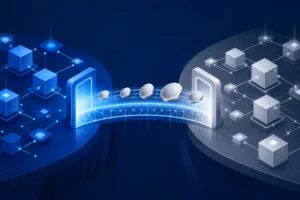
Namechain was designed as a Layer 2 blockchain built specifically for ENS. Development started in 2024 alongside ENSv2, a ground-up rewrite of the ENS contracts. The plan was to move most ENS activity off Ethereum’s main chain to cut costs and speed things up.
Technically, Namechain was going to be a zero-knowledge rollup (ZK-rollup). In simple terms, a ZK-rollup processes transactions off-chain, bundles them into a compact cryptographic proof, and posts that proof back to Ethereum. This keeps Ethereum’s security while taking pressure off the main network. ENS had selected the Taiko stack as the foundation and was aiming for a public testnet in 2026, followed by a mainnet launch.
Why ENS Planned Its Own Layer 2
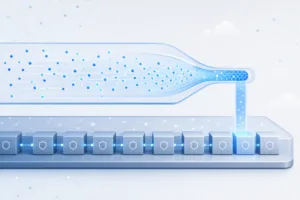
Two years ago, building a dedicated chain felt almost inevitable. Ethereum was often expensive to use, and registering or updating an ENS name could cost a frustrating amount in gas fees during busy periods. A purpose-built Layer 2 looked like the cleanest way to fix that.
At the time, the case for Namechain rested on a few real problems:
- High costs: name registrations and updates could become expensive when Ethereum was congested.
- Slow confirmations: users sometimes waited a long time for transactions to settle.
- Multi-chain pressure: as more Layer 2 networks appeared, ENS needed names that worked smoothly across many of them.
Why Namechain Was Cancelled
In February 2026, ENS Labs announced it would stop developing Namechain and deploy ENSv2 directly on Ethereum’s base layer instead. The reason was simple: the original problem had mostly solved itself.
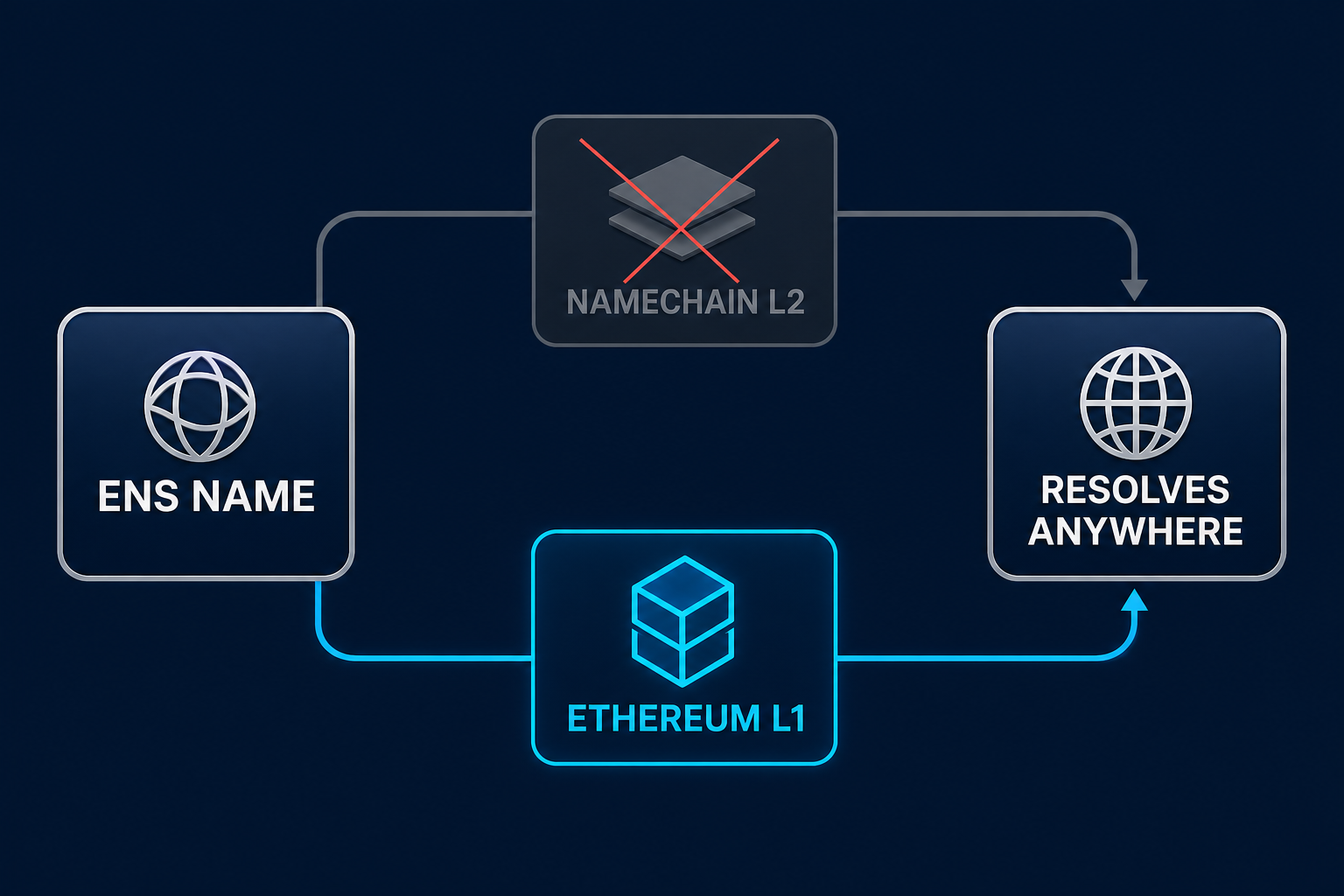
According to ENS co-founder Nick Johnson, gas costs for ENS registrations dropped roughly 99% over the previous year, helped by Ethereum raising its gas limit from 30 million to 60 million in 2025 (with higher targets ahead). Basic registrations now cost just a few cents. At that point, it became cheaper to simply cover ENS transaction costs on Ethereum than to build and maintain a separate chain.
The decision also matched a wider mood shift in the Ethereum community, including Vitalik Buterin’s own reflections on the limits of an L2-first roadmap. Buterin publicly called the move a wise decision. Here is what drove it:
- Cheaper Ethereum: a roughly 99% fall in ENS gas costs removed the main reason for a separate chain.
- Higher capacity: Ethereum’s gas limit doubled in 2025, with further increases planned.
- Lower complexity: running ENS on one chain is simpler for users and developers than splitting it across a rollup.
- Reused lessons: the L2 research still feeds work to make ENS interoperable with other networks.
What ENSv2 Looks Like Now
Cancelling Namechain does not cancel ENSv2. The upgrade is the bulk of what the team has been building, and it now rolls out directly on Ethereum mainnet. The user-facing roadmap is largely unchanged.
- One-click registration: a smoother flow for grabbing and renewing names.
- Stablecoin payments: support for paying in stablecoins, so name costs do not swing with the ETH price.
- Hierarchical registries: each .eth name gets more control over its subnames, useful for businesses and communities.
- Better tooling: a redesigned registration system and improved developer tools, built on ENS smart contracts.
The new ENS app and ENS explorer have already entered public alpha testing, so the next version of ENS is being shaped in the open.
What It Means for ENS Users
For everyday users, the outcome is arguably better than the original plan. You get most of the benefits Namechain promised without having to bridge to a separate chain or learn a new network.
- Cheaper and simpler: low fees on Ethereum, with everything staying on one familiar chain.
- One identity: your ENS name remains a portable digital identity you can use across apps.
- Cross-chain reach: ENS keeps investing in interoperability so names work across many networks.
- More control: hierarchical registries make managing subnames easier for individuals and organizations.
Bottom Line
Namechain was a sensible plan for a more expensive Ethereum that no longer exists. Rather than push ahead with a dedicated Layer 2, ENS Labs chose the simpler path and kept ENSv2 on Ethereum itself. For anyone who relies on readable names across the wider blockchain ecosystem, that means cheaper, easier-to-manage names without the extra moving parts a separate chain would have added.
 Stay Ahead in Crypto